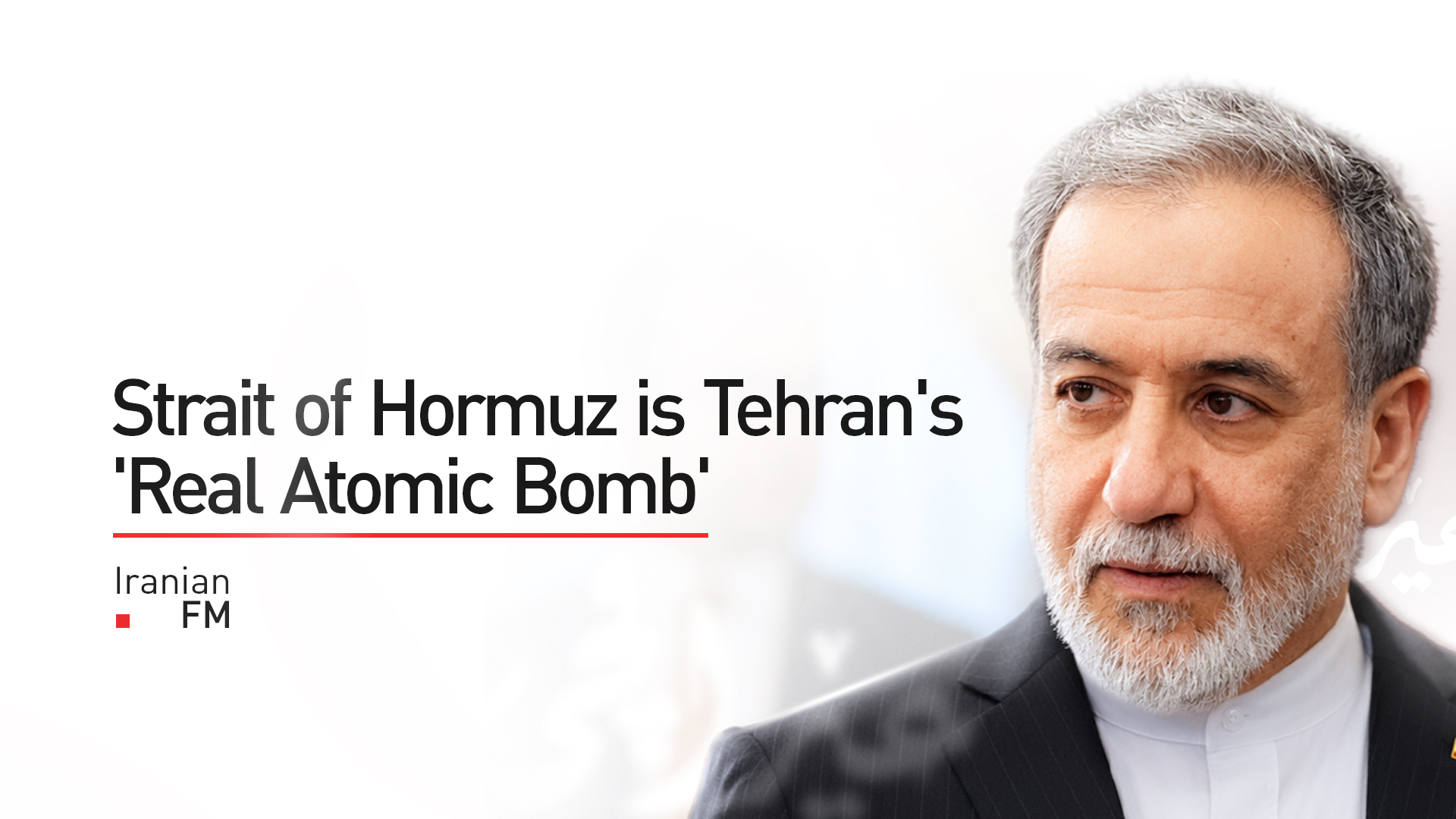
Iranian FM: Strait of Hormuz is Tehran's 'Real Atomic Bomb'
Abbas Araghchi says the recent 12-day conflict with Israel and the United States was merely the opening chapter of a longer confrontation, as he defends Tehran's refusal to formally suspend uranium enrichment
ERBIL (Kurdistan24) - Iranian Foreign Minister Abbas Araghchi said Sunday that the decision to end the recent war with Israel and the United States was made collectively by Iran's Supreme National Security Council, describing the brief conflict as only the beginning of a longer struggle still ahead.
"The 12-day war was only an introduction to a bigger victory in a 40-day war," Araghchi said in a televised interview. He added that Tehran's decision to return to the negotiating table was intended only to demonstrate proof of its position, "so that in the future no one can say that if Iran had chosen the diplomatic path, the war would not have happened."
Araghchi recounted a conversation with US envoy Steve Witkoff, saying he had asked him: "Until now, have you been in a meeting where the possibility of bombing wasn't there?" He said he told American officials directly that "the enrichment of uranium is not for sale," and that Iran's will could not be changed through threats.
He rejected any comparison between Iran and Venezuela, stating: "This is not Venezuela, where removing one person would scare the rest."
The foreign minister said that although Iran's nuclear facilities suffered damage during the 12-day war and the enrichment process was forced to halt, accepting the opposing side's demand for a formal, official suspension of enrichment would have represented a loss greater than the war itself — because it would have amounted to selling the country's dignity, which he described as a red line.
Araghchi detailed the creation of what was initially called the "Atomic Committee" within the secretariat of the Supreme National Security Council, which later evolved into the "Negotiation Committee," also known as the "Six-Member Committee."
Araghchi accused Israeli Prime Minister Benjamin Netanyahu of misleading US President Donald Trump into the war through a flawed interpretation of the situation, in the hope of bringing down the Islamic Republic.
"The enemy started with a demand for unconditional surrender, but ultimately arrived at signing a memorandum of understanding," Araghchi said. "This means Iran sat as a great power opposite America, and forced Washington to respect the sovereignty of its territory."
He said the entire episode began with a mistaken reading of Iran as weak, but argued that the world has since come to understand that Tehran's will to resist is stronger than ever.
Closing the interview, Araghchi described the Strait of Hormuz as Iran's decisive weapon and its "real atomic bomb," saying the waterway has shifted the balance of power across the region.