The Art of Stillness: A Kurdish 'Living Statue' Captivates Sulaimani
How Subhani Fathi uses extreme physical endurance and theatrical stillness to transform public spaces at the Sulaimani Festival.
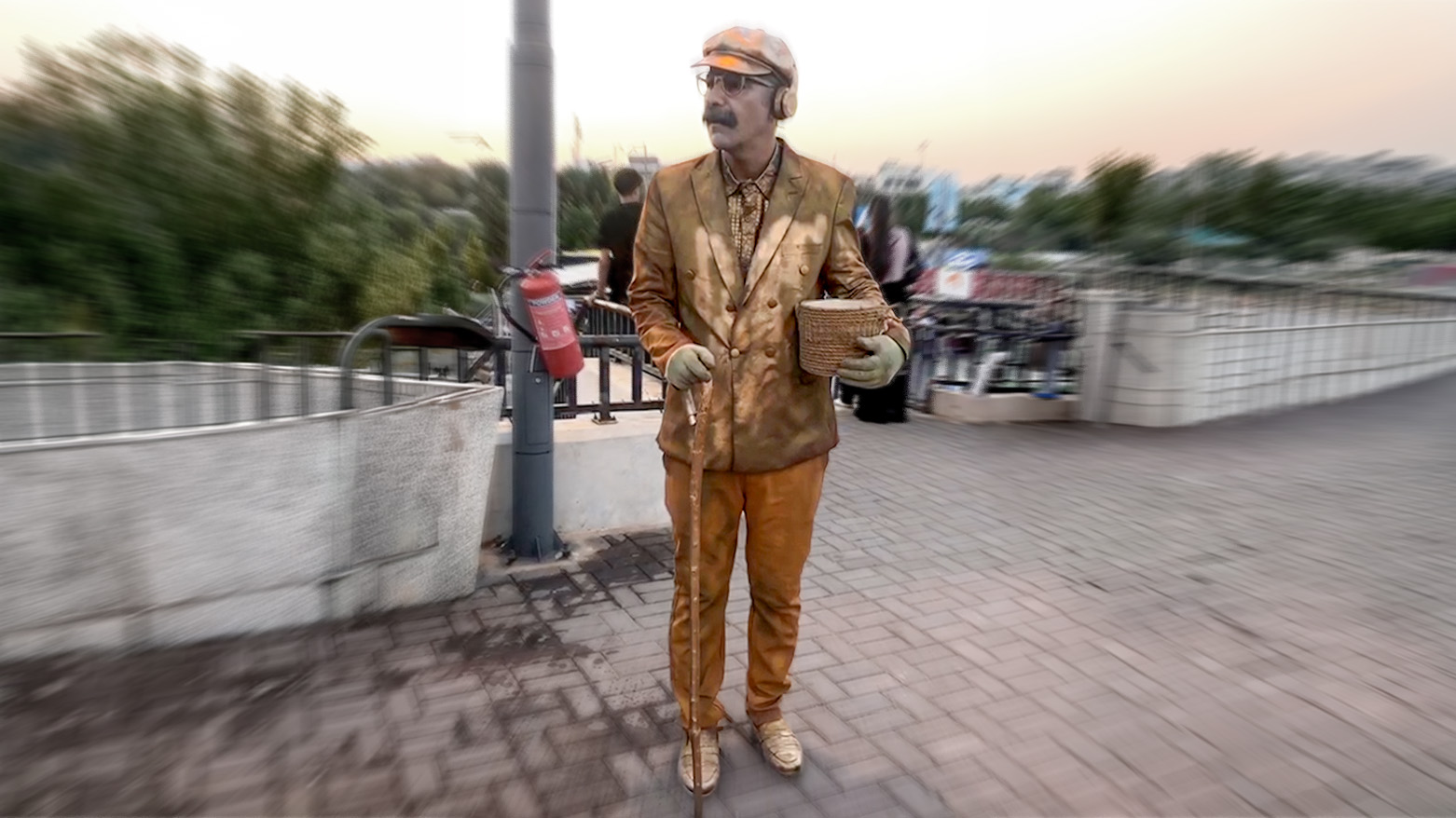
ERBIL (Kurdistan24) - Amid the kinetic, bustling atmosphere of the Sulaimani Festival, where the air is saturated with the sounds of celebration and commerce, an Eastern Kurdish artist is bringing crowds to a sudden, mesmerized halt. Subhani Fathi has spent the past five years mastering a uniquely demanding street craft: the art of the "living statue."
Coated in layers of metallic paint and draped in meticulously designed costumes, he holds a rigid, unyielding pose for up to an hour at a time, creating a striking visual illusion that dissolves the boundary between human flesh and cold stone.
Fathi's silent exhibition is a masterclass in extreme physical and mental control.
While occasionally dismissed by casual observers as simple street busking, the discipline actually requires immense stamina, blending elements of theatrical mime, visual artistry, and dance.
Performers like Fathi endure hours of intense preparation, applying complex makeup and rigid attire, before even stepping onto their makeshift stages.
Once in position, they must train their bodies to suppress natural twitches, stabilize their breathing rhythms, and weather the elements.
Their profound stillness is broken only by deliberate, subtle gestures, a slow nod or a mechanical shift in posture, designed to acknowledge a spectator's tip or elicit a surprised gasp from passing children.
The historical roots of this silent spectacle can be traced back to the European tradition of tableaux vivants, staged theatrical productions in which actors carefully recreated famous paintings or historical sculptures.
Over the late twentieth century, however, the practice evolved into a highly distinct, interactive global phenomenon.
In bustling metropolitan and tourist hubs, from the lively squares of London and Amsterdam to the iconic stretch of Barcelona's La Rambla, human statues have become an entrenched and celebrated fixture of the urban landscape.
The cultural footprint of these performers extends well beyond mere novelty.
Theatrical researchers, including academic Andy Lavender, argue that the art form forces audiences to recalibrate their understanding of presence and sculpture, effectively turning absolute stillness into a profound artistic statement and a unique mode of spectatorship.
Similarly, urban sociologists such as Avi Astor have documented how these performers actively shape a city's cultural identity.
Astor's research highlights how living statues add a vital layer of vibrance that enhances municipal branding, even as modern cities grapple with how to regulate street performers in public spheres.
By bringing this globally recognized tradition to the Kurdistan Region, Fathi is doing more than showcasing a personal endurance talent; he is actively altering the social fabric of the city's shared environment.
Broader sociological research underscores that such street-level artistic interventions make public areas feel far more engaging, safe, and welcoming.
At the Sulaimani Festival, Fathi's silent, stoic presence stands as a powerful testament to the impact of street theater, proving to local crowds that absolute stillness can be just as commanding, and just as emotionally resonant, as the most dynamic performance.
|
Summary Eastern Kurdish artist Subhani Fathi mesmerizes vast crowds at the Sulaimani Festival with his living statue performance. Drawing on five years of practice, Fathi uses striking stillness and intricate costumes to blur the lines between human and monument, transforming ordinary public spaces. |