Prime Minister Barzani's Aid Program Continues Support for Ezidi Survivors
The Kurdistan Regional Government has begun distributing May and June financial assistance to more than 3,500 Ezidi survivors of ISIS captivity, while continuing long-term psychological, educational, and rehabilitation support.
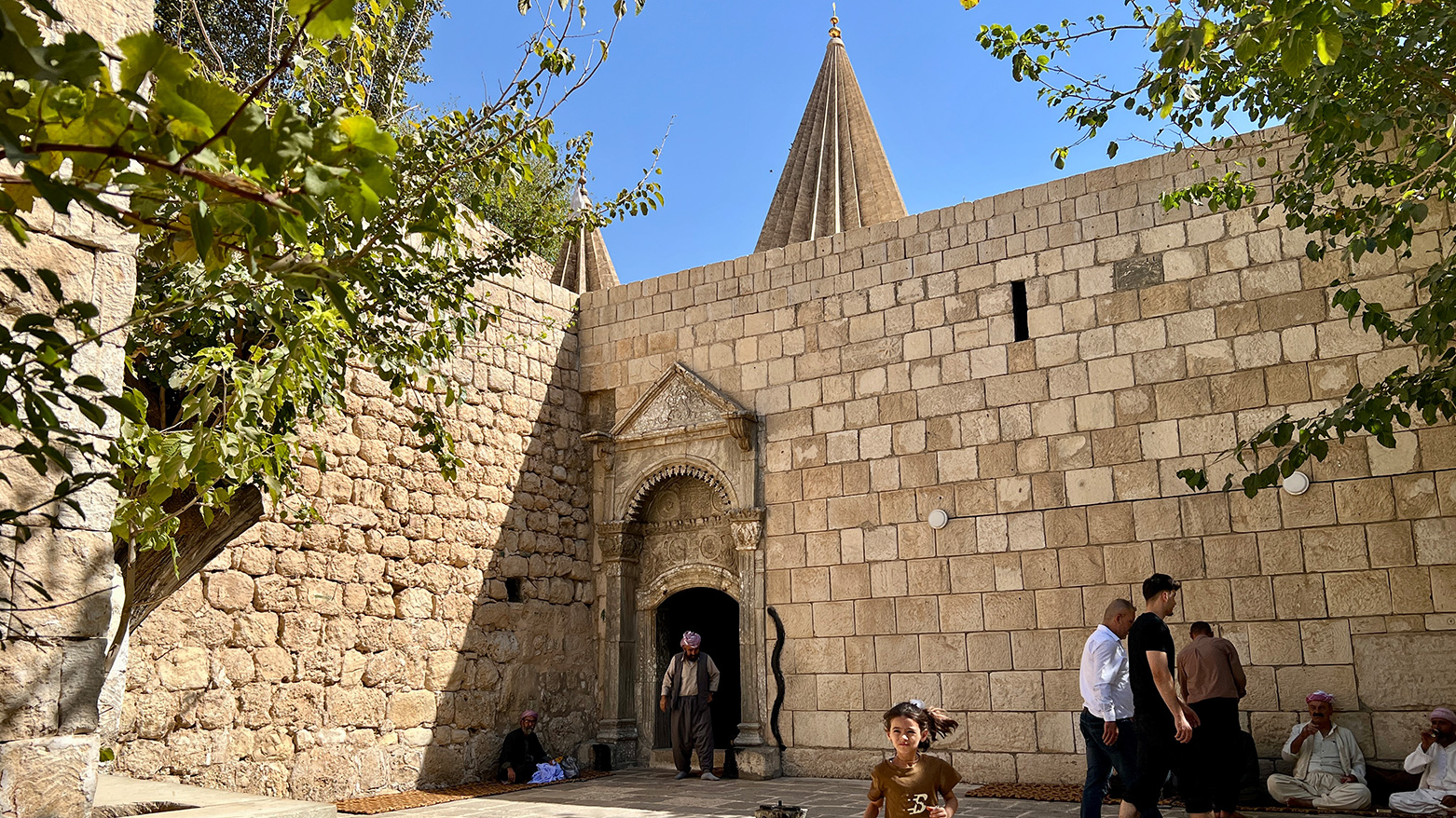
ERBIL (Kurdistan24) - The Kurdistan Regional Government has begun distributing its latest round of financial assistance to Ezidi survivors of ISIS captivity, extending a long-running support program aimed at helping survivors rebuild their lives through sustained humanitarian, psychological, and educational assistance.
The latest payments, covering the months of May and June, are being provided under the direction of Prime Minister Masrour Barzani as part of an ongoing initiative that has become a central element of the KRG's broader recovery strategy for survivors of the 2014 ISIS genocide.
Distribution began Tuesday morning in Shekhan and will continue in the coming days across Sharya, Khanke, and several camps for internally displaced persons, ensuring assistance reaches survivors in multiple communities across Duhok Province.
According to officials overseeing the program, every registered survivor is entitled to receive 150,000 Iraqi dinars for each payment period, with support provided on an individual basis regardless of age or gender.
As a result, households with more than one survivor receive assistance for each eligible family member rather than a single payment per household.
More than 3,500 survivors are expected to benefit from the latest distribution, reflecting the continued expansion of the program since its launch under the Prime Minister's Office.
Azad Murad, head of the Lalish Cultural and Social Center's Shekhan branch, said the initiative remains accessible to all eligible survivors, including those who have not yet completed registration.
He noted that individuals living outside Iraq, including in the United States, Canada, Australia, and several European countries, can also register through an online portal established to ensure that eligible members of the Ezidi diaspora are not excluded from the program.
The continued registration process reflects the government's effort to make the assistance available to survivors regardless of their current place of residence while maintaining updated beneficiary records as additional cases are documented.
While the monthly stipend provides direct financial relief, officials describe it as one element of a wider rehabilitation framework designed to address the long-term consequences of ISIS captivity.
Since introducing the assistance program in 2024, the KRG has steadily expanded support under the supervision of the Prime Minister's Office, with beneficiary numbers increasing as additional survivors completed registration.
The initiative has evolved into a recurring humanitarian policy intended to provide consistent support rather than emergency aid alone.
The financial assistance builds upon years of work by Kurdish institutions involved in locating, rescuing, and assisting Ezidi survivors following the ISIS assault on Sinjar in 2014.
Official KRG figures indicate that 3,579 kidnapped Ezidis have been rescued to date. Government records also state that 242 victims were killed, while approximately 2,596 people remain missing, underscoring the continuing humanitarian impact of the genocide more than a decade later.
Officials say recovery extends well beyond financial assistance, requiring long-term medical, psychological, educational, and social support.
Mental health services have become a significant pillar of that effort.
The KRG has established specialized trauma treatment programs for survivors, including the Institute of Psychotherapy and Psychotraumatology at the University of Duhok.
Developed in cooperation with German academic institutions, the institute trains specialists in trauma-focused care while providing free psychotherapy services tailored to survivors' needs.
Government-supported programs have also facilitated specialized treatment for more than a thousand survivors in Germany, while additional counseling and rehabilitation services are available through dedicated support centers operating in cooperation with Duhok's health authorities.
Education represents another major component of the recovery strategy.
Under directives issued by Prime Minister Barzani, the Ministries of Education and Higher Education introduced measures to help survivors resume interrupted studies by waiving tuition fees, removing age restrictions for enrollment, and extending educational support through university level.
Officials say these policies are intended to remove barriers that prevented many survivors from returning to classrooms after years spent in captivity or displacement.
Together, the financial, educational, and psychological initiatives form part of the KRG's broader institutional response to the lasting effects of the ISIS genocide.
By combining regular financial assistance with trauma care, educational opportunities, and continued registration for survivors inside Iraq and abroad, the government says it aims to support long-term recovery while helping survivors regain stability, independence, and opportunities for the future.
|
Summary The KRG has launched a new round of financial assistance for more than 3,500 Ezidi survivors of ISIS captivity. The program, directed by Prime Minister Masrour Barzani, combines monthly aid with psychological care, education, and rehabilitation to support long-term recovery in Iraq and abroad. |
Kurdistan24's correpondent in Duhok, Derman Baadri, contributed to this report.