Iraq Seeks Continued Presence of Foreign Military Advisors, Security Chief Says
Iraqi National Security Advisor Qasim Al-Aboudi says Baghdad has asked foreign military advisors to remain as the country strengthens its security forces, while ongoing investigations continue into recent attacks on state institutions.
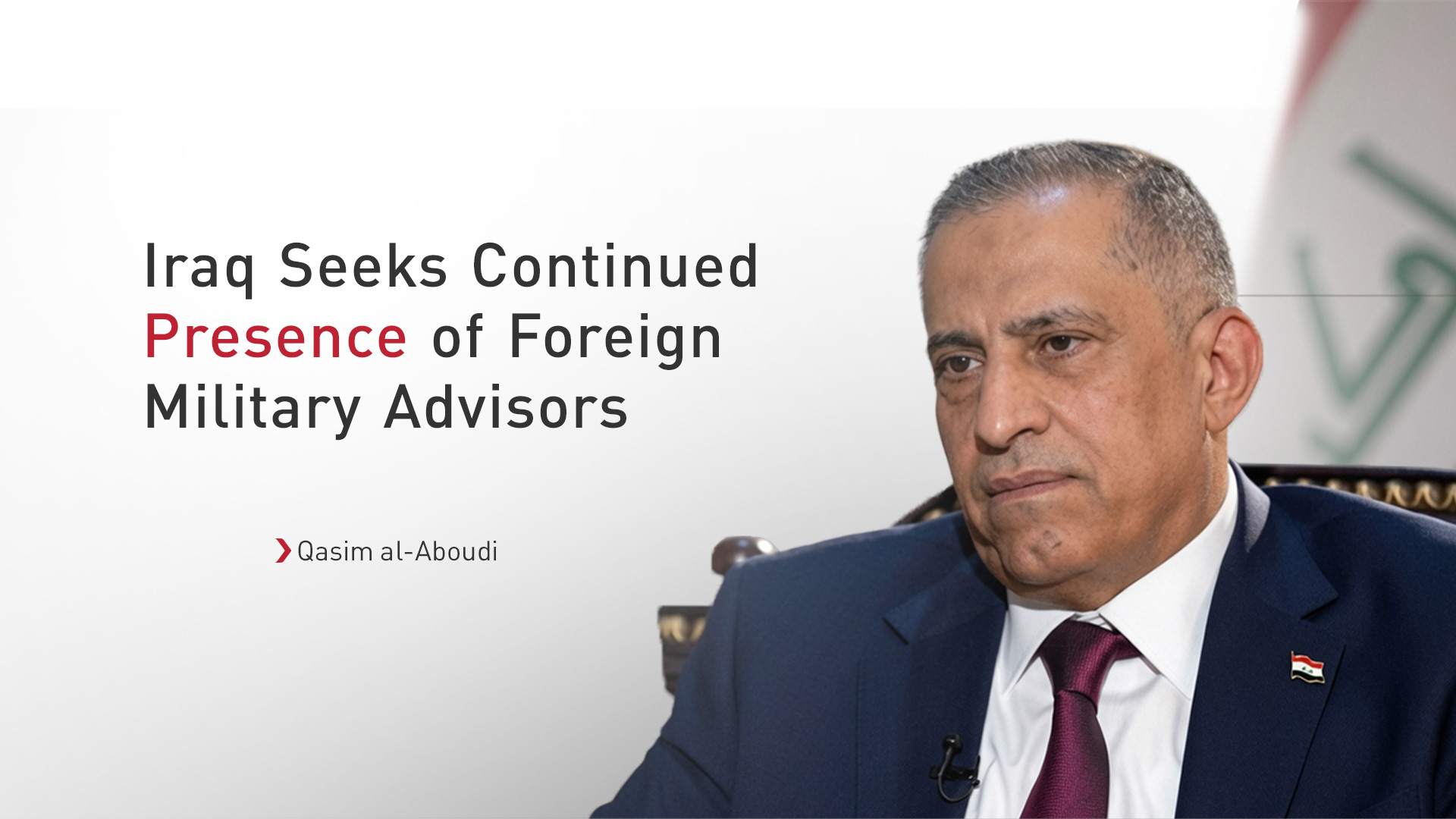
ERBIL (Kurdistan24) - Iraq has formally requested the continued presence of foreign military advisors as Baghdad seeks to strengthen its armed forces during the next phase of the country's security transition, National Security Advisor Qasim Al-Aboudi said, signaling that Iraqi leaders view international partnerships as an important component of long-term defense planning even as Coalition forces gradually reduce their footprint.
Speaking in a televised interview, Al-Aboudi said Iraq continues to require external expertise in military planning, training, and institutional development, arguing that advisory missions remain essential to building sustainable national defense capabilities rather than conducting combat operations.
His remarks offer one of Baghdad's clearest public indications that it intends to preserve security cooperation with international partners despite the ongoing transition involving the U.S.-led International Coalition.
According to Al-Aboudi, the withdrawal of Coalition forces is proceeding within the framework of earlier bilateral agreements, with the process already underway in Iraq's southern provinces. He noted, however, that Coalition personnel remain present in the Kurdistan Region as the transition continues.
While Iraq is steadily expanding the capabilities of its own security institutions, Al-Aboudi said the government has concluded that continued international advisory assistance remains necessary to support modernization efforts.
"We have requested the continued presence of foreign military advisors," he said, explaining that Iraq still requires assistance in training, strategic consultation, and developing the operational capacity of its security forces.
He added that Baghdad has already communicated its request to NATO, whose mission in Iraq focuses primarily on advising, training, and institutional capacity building rather than combat operations. According to Al-Aboudi, the alliance has expressed its readiness to continue supporting Iraq's security institutions through its advisory mission.
His comments underscore Baghdad's effort to balance greater military self-reliance with continued cooperation among international partners, reflecting a strategy that emphasizes strengthening Iraqi institutions while maintaining specialized external expertise.
Al-Aboudi also used the interview to outline broader security concerns facing Iraq, arguing that recent attacks on military facilities and strategic sites illustrate the country's complex security environment.
Referring to strikes that have targeted Baghdad International Airport and other security installations, he said the incidents should not be viewed solely through the lens of foreign military deployments.
According to the National Security Advisor, attacks have also occurred in provinces such as Basra, where no foreign forces are stationed, suggesting that the underlying security challenges extend beyond Coalition-related issues and require a broader national response.
He said such incidents demonstrate the continuing activity of destabilizing actors operating inside Iraq and reinforce the need for sustained investment in intelligence, counterterrorism, and institutional security.
Al-Aboudi also disclosed details of an ongoing investigation involving individuals suspected of links to what he described as a Ukrainian intelligence-related network operating inside Iraq.
According to the National Security Advisor, Iraqi security agencies arrested several suspects following attacks against state institutions. He said investigators had gathered evidence indicating possible foreign involvement and that some detainees had made statements during questioning concerning activities allegedly connected to Ukrainian interests.
However, Al-Aboudi stressed that the investigation remains active and cautioned against drawing premature conclusions.
He said the case involves multiple security and legal dimensions that require further examination before formal judicial determinations are made, emphasizing that authorities are continuing to collect evidence and complete the investigative process.
His comments highlighted the government's effort to distinguish between intelligence findings and legal proceedings while underscoring Iraq's commitment to pursuing cases involving threats to national security through established judicial mechanisms.
Taken together, Al-Aboudi's remarks portray an Iraqi security strategy centered on strengthening domestic institutions while preserving carefully defined international defense partnerships. As Coalition forces transition to a reduced role, Baghdad appears intent on maintaining advisory relationships that support military reform, professional development, and long-term institutional resilience, even as Iraqi authorities continue confronting evolving internal and external security challenges.
|
Summary Iraq has formally requested continued foreign military advisors, Qasim Al-Aboudi said, as Baghdad strengthens security cooperation with NATO during the Coalition transition. The National Security Advisor also discussed recent attacks, ongoing investigations, and Iraq's broader defense strategy. |