US Launches Fresh Airstrikes on Iran as Trump Weighs 'Massive Attack'
Axios confirms new wave of American strikes on Wednesday as CENTCOM prepares options for a 10 to 14 day intensive air campaign, Trump lashes out at aides over stalled war strategy, and Treasury sanctions two Iranian companies running Hormuz extortion schemes
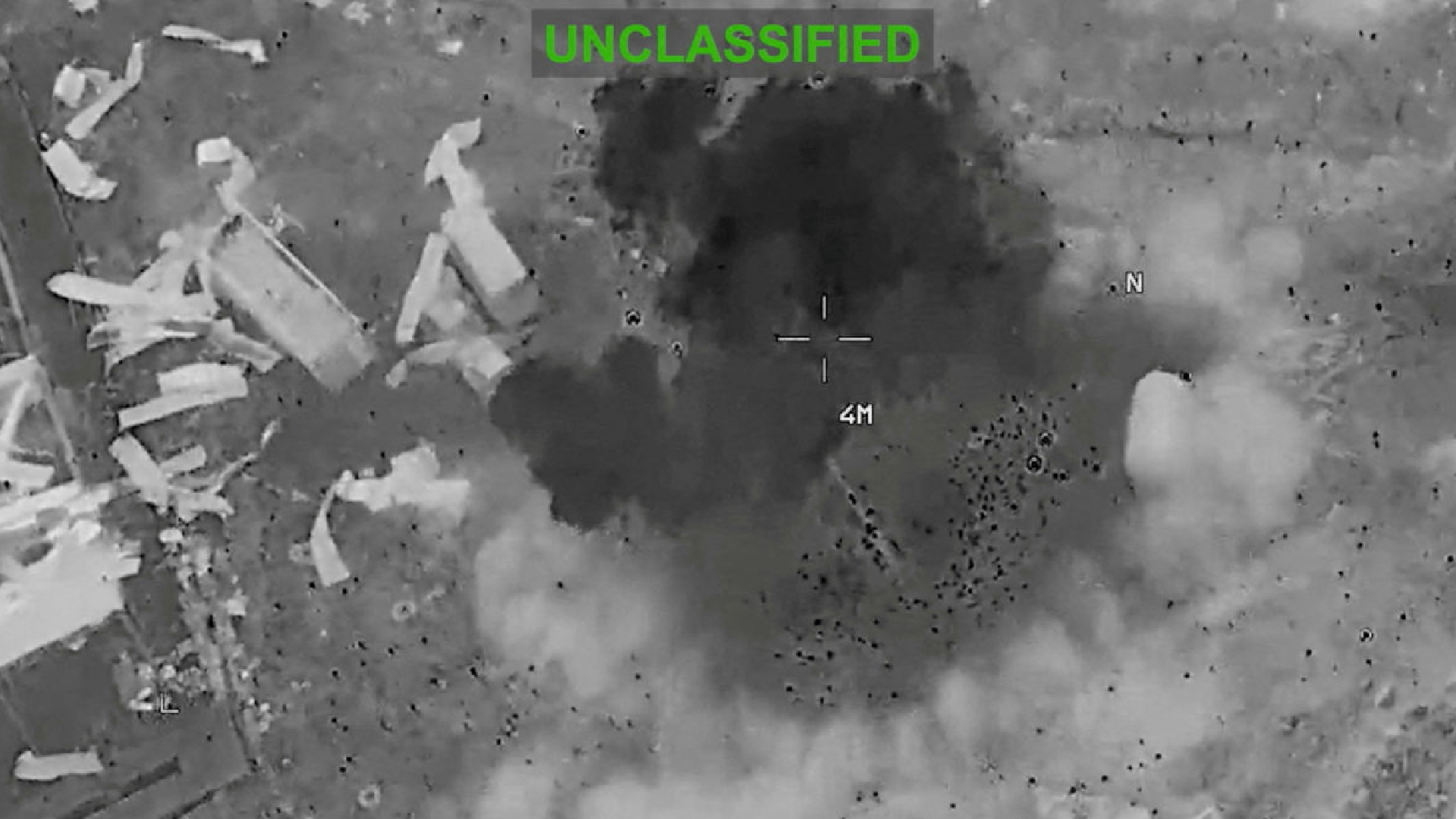
WASHINGTON, D.C. (Kurdistan 24) - The United States launched a fresh wave of airstrikes against Iran on Wednesday, a US official confirmed to Axios, extending an American military campaign that has now stretched across multiple consecutive nights as President Donald Trump weighs whether to authorize a dramatically larger offensive that officials describe as bigger than anything Washington has yet attempted in the conflict.
As the Times of Israel confirmed on Wednesday, citing Axios, the strikes came amid a rapidly deteriorating security environment across the region, with Iran having launched a surprise ballistic missile attack on US forces in Jordan on Tuesday night, all missiles successfully intercepted, and IRGC Navy Statement No. 53 claiming the halting of three commercial tankers in the Strait of Hormuz on the same day.
The Wall Street Journal reported Wednesday that CENTCOM is preparing an option for a 10 to 14 day intensive air campaign specifically aimed at degrading Tehran's missile capabilities, a plan that would represent a fundamental escalation in the scope and ambition of the American military campaign against Iran. NBC News confirmed Wednesday that Trump told Axios he is weighing whether to launch a "massive attack" on the Islamic Republic that would be "bigger than ever before," though the president subsequently left the door open for a diplomatic solution in comments to reporters. "There's two ways. I mean, it's, you can just keep doing exactly what we're doing and take them apart piece by piece," Trump said.
Despite those public statements, NBC News reported Wednesday that Trump lashed out at aides during a meeting last week over frustration with his military options against Iran and inability to close a deal to end the conflict. "Neither he nor his top aides are pleased with the status quo," a US official told NBC News, adding that private frustration inside the White House stands in contrast to the public posture of satisfaction with how the war is progressing.
Wednesday's strikes also came as the US Treasury Department's Office of Foreign Assets Control sanctioned two Iranian companies on Wednesday, accusing them of operating coercive maritime insurance schemes in the Strait of Hormuz, extorting commercial vessels, and funneling the proceeds to fund the IRGC, as Fox News confirmed on Wednesday. The dual sanctions action, targeting financial infrastructure simultaneously with military strikes, reflects Washington's continued effort to apply maximum pressure across economic and military domains simultaneously.
Iran rejected an Omani proposal to evenly divide control of the Strait of Hormuz on Wednesday, with Iranian Deputy Foreign Minister Kazem Gharibabadi announcing the rejection publicly, eliminating what had been one of the few remaining diplomatic proposals on the table for resolving the most contentious dimension of the US-Iran dispute, as Just Security reported on Wednesday.
The broader economic consequences of the conflict's latest escalation were visible in global energy markets on Wednesday. As NBC News confirmed, Brent crude oil briefly surged above $100 a barrel for the first time since May before pulling back, hovering around $97 a barrel on Friday morning as both sides continued trading strikes. The $100 threshold, described by energy analysts as a psychologically significant level capable of accelerating global inflation and tipping vulnerable economies into recession, had not been breached since the early weeks of the war.
Iran is also expected to receive a first shipment of Chinese-made shoulder-fired air defense missile launchers in the coming weeks, Reuters reported Wednesday, citing three sources. The overall contract covers between 300 and 400 man-portable air defense systems including Chinese-made QW-12 and FN-16 missiles, with the deal signed through a Hong Kong-based intermediary company. The acquisition, if completed as described, would significantly enhance Iran's ability to protect its forces and assets from the low-altitude drone and helicopter threats that have been central to CENTCOM's operational approach throughout the conflict.
The US Army simultaneously awarded Lockheed Martin a contract worth up to $58.62 billion for the production of Patriot interceptor missiles on Wednesday, the Department of Defense confirmed, a record contract driven by the dramatic depletion of American weapons stockpiles across multiple active conflict zones.
|
BRIEF: |