Jordan Intercepts Five Iranian Missiles as Regional Conflict Widens
Jordan says its air defenses intercepted five missiles launched from Iran, underscoring the growing regional impact of escalating U.S.-Iran military confrontation and mounting security risks across the Middle East.
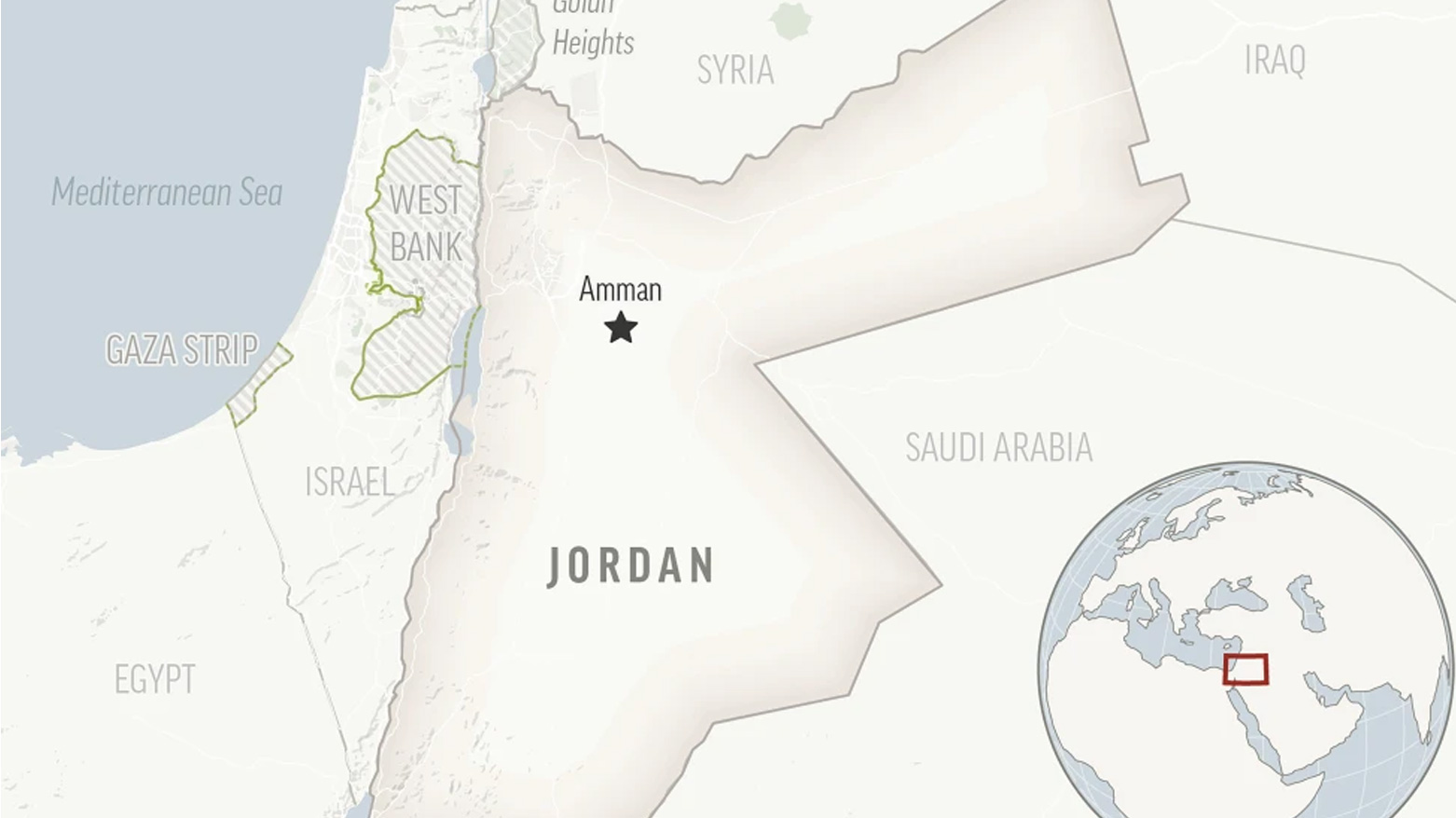
ERBIL (Kurdistan24) - Jordan said Thursday that its air defense systems intercepted five missiles launched from Iran toward the Kingdom, marking another instance in which the country's territory has been drawn into an intensifying regional confrontation despite Amman's efforts to remain outside the conflict.
In a statement, the Jordanian Armed Forces said air defense units engaged the incoming projectiles before they reached their intended targets, adding that no casualties or injuries were reported.
"At dawn today (Thursday), air defenses engaged five missiles originating from Iran that were targeting the territory of the Kingdom," a military spokesperson said.
The statement added that the missiles were successfully tracked, intercepted, and destroyed, while confirming that "no human casualties were recorded."
The interception came only hours after a renewed wave of U.S. military strikes inside Iran, illustrating how rapidly evolving hostilities are increasingly affecting neighboring states.
According to Agence France-Presse, citing Iranian media, a U.S. strike on Iran's Qeshm Island reportedly killed three members of a family, including a two-year-old child, while injuring two other children.
The reported casualties have not been independently verified, and Iranian authorities attributed the deaths to the U.S. operation.
Taken together, the developments underscore the increasingly interconnected nature of the conflict, with military exchanges extending well beyond the principal combatants and raising concerns about wider regional spillover.
For Jordan, Thursday's interception represents another reminder of its strategic position at the heart of a volatile region.
Although the Kingdom is not a direct participant in the fighting, its geographic location and close security cooperation with the United States have repeatedly placed it along the path of escalating military activity.
The Jordanian military offered few operational details beyond confirming the successful interception, but the announcement highlighted the country's continued emphasis on defending its sovereign airspace while seeking to prevent broader instability from reaching its territory.
The latest incident follows renewed American military operations against Iran.
According to U.S. Central Command, U.S. forces carried out what it described as an intense wave of strikes late Wednesday, characterizing the operation as a response to recent Iranian attacks on American forces in the region.
Reporting by The Associated Press indicates that Washington views the latest strikes as retaliation for an attempted Iranian missile attack targeting U.S. forces stationed in Jordan, with American officials saying the incoming missiles were intercepted.
President Donald Trump subsequently defended the military response while maintaining that diplomacy could still remain an option, even as military operations continued.
The Associated Press also reported that the broader confrontation has entered a more dangerous phase, with Saudi Arabia publicly joining operations against Iranian-backed militia targets in Iraq following attacks on Saudi-linked interests.
At the same time, officials in Riyadh have continued urging de-escalation and a return to negotiations between Washington and Tehran, reflecting the delicate balance many regional governments are attempting to maintain.
The expanding military activity has heightened concerns that the conflict could increasingly involve countries that have sought to avoid direct participation.
Drone attacks, missile launches, and retaliatory strikes have placed additional pressure on regional security networks while complicating efforts to prevent a broader war.
Diplomatic prospects have also continued to deteriorate.
According to the Associated Press, officials on both sides acknowledge that direct negotiations remain stalled, with deepening mistrust making a near-term return to meaningful talks increasingly unlikely.
Military planners are simultaneously confronting practical challenges created by sustained operations.
U.S. officials have acknowledged growing pressure on interceptor missile inventories used to protect American bases and regional partners, while analysts warn that prolonged hostilities could further strain defensive capabilities across the Middle East.
Against that backdrop, Jordan's interception of the five missiles serves as more than a tactical military success.
It illustrates how countries situated between the principal adversaries are increasingly required to respond to threats generated by a conflict that continues to broaden geographically.
While Amman emphasized that the latest attack caused no casualties, the incident reinforces the reality that neighboring states are facing mounting security pressures as the confrontation between Washington and Tehran evolves.
With diplomacy stalled and military exchanges continuing across multiple fronts, Jordan's latest defensive action reflects the increasingly complex environment confronting regional governments seeking to shield their territory from a conflict whose consequences are extending far beyond its original battlefield.
|
Summary Jordan said it intercepted five missiles launched from Iran, preventing casualties as renewed U.S. strikes inside Iran heightened regional tensions. The incident underscores how the expanding confrontation between Washington and Tehran is increasingly affecting neighboring states across the Middle East. |