Anniversary of Barzani Anfal Marks First Chapter of Kurdish Genocide
More than 8,000 Barzanis were forcibly disappeared and killed during the campaign. Years later, mass graves containing the remains of many victims were discovered in Iraq's Busayyah Desert.
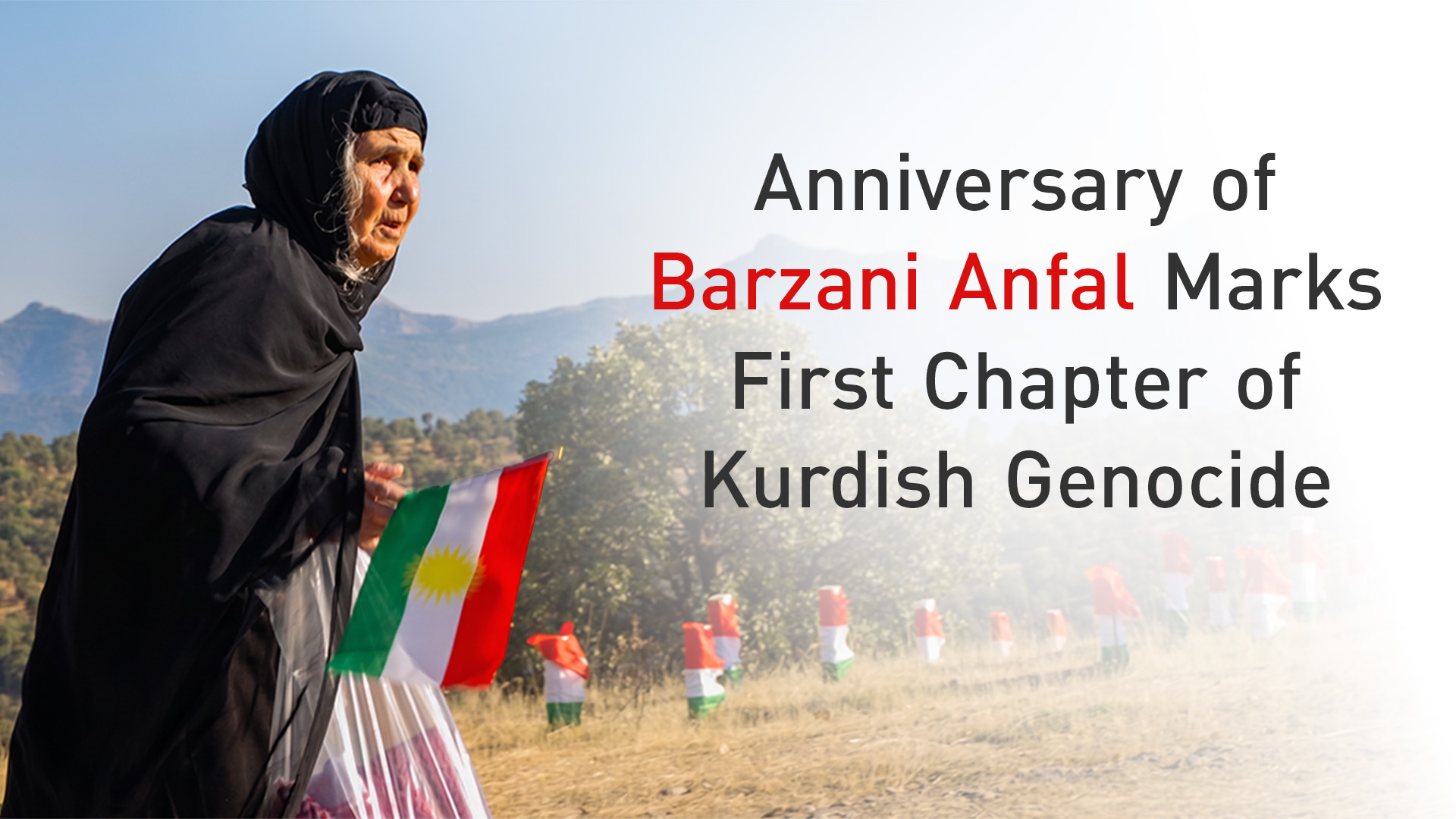
ERBIL (Kurdistan24) – July 31 marks the anniversary of the Barzani Anfal campaign, widely regarded as the first phase of the former Iraqi regime's genocide against the Kurdish people. Thousands of Barzanis were forcibly disappeared and executed in a systematic operation that preceded the broader Anfal campaign carried out later in the 1980s.
The campaign unfolded in several stages under the Ba'ath regime. During the 1970s, many Barzani families were forcibly relocated from their ancestral homeland to southern Iraq. In 1978, others were transferred to collective settlements in Soran, Harir, Bahrka, and Goratu, where they lived under strict military surveillance. In 1980, another group was relocated to the Al-Quds and Al-Qadisiyah collective settlements in Qushtapa, south of Erbil, as part of what historical records describe as preparations for their eventual extermination.
According to official documents from the former Iraqi regime, security forces launched a coordinated operation in late July and early August 1983, surrounding the collective towns where Barzanis lived and carrying out mass arrests in three phases.
The first wave began on July 31, 1983, targeting Barzanis living in the Al-Quds and Al-Qadisiyah collective settlements in Qushtapa. A second wave followed on August 10, arresting residents of the collective settlements in Harir, Soran, Bahrka, and villages in the Mergasur district. A final phase on October 1 involved house-to-house searches to detain those who had escaped the earlier arrests.
An official document issued by Iraq's General Security Directorate, dated March 29, 1989, confirms that Republican Guard forces surrounded the Qushtapa collective settlements on August 1, 1983, and arrested all Barzani males aged 15 and older, transporting them by truck to Baghdad.
The same document states that 403 Barzani civilians from the Harir collective settlement were executed by hanging after being accused of links to the Peshmerga. It also records that detainees from Diana, Bahrka, and the villages of Mergasur were transferred to Abu Ghraib Prison before being handed over to a special security force.
According to the records, authorities fabricated 16 charges against 667 detainees, who were later executed. The documents further instructed officials not to disclose any information about the executions to the victims' families.
More than 8,000 Barzanis were forcibly disappeared and killed during the campaign. Years later, mass graves containing the remains of many victims were discovered in Iraq's Busayyah Desert.
The remains have been returned to the Kurdistan Region in three phases: 512 sets of remains in 2005, 93 in 2014, and 100 in 2022.
The Barzani genocide case was referred to the Iraqi High Tribunal in 2010. In 2011, the court ruled that the crimes committed against the Barzanis constituted genocide.
Despite that ruling, the genocide has yet to be formally recognized by the Iraqi Parliament or the federal government, leaving many victims' families without compensation and other legal rights provided under Iraqi law.