Ceuta Returns to Calm After Mass Migrant Influx, but Europe's Border Debate Intensifies
Spain says nearly all migrants who entered Ceuta have departed, yet the episode is fueling renewed European discussions on border security, migration coordination, and resilience along the EU's external frontier.
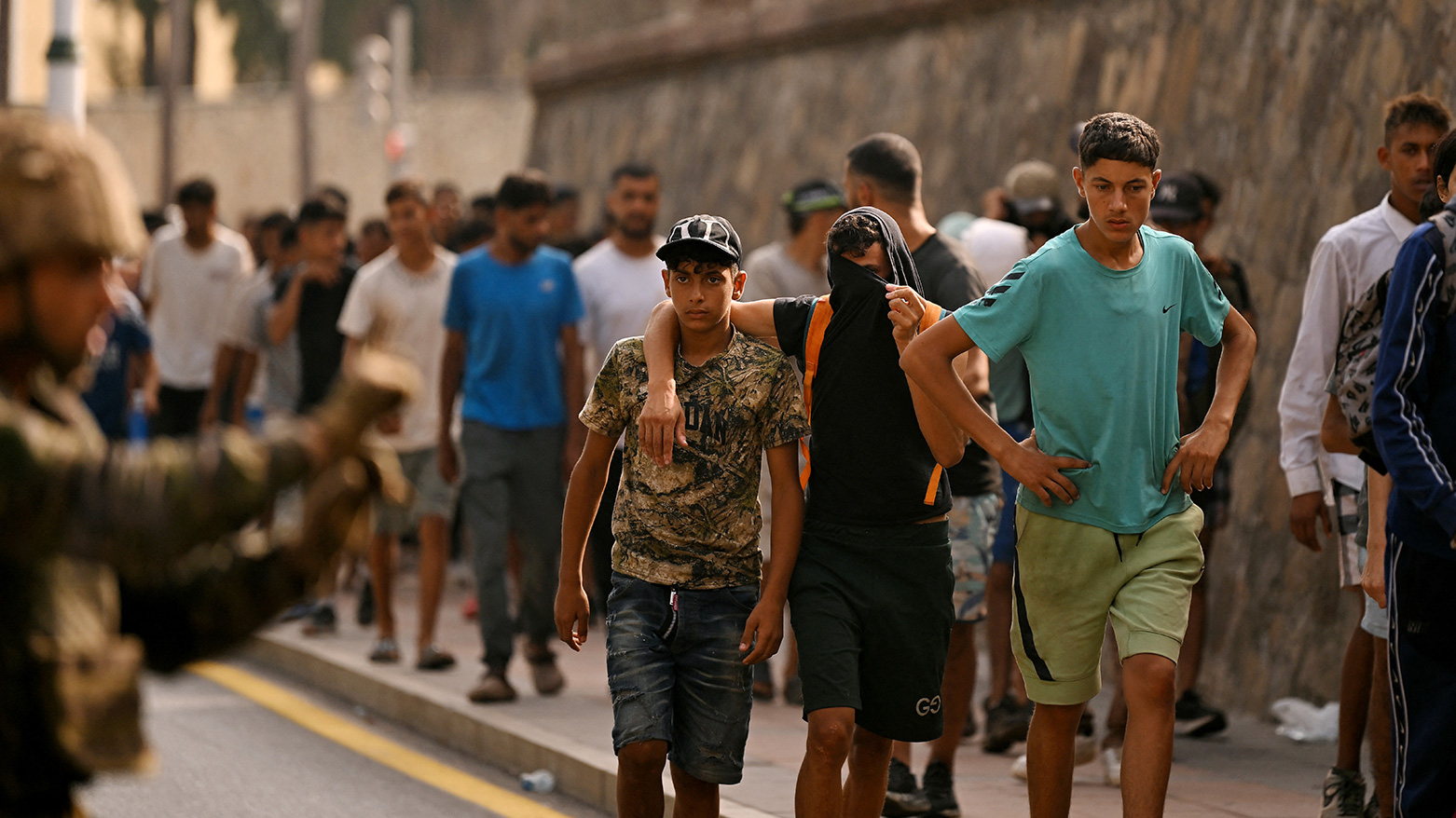
ERBIL (Kurdistan24) - Spain says normality is returning to its North African enclave of Ceuta after an extraordinary migration surge that saw an estimated 60,000 people enter from neighboring Morocco within days, only for nearly all of them to leave shortly afterward. While the immediate crisis has largely subsided, the episode has renewed scrutiny of Europe's external borders and the bloc's readiness to respond to sudden mass migration events.
Spanish Interior Minister Fernando Grande-Marlaska said Saturday that "the situation has been almost entirely reversed," according to Agence France-Presse (AFP), as authorities continued overseeing the return of the remaining migrants to Morocco. Security forces remained deployed along the frontier even as the number of arrivals dwindled and border operations shifted toward restoring routine control.
The speed with which the situation unfolded, and then eased, has not diminished its broader significance. Across Europe, the events in Ceuta reignited debate over border security, the functioning of the Schengen free-movement area, responsibility-sharing among European Union member states, and the need for coordinated responses when migration pressures emerge suddenly at the bloc's frontiers.
Although Spain has regained operational control, European governments continue to examine how a movement of such scale occurred and what measures may be needed to prevent similar episodes in the future.
AFP reported that Spanish soldiers and police remained stationed along the coastal border on Saturday as migrants continued crossing back into Morocco. Those lingering near the shoreline were directed toward the frontier, while many of those who had entered Ceuta voluntarily returned after spending the night on beaches, in public spaces, or near temporary reception facilities.
Many had reached the enclave by swimming around a border barrier extending into the Mediterranean Sea. The crossings carried a heavy human cost. Spanish authorities said at least 67 people died during the attempt, underscoring the dangers faced by those seeking to reach European territory by sea.
For many migrants, the journey reflected more than a search for physical safety. It was also driven by economic hardship, family ties and hopes for greater opportunity.
"We hope to go to Europe to work and earn a living," 19-year-old Senegalese migrant Souleye Bodian told AFP while waiting outside a migrant center in Ceuta. Another migrant, Soufian, a security guard from Morocco, said he had hoped to reach Madrid to visit his ill mother, explaining that years of low wages had left him with few alternatives.
Spanish authorities simultaneously moved to reinforce security around the enclave. According to AFP, Madrid deployed additional personnel and equipment to Ceuta, including the installation of a new 500-meter pneumatic barrier near the main border crossing. Border patrols also maintained a visible presence along beaches and coastal approaches as officials supervised the orderly return of migrants.
Exactly what prompted the sudden opening of the migration route remains unclear. Moroccan authorities had not issued an official public explanation as of Saturday. However, a Moroccan source familiar with border operations told AFP that those returned by Spain were being transported either directly to their hometowns by bus or through Tangier's railway station. The same source said the Fnideq border crossing and nearby hillsides had been secured after unrest the previous day.
The developments quickly resonated beyond Spain.
According to AFP, twenty-two European Union member states jointly called for an urgent video meeting of EU interior ministers to coordinate a common response and discuss measures aimed at preventing further large-scale unauthorized crossings.
Italian Prime Minister Giorgia Meloni argued that protecting the EU's external frontier is "a shared responsibility of Europe," while Spain urged its European partners to respond collectively rather than through unilateral measures. European Commission President Ursula von der Leyen also called for a process to draw lessons from the incident and strengthen the bloc's resilience against future crises.
Ceuta occupies a unique position in European migration policy. Together with the nearby Spanish enclave of Melilla, it forms the European Union's only land border with Africa, making it a recurring focal point whenever migration pressures intensify. Previous surges, including one in 2021 that brought more than 10,000 migrants into Ceuta within two days, have likewise tested relations between Spain and Morocco and prompted wider European debate.
With the emergency now largely contained, attention is shifting from managing arrivals to evaluating the political and operational lessons of the episode. European leaders continue to view Ceuta as a reminder that migration pressures at the EU's external borders can emerge rapidly, requiring coordinated responses that balance border security, humanitarian responsibilities and cooperation with neighboring countries.