Why Iraq's Christians See Kurdistan Region as Their Best Hope for Return
In a Kurdistan24 interview, Chaldean diaspora leader Sam Salman Yono discusses the Kurdistan Region's role in protecting Christians and other components, the need for transparent investment, stronger representation, and practical reforms to encourage families to return and rebuild communities.
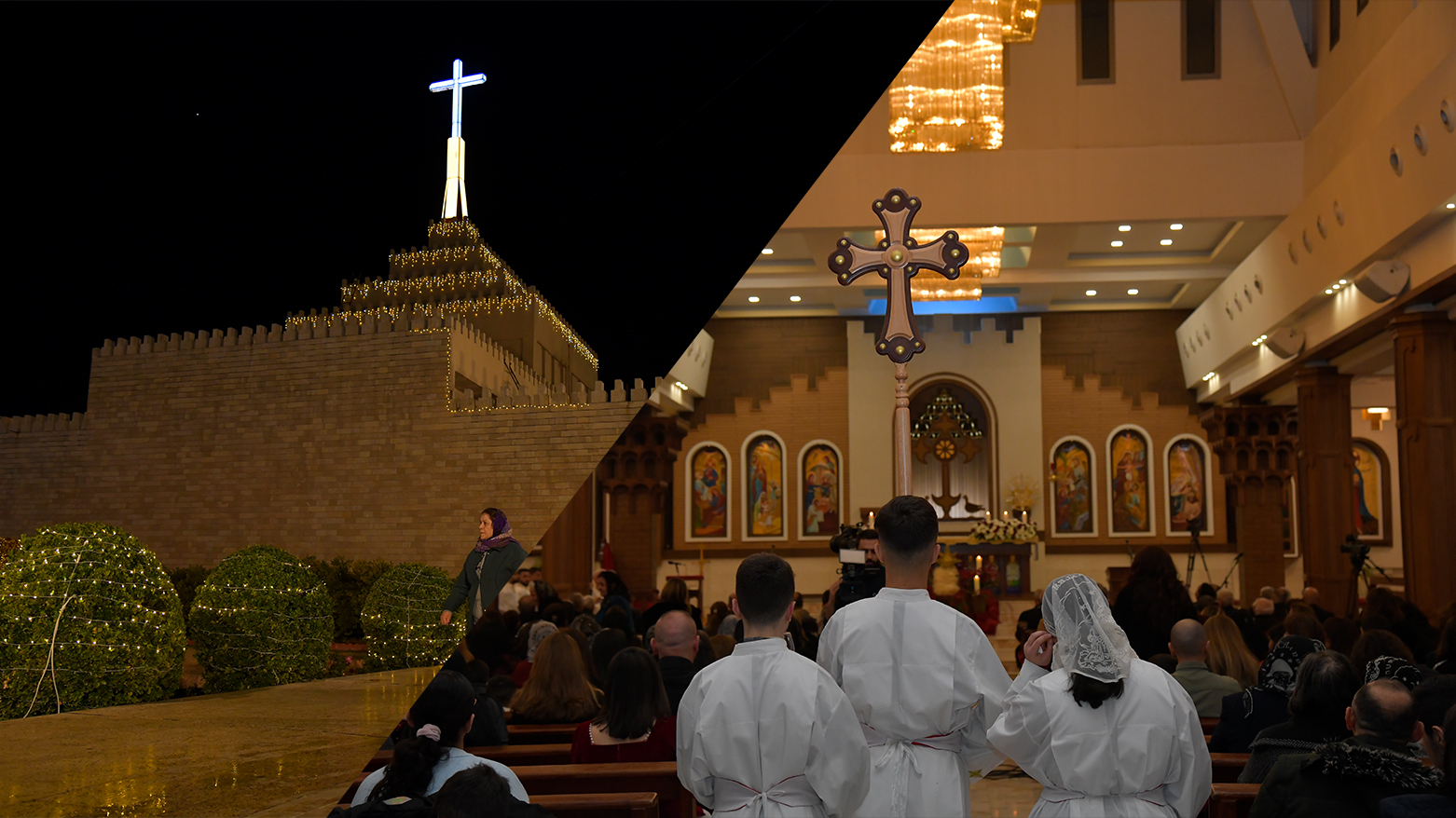
ERBIL (Kurdistan24) - For Sam Salman Yono, the story of Iraq's Christian community is one of resilience shaped by displacement, but also by enduring hope. Speaking to Kurdistan24, the veteran Chaldean community leader and diaspora advocate said the Kurdistan Region has distinguished itself as a place where Christians and other components have found security and recognition at moments when many elsewhere in Iraq faced uncertainty.
Drawing on nearly six decades of experience in the United States and years of engagement with policymakers in both Washington and the Kurdistan Region, Yono argued that preserving communities is no longer simply a question of protection.
The next challenge, he said, is creating the practical conditions that allow families to return, invest, and rebuild lives in their ancestral towns.
"Kurdistan has done a much better job than the government in Baghdad in protecting the identity and needs of Christians and other components," he told Kurdistan24. "But there is still room to do more."
A Life Between Iraq and America
Born in Tel Kaif in Nineveh Province, Yono completed his early education in Baghdad before moving to the United States at the age of 17. He later earned degrees in engineering and business management and built a career spanning business, education, and civic leadership.
Over the years, he has served in a range of public and professional roles, including leadership positions in Chaldean organizations in the United States.
Today, he chairs the Chaldean Federation International and remains an advocate for Christians and other Middle Eastern components, frequently traveling to the Kurdistan Region and maintaining longstanding relationships with political and community leaders.
Those experiences, he said, have given him a unique perspective on both the opportunities and the challenges facing communities seeking to rebuild in Iraq.

Security Is Only the First Step
Yono credited the Kurdistan Regional Government (KRG) with providing stability that enabled many displaced Christians and other components to find refuge, particularly during periods of violence that forced families to flee places such as the Nineveh Plain.
At the same time, he argued that long-term success requires broader participation in public life.
He called for stronger representation of Christians and other components within ministries, municipalities, local administrations, and public institutions, saying communities should have a greater voice in decisions affecting their future.
According to Yono, expanding participation would not simply improve representation but also strengthen governance by drawing on the professional experience of communities that have contributed to Iraq for generations.
"We can offer much more in government, municipalities and public administration," he said.
Turning Return Into Reality
Throughout the interview, Yono repeatedly stressed that encouraging people to return requires more than public appeals.
Many families now living in the United States, Canada, Australia, Sweden, and elsewhere, he said, possess extensive expertise in business, engineering, hospitality, finance, medicine, and construction that could help transform communities across Erbil, Duhok, Ankawa, Tel Kaif, Alqosh, Bartella, Qaraqosh, and the wider Nineveh Plain.
But attracting that expertise back to Iraq depends on confidence in the investment environment.
"If opportunities are given fairly and squarely, I guarantee you many people from the diaspora would return," he said.
He argued that transparent bidding procedures, equal access to contracts, clear land policies, financing mechanisms, and practical government support would encourage expatriate Iraqis to invest rather than simply visit.
Yono also suggested that committees bringing together diaspora professionals and local officials could identify development priorities and oversee implementation instead of producing recommendations that never materialize.
"What we need is implementation, not just promises," he said.
Communities Still Waiting for Restitution
"We can see Ankawa is thriving, there are business opportunities, but keep in mind some of the other villages, especially on the Nineveh side, because of ISIS and the turbulence coming out of Baghdad, many of our people have left those villages," Yono said.
Reflecting on his birthplace of Tel Kaif, Yono described the profound demographic changes that have reshaped many historic Christian towns.
Violence, instability, and the rise of ISIS forced many residents to abandon communities that had existed for centuries. In contrast, many who left have yet to see restitution or conditions that would encourage permanent return.
He argued that rebuilding requires addressing both physical destruction and the legal and economic uncertainty that discourages investment.
According to Yono, many families now enjoy security, employment opportunities, and religious freedom abroad, making any decision to return dependent on credible guarantees rather than emotional appeals alone.
Praise for the Ninth Cabinet — and a Call to Go Further
Yono spoke positively about Prime Minister Masrour Barzani and the KRG's Ninth Cabinet, praising efforts to improve infrastructure, strengthen security, diversify the economy, and modernize public services.
He said those reforms have improved confidence among diaspora communities, particularly by making travel to the Kurdistan Region easier and reinforcing a sense of stability.
Still, he believes the next phase of reform should place greater emphasis on involving local components in decision-making.
His recommendations include appointing more Christians and other components to municipal leadership positions, district administrations, and government directorates while establishing formal mechanisms that allow local communities and diaspora experts to participate in planning development initiatives.
"I applaud Prime Minister Masrour Barzani and his cabinet," Yono said. "But if they listen to us, they will do even better."

Investment Through Trust
Yono also linked the Kurdistan Region's relationship with Washington to the confidence many expatriate Iraqis have in returning.
He said security improvements have removed many of the concerns that once discouraged visits, but long-term investment depends on predictable institutions capable of protecting property, businesses, and private capital.
He pointed to tourism, hospitality, agriculture, recreation, and real estate as sectors where diaspora expertise could help drive growth.
Drawing on the experience of Chaldean entrepreneurs in Michigan, where many own hotels and other businesses, he argued that similar investment could flourish across communities stretching from Erbil and Duhok to Alqosh, Tel Kaif, and surrounding towns if supported by transparent policies and financing programs.
He also encouraged authorities to consider development beyond major urban centers, saying smaller towns possess significant potential for tourism and hospitality if infrastructure and incentives are aligned.
A Future Built on Partnership
For Yono, the future of Iraq's Christian and other components ultimately depends on transforming goodwill into practical cooperation.
He believes the Kurdistan Region has already established an important foundation by providing security and stability, but argues that genuine recovery requires institutions capable of turning diaspora experience into tangible development.
His message was ultimately one of partnership rather than criticism: involve local communities, expand opportunities, ensure transparency, and give returning families confidence that they can build lasting lives once again.
If those conditions are met, he said, today's scattered diaspora could become tomorrow's investors, employers, and community builders, helping restore historic towns across the Nineveh Plain and strengthen the Kurdistan Region's broader economic and social future.