Hezbollah Chief Signals Openness to Talks with Syria While Rejecting Lebanon-Israel Negotiations
Qassem says Hezbollah is ready for a meeting with Syria's new leadership but warns direct negotiations with Israel would bring Lebanon "shame" and "humiliation"
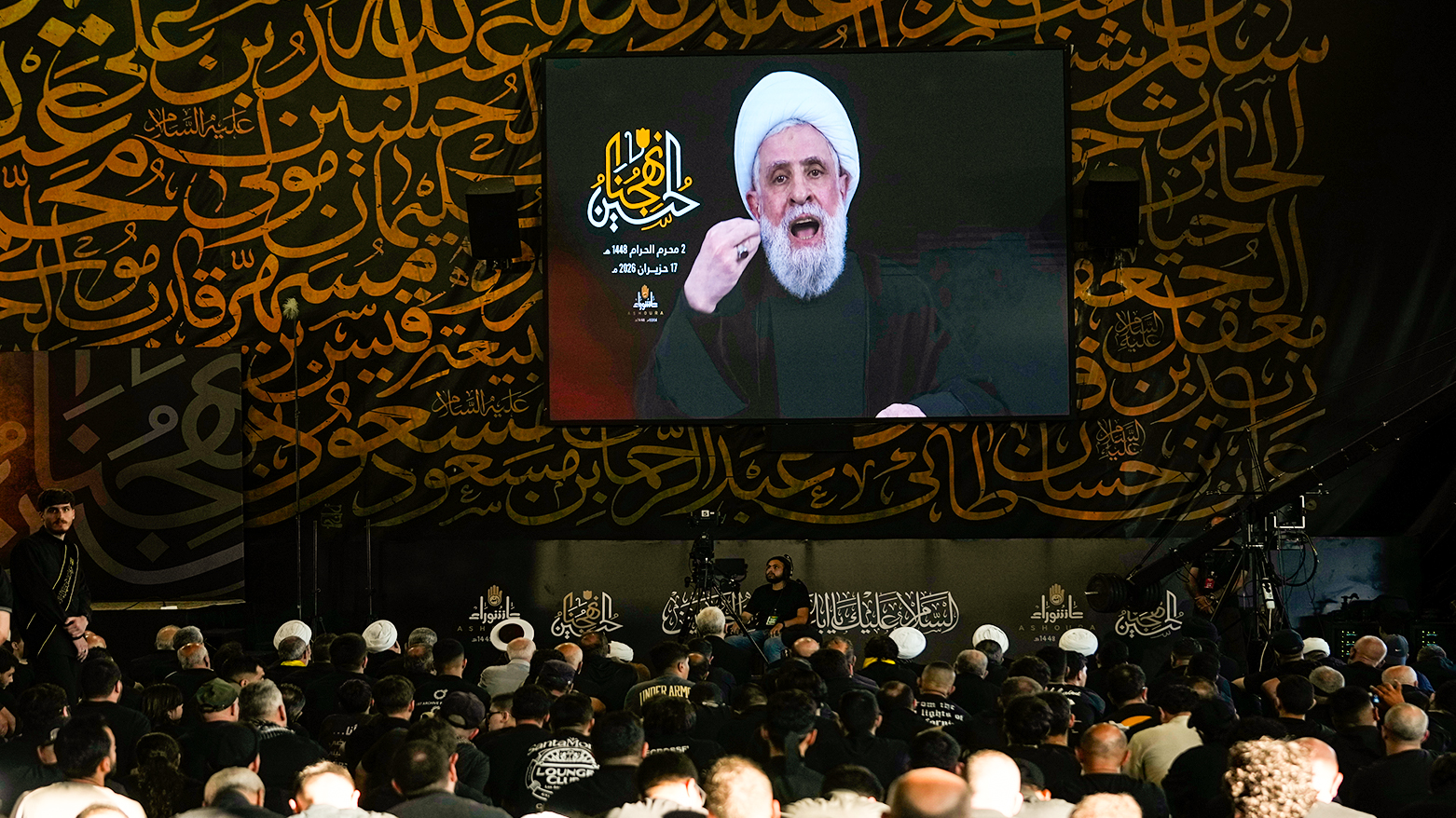
ERBIL (Kurdistan24) — Hezbollah Secretary-General Naim Qassem said Tuesday that the Iran-backed Lebanese group is open to holding direct talks with Syria's new leadership, marking the first time he has publicly expressed willingness to engage with the authorities that replaced former Syrian President Bashar al-Assad.
In a televised address, Qassem said there was "no impediment to a public meeting between Hezbollah and the Syrian leadership at a time considered appropriate by both sides," stressing "the importance and necessity of positive, fraternal, cooperative relations."
The remarks signal a potential shift in Hezbollah's approach toward Damascus following the dramatic political changes in Syria.
Hezbollah had been one of Assad's strongest regional allies, deploying thousands of fighters in support of his government during Syria's civil war.
Following the collapse of Assad's rule in December 2024, the new Syrian authorities inherited a strained relationship with the Lebanese group, which had fought alongside the former government for years.
Syria also served as Hezbollah's principal logistical corridor for the transfer of weapons and military supplies from Iran into Lebanon before the change of power in Damascus.
In the same speech, Qassem sharply criticized the prospect of direct negotiations between Lebanon and Israel, saying such talks would bring "nothing but shame, humiliation, and successive compromises" for Lebanon ahead of a new round of discussions expected to take place in Rome.
He also launched a rare public attack on Lebanese President Joseph Aoun, accusing him of abandoning his role as a neutral national figure.
"President Joseph Aoun has not acted as an arbiter, nor as a unifying figure, but has become biased and divisive, which is incompatible with his role and with Lebanon's strength," Qassem said.
His comments underscore growing political tensions in Lebanon over efforts to address longstanding disputes with Israel, including border and security issues, as international mediators seek to reduce the risk of renewed conflict along the two countries' frontier.
Qassem's remarks came as President Aoun has increasingly emphasized strengthening state institutions and advancing accountability, while navigating mounting political and economic challenges.
On Monday, the Lebanese president urged the judiciary to issue a long-delayed indictment in the investigation into the 2020 Beirut port explosion, saying justice for the victims could no longer be postponed ahead of the sixth anniversary of the disaster.
The Aug. 4, 2020, explosion, caused by a fire that ignited thousands of tons of improperly stored ammonium nitrate at the Port of Beirut, killed more than 220 people, injured over 6,500 others, and devastated large parts of the Lebanese capital.
Despite years of investigations, no one has been held accountable, fueling widespread public anger.
Aoun said the judiciary must demonstrate its independence by uncovering "the whole truth" and holding accountable all those responsible, regardless of their position, describing the long-awaited indictment as "a right owed by the living to the martyrs and their families."
Hezbollah emerged as one of the most influential armed and political movements in Lebanon with extensive military, financial, and ideological backing from Iran.
During Syria's civil war, the group played a pivotal role in supporting Bashar al-Assad's government, helping it regain territory from opposition forces.
The fall of Assad's government in December 2024 disrupted Hezbollah's regional supply network through Syria and reshaped the strategic landscape for Iran's allies.
Meanwhile, Lebanon remains under international pressure to implement reforms and assert full state authority, including over armed groups, while diplomatic efforts continue to prevent a broader conflict with Israel following years of cross-border hostilities.