Construction Continues on Key Erbil Road Project to Ease Traffic Flow
A new 60-meter road connecting two of Erbil's main arteries is progressing as part of the KRG's broader infrastructure modernization plan aimed at improving mobility and strengthening the capital's transport network.
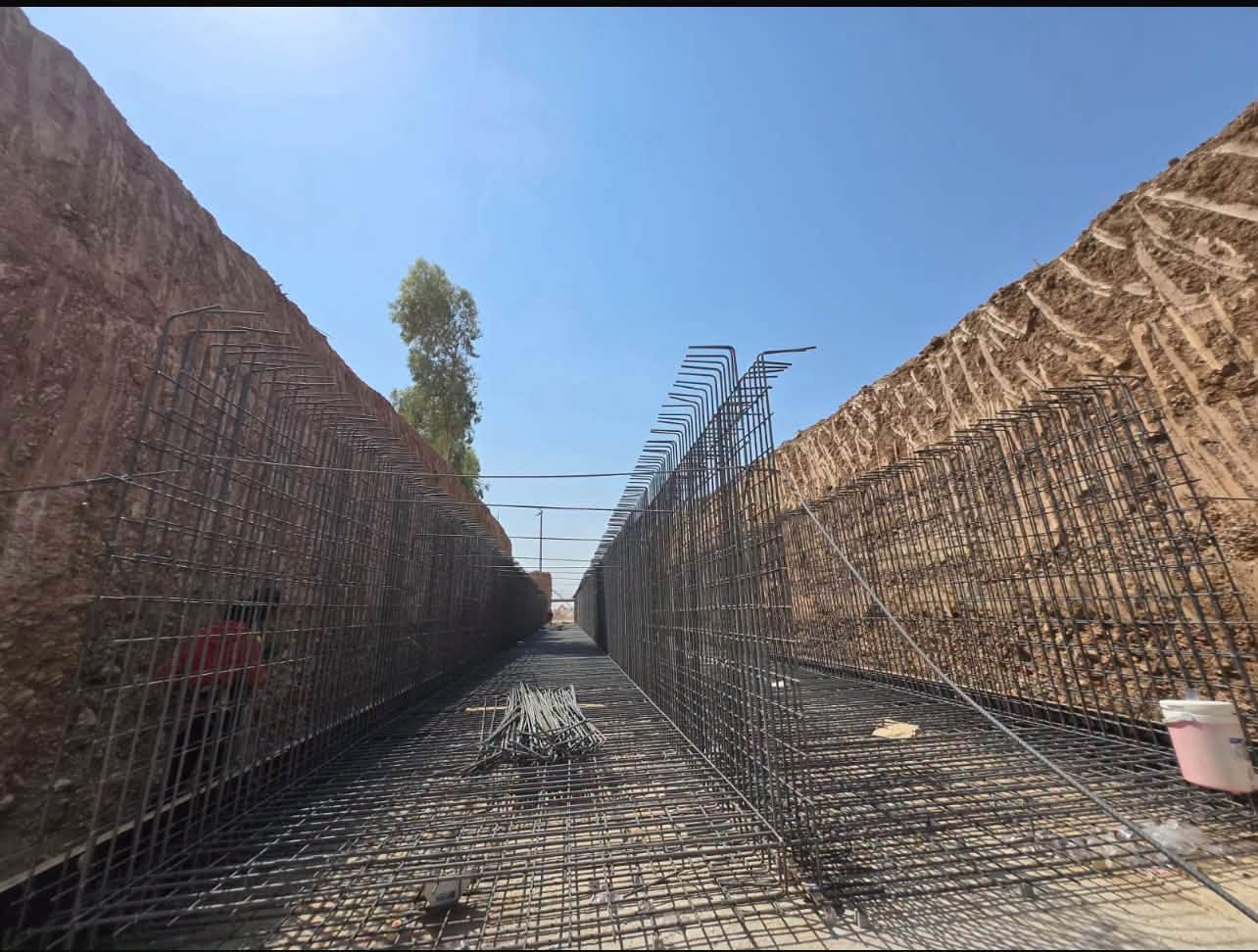
ERBIL (Kurdistan24) - Construction is continuing on a new 60-meter road that will connect Erbil's strategic 120-meter and 150-meter roads, according to a statement issued Wednesday by the Erbil Governorate, describing the project as part of the Kurdistan Regional Government's broader effort to expand public infrastructure and improve the capital's transportation network.
The governorate said the project forms part of the government's ongoing plan to develop public service infrastructure and modernize Erbil's road system, with the new corridor designed to strengthen connectivity between two of the city's principal thoroughfares.
According to the statement, the project consists of several components, the most significant of which is the construction of a 1,580-meter reinforced concrete box drainage channel.
The drainage system is intended to prevent the accumulation of rainwater and improve stormwater management across the surrounding area, enhancing the resilience of the road network while supporting future urban development.
The governorate added that the project is expected to significantly reduce traffic congestion and facilitate smoother movement for residents traveling between Erbil's major roads, describing it as another step toward delivering higher-quality public services for the city's growing population.
The latest road project comes as the Kurdistan Regional Government continues implementing its long-term infrastructure development strategy.
According to the KRG Department of Media and Information, the Ninth Cabinet has completed 810 road and bridge projects between July 2019 and May 2026, constructing or rehabilitating 3,055 kilometers of roads through investments totaling IQD 1.057 trillion.
The government said the infrastructure program—widely described as a "road revolution"—is financed through a three-tier model combining investment budgets, the Ministry of Construction and Housing's regular budget, and a dedicated mechanism that reinvests 30% of revenues generated by commercial truck weigh stations into road maintenance and development.
Official figures show the investment program includes 104 strategic road projects worth IQD 986 billion, delivering 1,598 kilometers of roads, 2.45 kilometers of tunnels, and 928 linear meters of bridges.
A further 451 road rehabilitation and maintenance projects have been completed through the ministry's regular budget, covering 594 kilometers of roads, while another 255 projects funded through weigh station revenues have added 863 kilometers of roads and 500 linear meters of bridges.
Beyond completed works, the KRG said construction is underway on 227 strategic infrastructure projects spanning 2,239 kilometers of future roads, tunnels, and transport interchanges, with a projected investment of IQD 4.179 trillion.
Among the flagship projects are the Korre–Shaqlawa–Qandil Highway, the Koya–Erbil Highway, the Basti Shargha Road and Bridge Project, the Dukan–Chwarqurna Highway, and the Kalar–Darbandikhan Road Corridor.
The Department of Media and Information noted that several of these projects have experienced delays due to fiscal constraints and the suspension of the Kurdistan Region's share of Iraq's federal budget. Despite those challenges, it said the KRG has continued construction by allocating domestic revenues to maintain progress.
The government said its infrastructure strategy aims to strengthen economic connectivity, improve road safety, facilitate commercial transport, and better connect rural communities with urban centers, while continuing to modernize the Kurdistan Region's transportation network.