Duhok Commemorates 12 Years Since Ezidi Genocide as Calls for Justice Intensify
Commemorations in Duhok honor victims of ISIS massacres while survivors, religious leaders, the UN and Kurdish officials renew demands for justice, security, reconstruction and a dignified return to Sinjar.
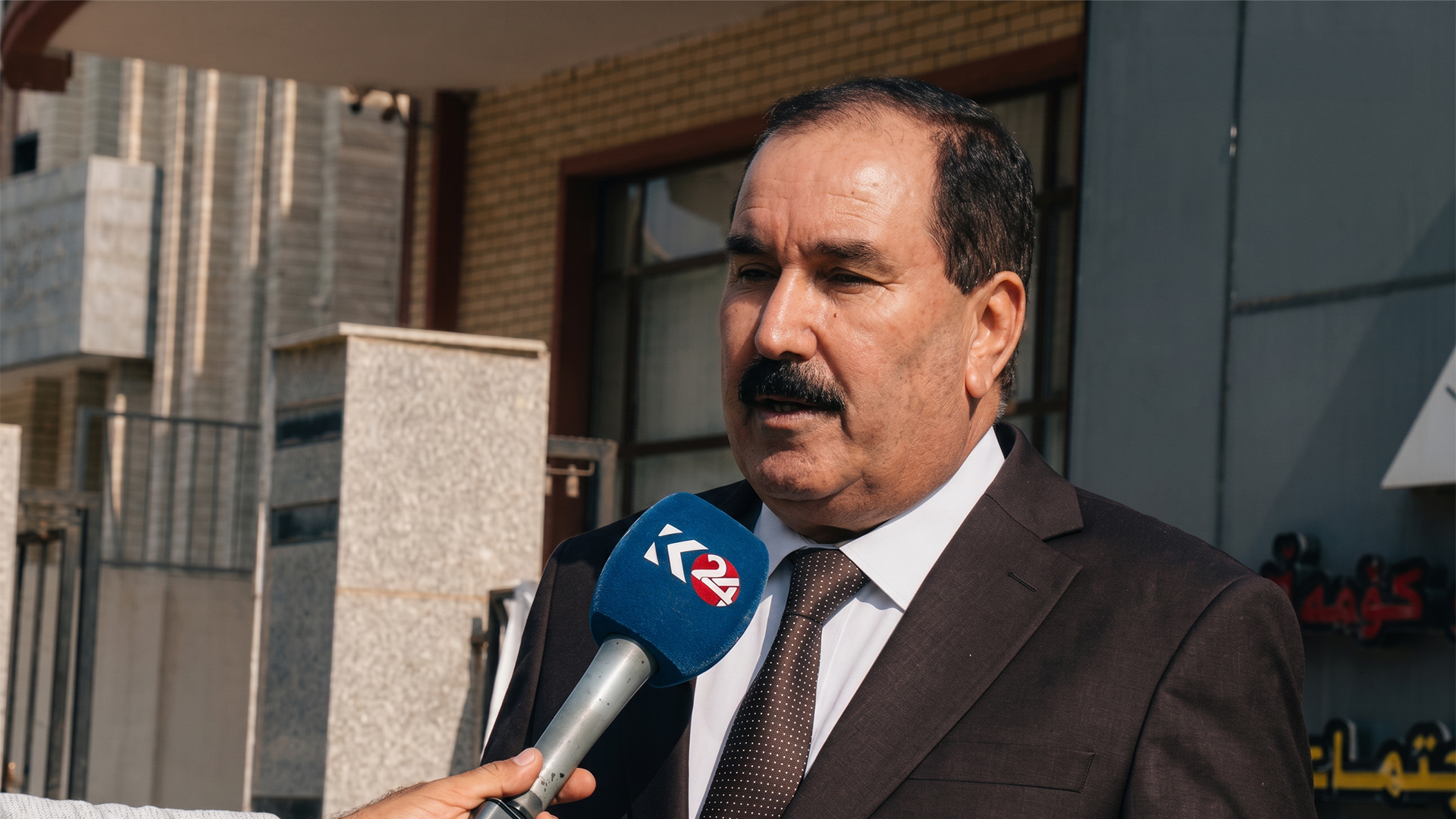
ERBIL (Kurdistan24) - The city of Duhok is marking the 12th anniversary of the Ezidi genocide with ceremonies honoring victims of ISIS massacres and renewed demands for justice, reconstruction and the safe return of displaced families to Sinjar.
The commemoration, organized by the Lalesh Cultural and Social Center, is focused on the massacres of Kocho, Giruzer and Siba Sheikh Khidir and combines remembrance with appeals for legal accountability and action to address the conditions that have kept thousands of Ezidis away from their homes.
The anniversary comes 12 years after ISIS overran Sinjar on Aug. 3, 2014, killing thousands, abducting women and children, destroying religious and cultural sites and forcing hundreds of thousands from their homes.
For survivors and their families, however, the anniversary remains about more than remembering what happened. It is also a measure of how much remains unresolved.
Duhok Turns Remembrance Into a Call for Justice
Saeed Jardo, head of the Lalesh Cultural and Social Center, told Kurdistan24 that this year's events commemorate two separate tragedies: the Giruzer massacre, described as the 73rd Firman, and the massacre of Kocho during the ISIS assault on Sinjar.
"This anniversary is held every year," Jardo said, explaining that the events are intended to preserve the memory of victims while keeping pressure on authorities to pursue accountability.
He called for a permanent legal response to the genocide and urged the Iraqi federal government to cooperate with international judicial bodies so perpetrators can be prosecuted and survivors compensated.
The program in Duhok includes political messages, literary performances, poetry and artistic presentations portraying the suffering of the Ezidi community.
The symbolism is significant for a community whose genocide was recognized internationally but whose survivors continue to face unresolved questions over justice, missing relatives, property and return.
A United Nations Call for Justice and Safe Return
The United Nations has also used the anniversary to press for accountability and a sustainable recovery in Sinjar.
In comments to Kurdistan24, Farhan Haq, Deputy Spokesperson for the UN Secretary-General, paid tribute to the resilience of the Ezidi community and stressed the need for continued support for survivors and families of those still missing.
The UN emphasized that lasting peace requires not only accountability for ISIS crimes but also the safe, voluntary and dignified return of displaced people, alongside recovery and reconciliation in Sinjar.
That emphasis reflects the central problem facing the community 12 years after the genocide: military defeat of ISIS did not resolve the humanitarian and political consequences of the group's assault.
Many families remain displaced, while large numbers continue to search for relatives who disappeared during the 2014 campaign.
One Survivor's Story
The continuing human cost is perhaps most clearly captured in the testimony of 70-year-old Edo, an Ezidi survivor interviewed by Kurdistan24's Mahir Shingali.
Edo recalled being captured near Til Binat on Aug. 3, 2014, before being moved through Kocho and other locations and eventually taken toward the forests of Mosul.
He remembered the separation of women and men with particular pain.
"I wept the most when they began taking women away," Edo said, recalling how women and girls were separated from their families and subjected to enslavement.
"Food was scarce, and there were constant beatings," he said. "We cried until the very tears in our eyes ran dry."
Edo survived captivity, but the consequences remain visible. He lives with severe physical disabilities, including the loss of a hand and a foot, while describing the psychological trauma of captivity as something that never truly ended.
His testimony reflects the broader experience of survivors whose lives were permanently altered by the genocide.
According to figures cited in Kurdistan24 reporting, more than 5,000 Ezidis were killed and thousands of women and children were abducted. About 2,820 people remain missing, while nearly 97 mass graves have been identified.
'ISIS Could Not Erase 4,000 Years'
At the official commemoration, Mir Hazim Tahsin Beg, the spiritual leader of the Ezidi community, sought to place the genocide within a much longer history.
He said ISIS had attempted to destroy thousands of years of Ezidi civilization but had failed.
"In the 21st century, ISIS sought to erase 4,000 years of Ezidi history in a single day," Mir Hazim said. "But by the will of God and the resilience of our people, those plans failed."
His message combined remembrance with a list of practical demands, including full implementation of the Ezidi Survivors Law, activation of the Sinjar Reconstruction Fund, legitimate local administration, continued efforts to rescue those still missing, and implementation of the 2020 Sinjar Agreement.
For the Mir, the anniversary should therefore serve as a deadline for action rather than simply another date on the calendar.
Read More: Mir Hazim Tahsin Beg: ISIS Could Not Erase Ezidis' 4,000-Year Heritage
Baghdad and Erbil Face Pressure Over Sinjar
Kurdistan Region officials have similarly tied commemoration to the unresolved political and security situation in Sinjar.
President Masoud Barzani on Monday reaffirmed his unwavering support for the Ezidi community, calling for the dignified return of displaced families to their ancestral homeland in Sinjar (Shingal) and compensation for the immense losses they suffered, as the Kurdistan Region marked the 12th anniversary of the genocide committed by the Islamic State (ISIS).
Prime Minister Masrour Barzani, speaking at the anniversary ceremony, renewed calls for Baghdad to normalize the district, rebuild damaged communities and implement the Sinjar Agreement.
He recalled the sacrifices of Peshmerga forces during the 2015 operation that liberated Sinjar from ISIS and emphasized the continuing KRG effort to locate abducted Ezidis.
Read More: At Ezidi Genocide Ceremony, Prime Minister Barzani Urges Baghdad to Normalize Sinjar
Prime Minister Barzani said more than 3,500 Ezidi women had been rescued, while more than 2,700 people remained missing, according to the figures he presented.
He also highlighted rehabilitation services and university scholarships provided to survivors, while urging international partners to continue supporting the community.
"The rights of the victims cannot be forgotten," the prime minister's remarks made clear, linking commemoration to the broader responsibilities of justice and recovery.
Kurdistan Region President Nechirvan Barzani likewise called on the Iraqi federal government to implement the Sinjar Agreement, remove illegal armed groups and restore security and reconstruction in the district.
He described the genocide as an "open wound" and argued that displaced families cannot return unless the political and security conditions in Sinjar are fundamentally changed.
Read More: Kurdistan Region President Calls for Sinjar Agreement as Ezidi Genocide Marks 12 Years
The Unfinished Sinjar Agreement
The Sinjar Agreement was signed in October 2020 by Baghdad and the Kurdistan Regional Government, with the aim of reorganizing local administration and security and accelerating reconstruction.
Its provisions include establishing a new local administration, restructuring security under federal authority, recruiting local residents into security services, removing the PKK and affiliated armed groups and coordinating reconstruction between Baghdad and Erbil.
Implementation, however, has remained limited.
That gap between agreement and reality has become one of the central issues in the annual commemoration.
Survivors continue to cite damaged homes, weak public services, fragmented security arrangements and the presence of illegal armed groups as major barriers to returning.
Twelve Years Later, Return Remains Elusive
The scale of displacement demonstrates why return remains such a difficult issue.
According to data obtained by Kurdistan24, more than 400,000 Ezidis fled to the Kurdistan Region after the ISIS assault. About 100,000 have returned to Sinjar, while more than 270,000 remain in displacement camps and another 100,000 have sought refuge abroad.
Read More: Justice, Reconstruction and Return Remain Elusive for Sinjar
For those still displaced, home is therefore not simply a geographic destination. It depends on security, functioning institutions, housing, jobs, schools, healthcare and confidence that another catastrophe will not force them to flee again.
That is why the demands heard in Duhok increasingly overlap: justice, accountability, security and reconstruction are viewed as parts of the same recovery process.
Remembering the Dead, Protecting the Future
The anniversary also carries a wider message about Iraq's ability to protect its diverse communities.
The UN has urged continued international support, while Kurdish officials have repeatedly argued that the genocide should remain a national and international priority until survivors can return safely and those responsible are held accountable.
For the Ezidi community, the passage of 12 years has not closed the chapter opened on Aug. 3, 2014.
The ceremonies in Duhok honor those who were killed and those who survived, but they also draw attention to the families still waiting for answers, the homes still standing empty and the district still struggling to recover.
The message emerging from the anniversary is therefore both mournful and political: remembrance must be accompanied by action.
For Edo and thousands of other survivors, the past remains present. For families still searching for missing relatives, justice remains unfinished. And for those waiting to return to Sinjar, the meaning of home remains tied to whether security, reconstruction and accountable governance can finally become realities rather than promises.