Mazloum Abdi: SDF, Damascus Move to Accelerate Reintegration
Syrian Democratic Forces (SDF) Commander Mazloum Abdi says talks with Syrian officials addressed Hasakah security, displaced families and steps to accelerate the implementation of an integration agreement with Damascus.
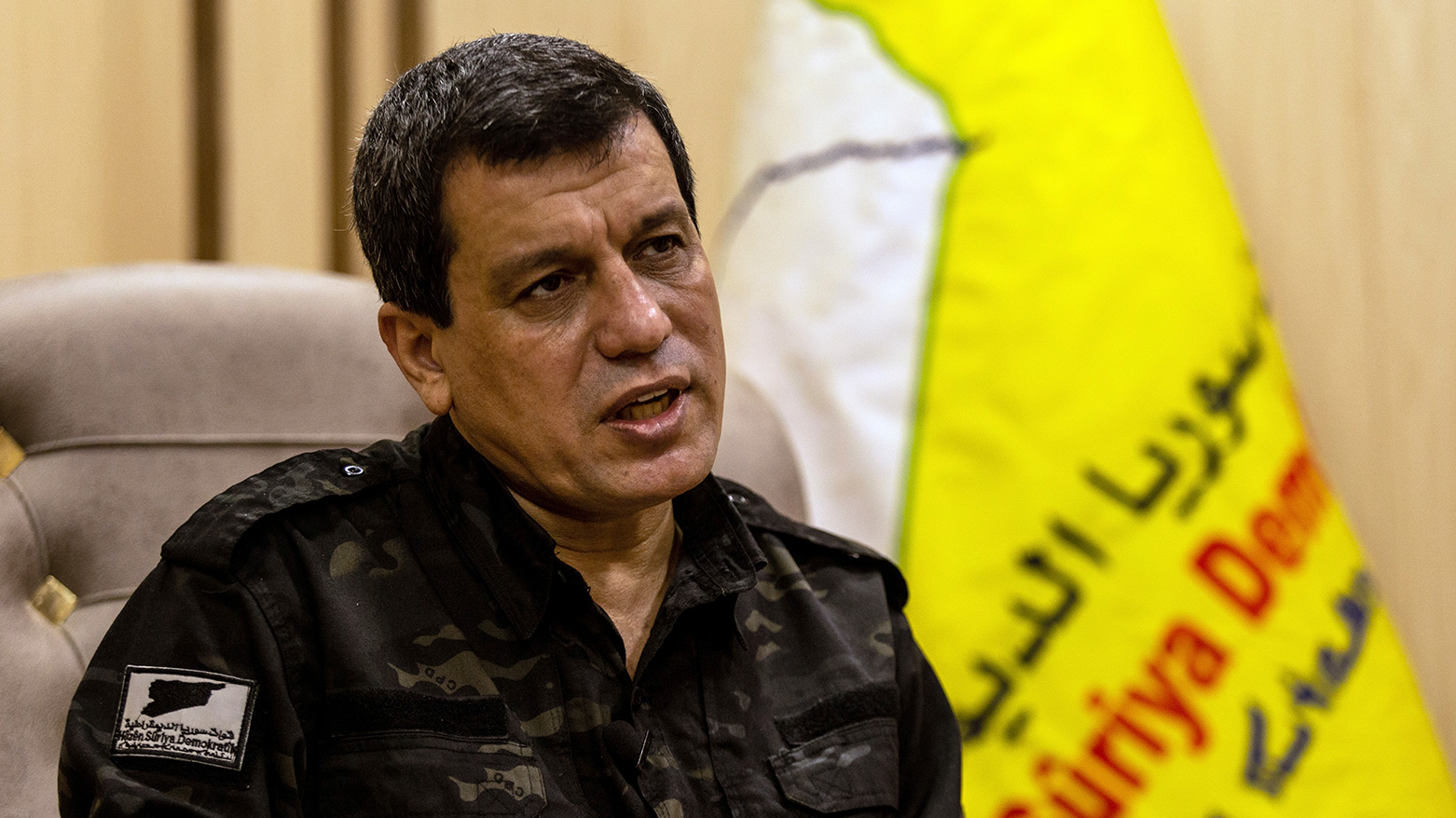
ERBIL (Kurdistan24) - Syrian Democratic Forces (SDF) Commander Mazloum Abdi said Thursday that recent talks with Syrian government officials focused on accelerating the reintegration process, strengthening security in Hasakah and addressing the return of displaced residents.
Abdi said he met with Ziad al-Ayash, an envoy from the Syrian presidency, and Awad al-Jassim, commander of the Syrian Army's Second Corps, to discuss a series of outstanding issues affecting Hasakah Province.
The talks come days after violence disrupted the return of displaced Kurdish families to Serê Kaniyê (Ras al-Ayn), prompting authorities to suspend organized return convoys and raising fresh questions over the security environment surrounding the broader integration process.
Security, Returns and Reintegration
In a post on X, Abdi said the meeting addressed the security and stability of Hasakah, attacks against state institutions, the situation of displaced civilians and efforts to accelerate and complete the reintegration process.
He described the discussions as taking place in a positive atmosphere and said they produced several solutions and represented "serious steps" toward resolving outstanding issues.
The meeting follows an earlier high-level round of talks in Damascus between Abdi and Syrian President Ahmad al-Sharaa.
Read More: Damascus Hosts New Round of Talks with SDF Commander Mazloum Abdi
According to Syria's state news agency SANA, the earlier discussions focused on implementing the January agreement between Damascus and the SDF, including the integration of SDF military forces and Kurdish-led civil institutions into Syria's state structures.
The agreement provides for the individual integration of SDF fighters into the Syrian Defense and Interior ministries following security procedures, as well as the incorporation of military units and civil institutions into the state.
Return to Serê Kaniyê Halted
The latest discussions have taken on added significance after the first organized convoy of displaced Serê Kaniyê residents returned earlier this week.
The convoy was subsequently followed by attacks on some returnees, according to local authorities and representatives of the displaced.
Siyamend Afrini, deputy commander of the Internal Security Forces in Hasakah, said several suspects had been arrested and that official return convoys were temporarily suspended as a precaution.
He said the journeys would resume after security conditions stabilize and sufficient guarantees are provided for returning families.
Read More: Return to Sere Kaniye Suspended After Attacks on Displaced Families
Agence France-Presse (AFP) separately reported that the first group comprised around 2,500 people, while representatives of the displaced said a much larger number of residents have expressed interest in returning.
AFP quoted returnee Nora Khodor, 37, as saying before the violence that returning home was "like a dream."
The return process is particularly sensitive because Serê Kaniyê has remained largely empty of its pre-2019 displaced Kurdish population since Turkish forces and allied Syrian fighters seized the city and surrounding areas during an offensive that year.
Representatives of the displaced have raised concerns over destroyed or confiscated homes and called for guarantees over property, security and basic services.
Read More: First Convoy of 650 Sere Kaniye Families Begins Return After Seven Years
Violence Tests the Agreement
The attacks have also exposed the fragility of the security arrangements surrounding the political process.
Kurdistan24 previously reported that two fighters were killed and two others seriously wounded in an attack on a joint SDF-Syrian Army post near Qamishlo. Syrian Defense Ministry officials described the attackers as an illegal armed group, while no organization immediately claimed responsibility.
Read More: Kurdistan24 Exclusive: SDF Forces Attacked at Joint Post in Western Kurdistan
Separately, authorities imposed a temporary curfew in Kobani following unrest and attacks on government facilities.
Read More: Resettled Arabs Attack Kurdish IDPs in Serê Kaniyê
The developments prompted Abdi to call publicly for restraint.
"We understand the angry reactions in the Kurdish street," AFP quoted Abdi as saying, while urging people to avoid being drawn into "irresponsible acts" and preserve civil and security institutions.
His appeal reflects the increasingly delicate balance facing the SDF as it negotiates integration with Damascus while trying to maintain security across Kurdish-majority areas.
A Test for Damascus and the SDF
The January agreement has been presented as a framework for integrating Kurdish-led military and administrative structures into Syria's state institutions, but its implementation remains politically and security-sensitive.
The recent difficulties surrounding Serê Kaniyê demonstrate that formal agreements alone may not be sufficient to secure a sustainable return for displaced families.
For Damascus, the challenge is to demonstrate that state institutions can guarantee security and property rights in areas undergoing reintegration.
For the SDF, the process requires balancing commitments made to Damascus with demands from Kurdish communities that have faced years of displacement and insecurity.
Abdi's latest meeting suggests that both sides are seeking to move the process forward despite those obstacles.
With return convoys suspended and tensions still elevated in several areas, the ability of Damascus and the SDF to translate their agreements into effective security arrangements and safe returns is likely to remain one of the most important tests of their emerging relationship.