Bakırhan: Demirtaş to Attend Next DEM Party Congress
DEM Party Co-Chair Tuncer Bakırhan says jailed former leader, Selahattin Demirtaş, is expected at the party's next congress as Türkiye moves into the implementation phase of its new peace framework
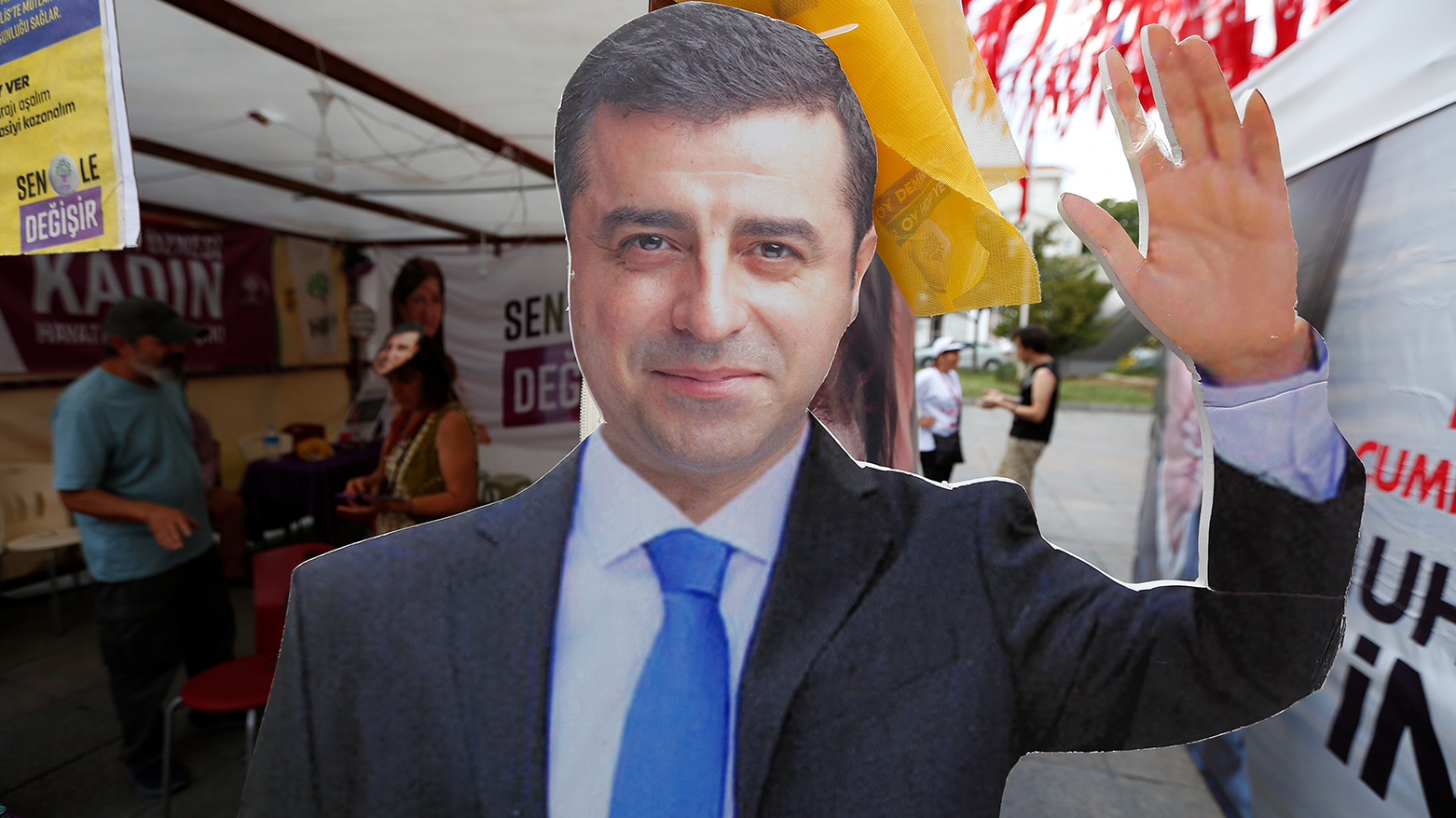
ERBIL (Kurdistan24) - DEM Party Co-Chair Tuncer Bakırhan says jailed former party leader Selahattin Demirtaş is expected to attend the party's next general congress, adding a new political dimension to Türkiye's unfolding peace process as a newly approved legal framework moves toward implementation.
Bakırhan said the congress is expected to take place in the autumn and that Demirtaş, along with numerous other party figures and cadres currently abroad, is expected to participate.
His remarks come as Ankara begins working through the practical consequences of a framework law approved by Parliament this week and amid broader developments involving Kurdish political and military figures in Türkiye and neighboring Syria.
The reported removal of former Syrian Democratic Forces commander Sipan Hamo from Türkiye's highest wanted category has added to the changing political landscape, particularly as Hamo now serves as Syria's deputy defense minister for eastern affairs.
Demirtaş's Expected Return to Party Politics
Bakırhan said the DEM Party congress would provide an opportunity for party members and senior figures to come together at a significant moment for Türkiye's political process.
He said Demirtaş is expected to attend, alongside many party cadres and leaders who are currently outside the country.
Demirtaş has been imprisoned since 2016 and remains one of the most prominent figures in the Kurdish political movement in Türkiye.
He previously served as co-chair of the Peoples' Democratic Party (HDP), the predecessor to DEM Party, and became one of the country's best-known opposition politicians.
His potential participation in a DEM Party congress would therefore carry significance well beyond an internal party gathering.
Bakırhan has previously called for Demirtaş and other imprisoned Kurdish politicians to be released as part of the broader peace process. In March, he said parliamentary steps could allow figures including Demirtaş and Figen Yüksekdağ to return to political life.
A Legal Framework With Wide Reach
Bakırhan also said the newly passed framework law could affect approximately 125,000 case files, including around 75,000 ongoing investigations and another 50,000 confidential investigations, according to the figures he cited.
He said approximately 3,900 people currently in prison could be released once the law is implemented.
The framework does not provide an unrestricted amnesty. Certain groups, including people serving life sentences for intentional killings committed before 2005, are initially excluded, Bakırhan said.
He added that the status of roughly 900 people in this category could be examined during a later phase.
The Turkish Parliament approved the legislation on Aug. 10 by a large majority. The vote was 468 in favor, 88 against and six abstentions in the supplied parliamentary figures.
The law followed months of work by a parliamentary commission tasked with examining the peace process and consulting political and social figures.
Implementation Now Becomes the Test
The passage of the legislation has shifted political attention from parliamentary approval to implementation.
DEM Party Co-Chair Tülay Hatimoğulları has argued that the crucial question is what follows the vote, calling for rapid action by the National Security Council and publication of its decision in the Official Gazette.
She described the legislation as an initial step toward consolidating peace and warned that delays could undermine the process.
The law's supporters in the ruling AKP have also left open the possibility of further legislative changes.
AKP parliamentary group deputy chairman Abdulhamit Gül said the legislation represents a broad political consensus and described the parliamentary vote as evidence that political mechanisms can address longstanding problems.
He also said Parliament could adopt additional measures if new requirements emerge during implementation.
That possibility could become important as questions remain over the legal status of senior PKK figures, the mechanics of disarmament and the role of imprisoned PKK leader Abdullah Öcalan.
Öcalan Remains a Central Question
While the new framework establishes legal mechanisms concerning individuals linked to the PKK, Öcalan's future is not directly resolved by the legislation.
Öcalan issued a landmark call for the PKK to end its armed struggle and pursue democratic political means in February 2025. His continuing involvement has remained a major issue in discussions over the process.
The KCK has argued that the initiative cannot succeed without Öcalan's direct and effective participation, while Turkish officials have maintained that the legislation does not cover his individual legal status.
The issue has consequently become one of the clearest points of disagreement over how far the current framework can go.
For DEM Party officials, however, the process is broader than disarmament alone.
They have repeatedly called for political and legal reforms, including measures concerning political prisoners, freedom of expression, local democracy and a wider democratic settlement.
Sipan Hamo's Changing Status
Against this backdrop, the reported removal of Sipan Hamo from Türkiye's Interior Ministry wanted list has attracted particular attention.
Hamo, also known as Samir Oso, was previously placed on the Red List, Türkiye's highest category for wanted individuals, with a reported reward of 20 million Turkish lira.
According to Turkish media reports, his name was removed from the list after he became Syria's deputy defense minister for eastern affairs.
The change follows the Jan. 29 agreement between Damascus and the SDF and Hamo's subsequent appointment within Syria's official defense structure.
Türkiye's Interior Ministry previously listed Hamo among individuals it identified as senior PKK-linked figures operating within the YPG. Official Turkish material continues to characterize the YPG as connected to the PKK.
His new role in the Syrian state has nevertheless altered his institutional position.
The reported decision does not mean Türkiye has removed all SDF officials from its wanted lists. SDF Commander Mazloum Abdi and other senior figures remain subject to Ankara's security policies.
The distinction highlights how Syria's separate integration process and Türkiye's domestic peace initiative are developing in parallel, even as they intersect around Kurdish political and military actors.
A New Phase for Kurdish Politics
The possibility of Demirtaş attending the DEM Party congress comes at a moment when Kurdish political developments are increasingly being shaped by formal legislation rather than solely by security policy.
For the party, his appearance could carry symbolic weight after years of imprisonment and political restrictions.
For Ankara, the larger challenge will be ensuring that the new legal framework produces a controlled transition from armed conflict to political participation without destabilizing the state-led process.
And for Kurdish political actors, the central question remains whether the initiative will ultimately extend beyond disarmament and address the deeper political and constitutional issues that have shaped the conflict for decades.
Bakırhan's announcement about Demirtaş therefore places a familiar political figure at the center of a rapidly changing process.
Whether he can actually attend the next DEM Party congress will depend on developments in Türkiye's legal and political process. But the prospect itself signals how dramatically the political landscape could change if the new framework moves from legislation toward implementation.