930 Groundwater Wells Closed: How the Kurdistan Region is Engineering a Water Revolution
Emergency water projects have eased shortages across the Kurdistan Region, while major schemes in key urban centers and rural districts continue to advance.
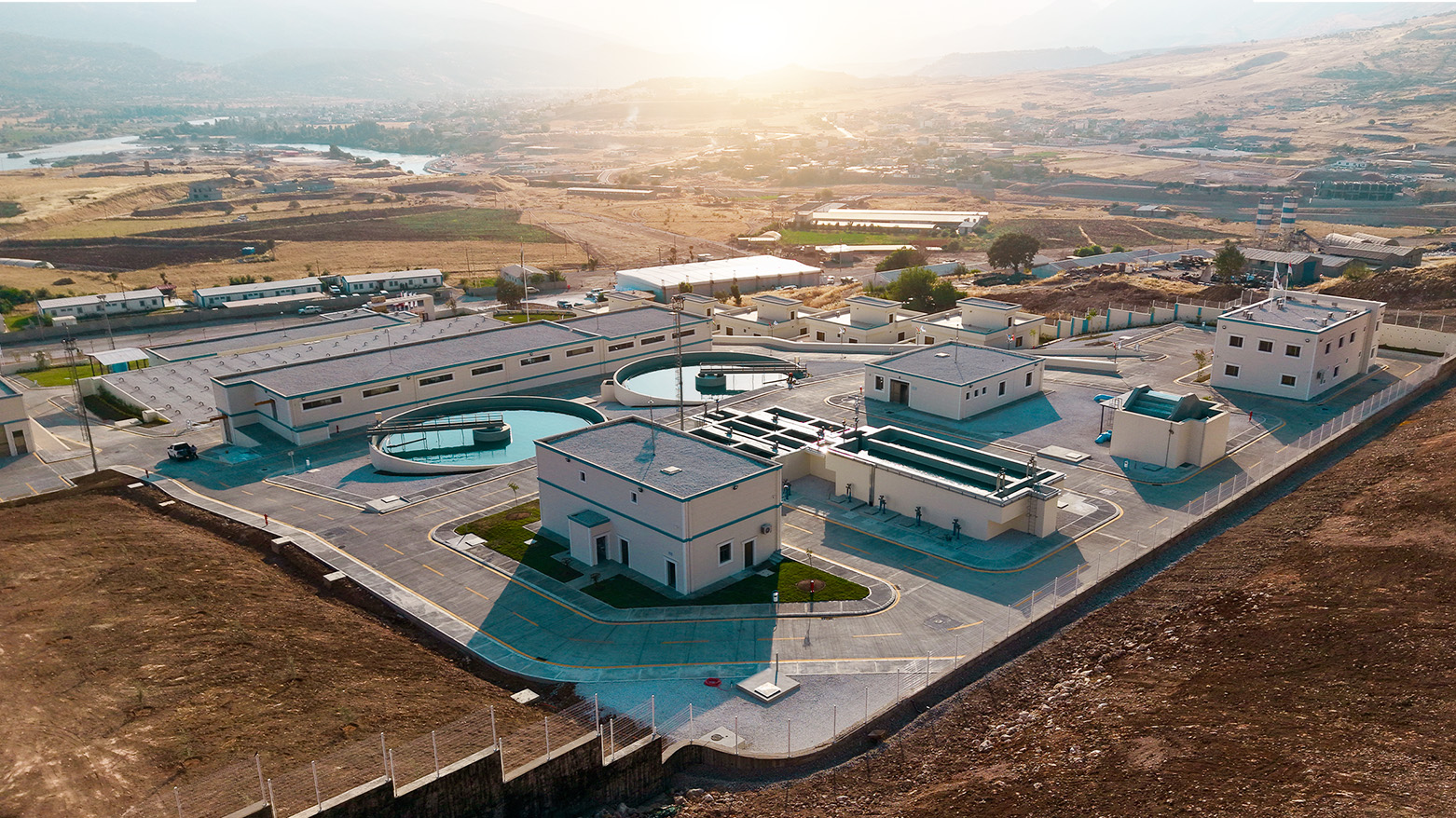
ERBIL (Kurdistan24) - The Kurdistan Regional Government (KRG) has made significant progress in addressing water shortages across the Kurdistan Region, with the activation of emergency water projects allowing authorities to close 930 groundwater wells in Erbil Governorate and advance major water infrastructure projects elsewhere.
For decades, Erbil depended on a vast network of groundwater wells. However, as the water table dropped, authorities were forced to drill to staggering depths of 500 to 700 meters just to find viable water.
To halt this depletion, the KRG launched the Erbil Emergency Water Supply Project, a $480 million infrastructure feat that draws and treats water from the Greater Zab River. The impact has been immediate: out of a total of 1,411 groundwater wells in Erbil, 930 have already been closed. This includes 136 wells in Qushtapa and more than 58 in the Barzan area.
With a capacity to treat 480,000 cubic meters of water per day, this single project now provides roughly 60% of Erbil's total daily demand, proving that surface-water infrastructure can effectively replace thousands of deep-earth wells.
Further south, the city of Sulaimani is embarking on its own large-scale engineering solution. The Third Line of the Dukan Water Project, valued at $423.89 million, has officially entered the implementation phase.
Designed to draw from the Little Zab River, the project will match Erbil’s capacity of 480,000 cubic meters per day. Most importantly for long-term planning, this infrastructure is specifically designed to meet the municipal water needs of Sulaimani for the next 30 years, ending the cycle of seasonal shortages.
The KRG’s Director General of Water and Sewerage, Ari Ahmed, confirms that this strategy is being replicated across the entire region. Unlike previous years, the region did not face the same level of acute water shortages this summer, thanks to these active construction sites:
-Darbandikhan: This project is nearing the finish line at 85% completion.
-Akre: Construction has reached the 75% mark.
-Chamchamal: The Goptepe–Chamchamal Water Project is currently 43% complete. If budgets are allocated and administrative hurdles cleared, it is expected to be fully operational within eight months, permanently eliminating local shortages.
-Bardarash: Currently 40% complete, this project is designed to serve the district center, three sub-districts, and 50 surrounding villages.
-Barzan: Already fully completed several months ago, providing a blueprint for success as residents there no longer face the shortages that once plagued the area.
The KRG isn't stopping with these major cities. New water projects have already been approved for Khabat, Koya, Kalar, and Soran, alongside plans to expand the existing Qandil Water Project. These initiatives will move into the implementation phase as soon as the necessary budgets are finalized.