Iran Allows Iraqi Oil Tankers Through Hormuz After Baghdad Request
Iran has allowed several Iraqi oil tankers through the Strait of Hormuz, offering Baghdad limited relief as disrupted exports strain state revenues.
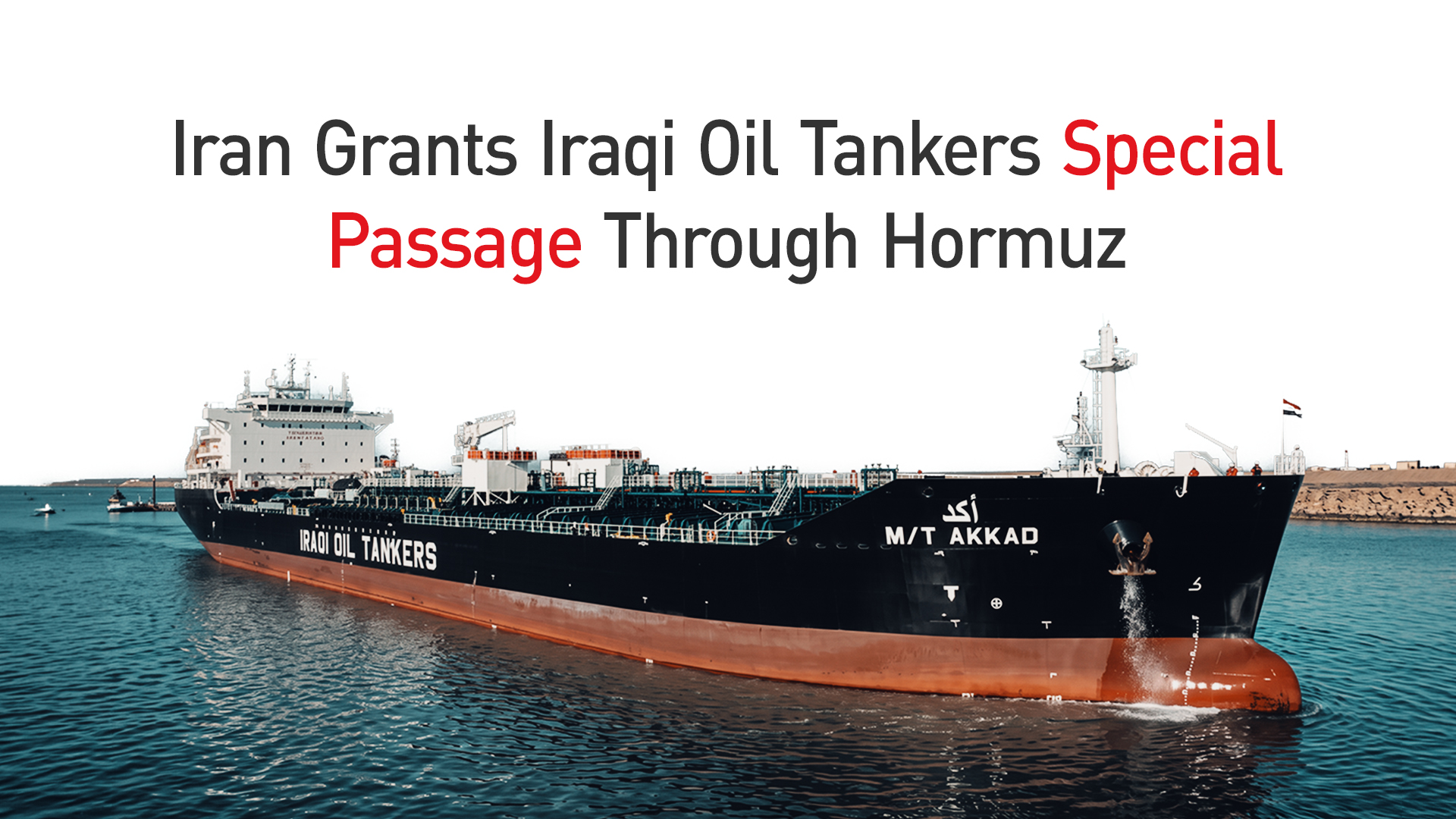
ERBIL (Kurdistan24) - Iran has authorized several Iraqi oil tankers to pass through the Strait of Hormuz following an official request from Baghdad, potentially easing some of the pressure on an Iraqi economy heavily dependent on crude exports disrupted by the Middle East war.
Iran's official Islamic Republic News Agency (IRNA) reported on Saturday that Tehran granted the tankers special clearance after Iraq submitted requests through diplomatic channels.
The issue had been raised during Iranian Parliament Speaker Mohammad Baqer Qalibaf's recent visit to Baghdad, according to the Iranian report.
Iraqi Parliament Speaker Mohammad al-Halbousi met Qalibaf on Wednesday and requested special treatment for Iraqi oil exports through the waterway, citing the relationship between Baghdad and Tehran and the need to protect Iraq's economic interests.
The authorization is particularly important for Iraq because oil sales generate nearly 90% of government revenue. Before the conflict disrupted traffic through Hormuz, Iraq produced around four million barrels of crude a day and exported an average of approximately 105 million barrels each month, with most shipments leaving the southern Basra terminals and passing through the strait.
Restrictions on the waterway have sharply reduced Baghdad's ability to move crude to international markets, forcing production cuts as storage capacity filled and placing additional pressure on the state's principal source of foreign currency.
Export lifeline under pressure
Iraq's exports recovered somewhat in July to around 49 million barrels, according to Agence France-Presse, with more than 30 million barrels passing through Hormuz. During the first two weeks of August, exports averaged around two million barrels per day, the highest level recorded since the regional war began.
The passage granted by Iran could therefore provide Baghdad with an additional outlet at a time when the government is trying to restore export volumes and protect revenues needed to finance public spending, including the large state payroll.
The number and capacity of the Iraqi tankers granted passage were not specified in the supplied Iranian report, making the immediate effect on overall export volumes unclear.
Iraqi Prime Minister Ali al-Zaidi said Friday that disruption in the Strait of Hormuz remains a major economic challenge, while assuring civil servants that their salaries would continue to be paid.
"The closure of the Strait of Hormuz presents a significant challenge, but the government has multiple solutions to our economic problems," al-Zaidi said in comments reported by Kurdistan24.
Baghdad has been working to reduce its dependence on the Gulf export route by increasing crude shipments through other corridors.
The government is seeking to expand exports through Türkiye's Ceyhan port while developing additional options involving Syria's Baniyas port and Jordan's Aqaba. Iraq has also transported crude by tanker trucks through Syria since shipping disruptions began.
Al-Zaidi said Iraq was working within the OPEC+ framework to raise its production capacity to between nine million and 10 million barrels per day within six years. Baghdad has also asked OPEC for an increase in its production quota following the economic effects of the war.
Alternative routes, however, remain especially important because Iraq's southern oil infrastructure has historically depended on access through Hormuz. Even with shipments moving again through the strait, the war has demonstrated the vulnerability created by concentrating the bulk of Iraqi crude exports along a single maritime corridor.
The special Iranian clearance may help sustain some shipments in the near term, but Baghdad's broader strategy increasingly centers on building multiple export options capable of protecting state revenue if access through Hormuz is again restricted.
For an economy in which oil finances the overwhelming majority of government income, maintaining those routes is not simply an energy issue. It is directly tied to Iraq's fiscal stability, access to foreign currency and ability to meet public-sector obligations.