China Warns US Its Cooperation With Iran Must Not Be Disrupted
Beijing's Foreign Ministry says ties with Tehran operate within international law and that Washington's new restrictions risk escalating tensions and expanding the crisis
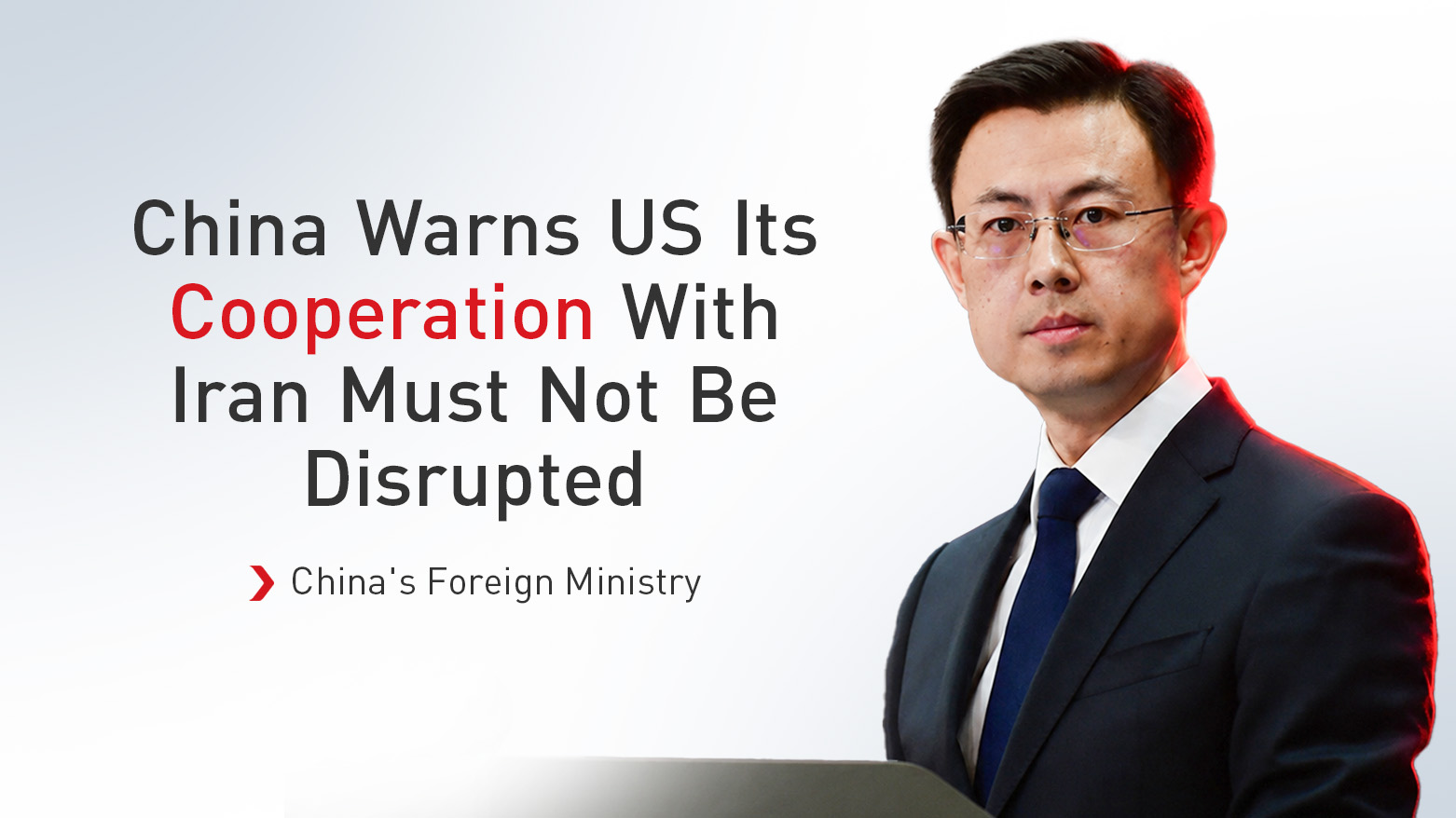
ERBIL (Kurdistan 24) - China's Foreign Ministry issued a direct warning to the United States on Tuesday, declaring that Beijing's cooperation with Tehran operates within the framework of international law and must not be disrupted or weakened, as Washington's Economic D-Day sanctions package targeting Iranian oil buyers took effect.
"Beijing's cooperation with Tehran is within the framework of international law and must not be disrupted or weakened," China's Foreign Ministry spokesperson said in response to new US restrictions and threats against buyers of Iranian oil. "America's actions only intensify tensions and conflicts and carry the risk of expanding the scope of the crisis."
The warning represents Beijing's most direct public pushback yet against Washington's escalating economic campaign against Iran, arriving on the same day Treasury Secretary Scott Bessent declared Economic D-Day, the single greatest financial offensive ever marshaled against an adversary, with measures specifically targeting the financial networks and oil purchase arrangements that keep Iran's economy functioning.
China's warning is of particular strategic weight because Beijing is Iran's most indispensable economic lifeline. China currently purchases more than 90 percent of Iran's oil exports, making Chinese financial institutions and state-owned energy companies the central pillar of Tehran's surviving revenue stream. Treasury Secretary Bessent's five-option menu for squeezing Iran, reported by Fortune magazine on August 15, 2026, identified targeting major Chinese banks as the most powerful but most dangerous available option, one that carries the potential to rupture strategic US-China relations and disrupt global energy markets.
Washington has so far sanctioned only a handful of small Chinese teapot refineries, deliberately stopping short of the major Chinese banks that process payments for the Iran oil trade. Tuesday's Chinese Foreign Ministry warning signals that Beijing is watching Washington's escalation closely and is prepared to defend its Iranian economic relationship publicly and forcefully, even as the Trump administration prepares to ratchet up pressure on third-party buyers and financial intermediaries enabling Tehran's sanctions evasion.
Trump warned on Wednesday, on Truth Social, that "ANY country that allows its financial institutions, businesses, airports, or government entities to provide any type of lifeline to Iran will itself face TREMENDOUS Economic Consequences," a warning widely understood to be directed in part at China. Beijing's Tuesday response, delivered through its Foreign Ministry spokesperson rather than through diplomatic back channels, suggests China has chosen to answer that warning publicly and without ambiguity.
The Chinese Foreign Ministry's characterization of American actions as intensifying tensions and carrying the risk of expanding the crisis mirrors the framing Iran itself has used throughout the conflict, and places Beijing explicitly alongside Tehran in the diplomatic and rhetorical confrontation with Washington over the conflict's economic dimensions. Whether China backs its public warning with concrete steps to insulate its Iranian oil purchases from American secondary sanctions pressure, or whether the statement is primarily a diplomatic signal designed to slow Washington's escalation trajectory, will determine how consequential Tuesday's exchange proves to be in the broader arc of the conflict