Ghalibaf Warns Gulf States: Either All Export Oil Freely or None Will
Iran's chief negotiator declares Hormuz will never return to pre-war status without US withdrawal and warns that no Gulf infrastructure will be safe if Iran's security is not guaranteed
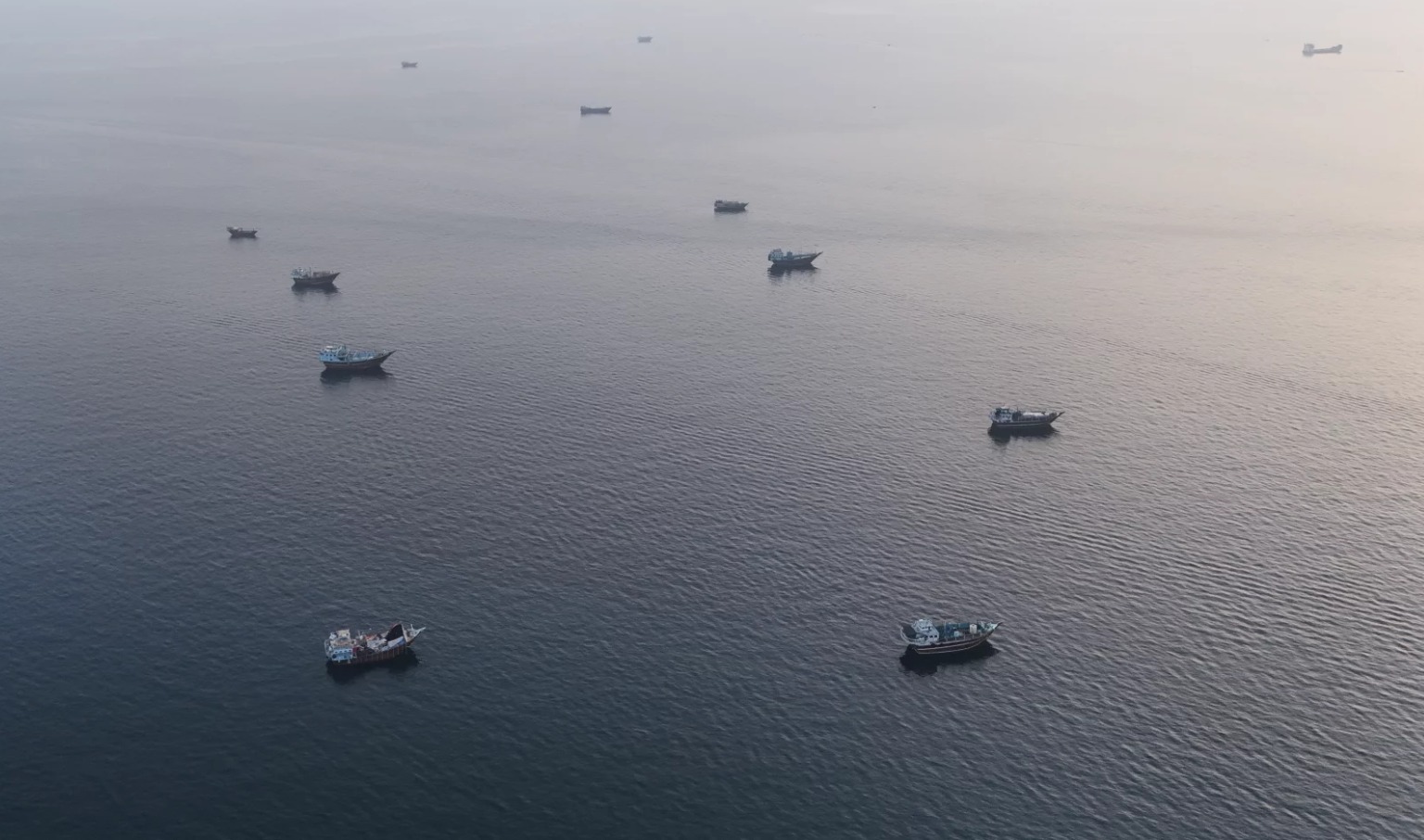
ERBIL (Kurdistan 24) - Iran's chief nuclear negotiator and Parliament Speaker Mohammad Bagher Ghalibaf issued one of the most sweeping and direct threats yet to the Persian Gulf's oil exporting states on Saturday declaring that either all Gulf countries export their oil freely or none will, and warning that the Strait of Hormuz will never return to its pre-war status without the withdrawal of US forces from the region, as Mehr News Agency reported.
"Either all or none," Ghalibaf declared, framing Iran's position as an explicit ultimatum to its Gulf neighbors. "If Iran cannot safely export its oil, Tehran says no other Gulf state will be allowed to do so either."
The statement represents the most direct Iranian threat to Gulf oil exports since the conflict began on February 28, 2026, going beyond Tehran's previous declarations about managing Hormuz and charging fees for transit to explicitly threatening the oil export capacity of Saudi Arabia, the UAE, Kuwait, Qatar, Bahrain, and Oman, the six Gulf Cooperation Council states whose combined oil exports flow through or near the Strait of Hormuz.
Ghalibaf also challenged the foundational premise of the American security architecture in the Gulf, arguing that US military presence offers no real security and that regional countries must build an independent security order. "If our security is not ensured, no infrastructure will be safe," he warned, a statement that carries direct implications for the oil terminals, refineries, desalination plants, and port facilities that form the economic backbone of the Gulf states.
The timing and context of Ghalibaf's statement amplify its significance considerably. It comes as Treasury Secretary Scott Bessent's Operation Economic Outcast has been in effect for five days, targeting every remaining Iranian financial lifeline and warning that countries continuing to provide Iran with economic lifelines will face tremendous economic consequences. The UAE has halted all trade and financial transactions with Iran. Saudi Arabia, Qatar, and Kuwait have condemned Iranian attacks on KRG infrastructure. And Washington has been pressing Gulf states to tighten their compliance with the financial siege of Tehran.
Ghalibaf's "all or none" declaration is Iran's answer to that pressure, inverting the economic logic of Operation Economic Outcast by threatening to impose costs on the Gulf states whose cooperation Washington is depending on to isolate Tehran. If Iran cannot export its oil because of the naval blockade, the message is that Saudi Arabia, the UAE, Kuwait, and Qatar will face the same fate through Iranian action against their shipping and infrastructure.
The declaration also directly contradicts the optimistic framing of the Iran-Oman negotiations on the Strait of Hormuz. The IRGC confirmed on Wednesday that Iran and Oman have agreed on their respective shares of Hormuz revenues, and Omani Foreign Minister Badr Albusaidi expressed hope that a temporary corridor announcement was imminent. Ghalibaf's Saturday statement that Hormuz will never return to its pre-war status without a US withdrawal suggests that whatever technical arrangements are being finalized with Oman, Tehran's strategic position on the strait remains non-negotiable and maximalist.
Ghalibaf's call for Gulf states to build an independent regional security order free from US military presence echoes the broader Iranian strategic vision that has been articulated throughout the conflict, and which the Makkah Joint Defence Agreement between Saudi Arabia, Türkiye, and Pakistan was in part designed to counter. Whether Ghalibaf's threat accelerates or derails the diplomatic momentum around the Iran-Oman corridor framework will determine whether the "all or none" ultimatum proves to be a negotiating pressure tactic or the opening move in a new phase of Iranian economic warfare against the Gulf.