Appeals Court Overturns $42 Million Abu Ghraib Verdict Against US Contractor
Fourth Circuit panel dismisses landmark case against CACI International following new Supreme Court ruling limiting foreign citizens' ability to sue in US courts, as Iraqi plaintiffs vow history will record the injustice
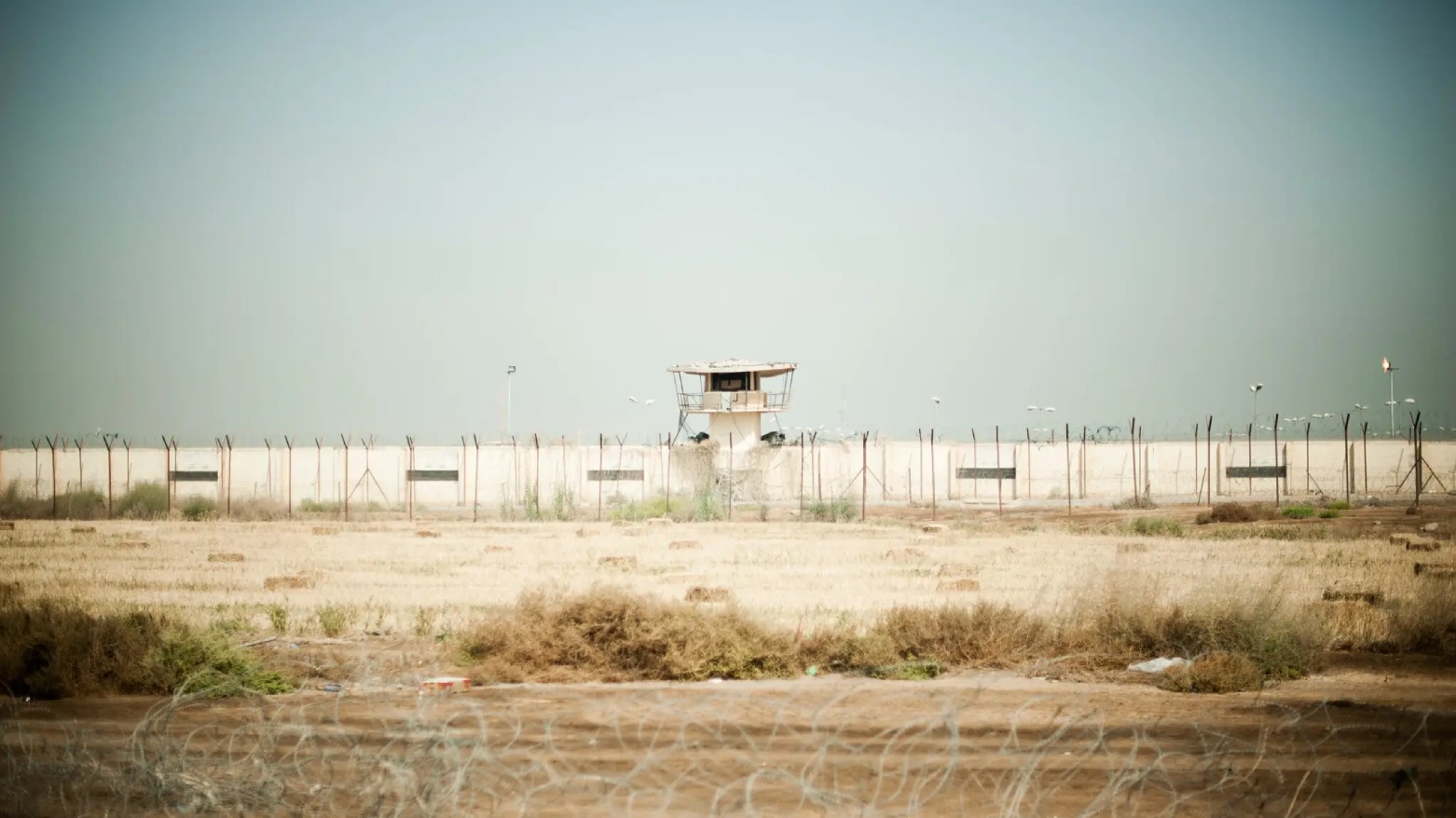
ERBIL (Kurdistan 24) - A federal appeals court overturned a landmark $42 million jury verdict against a Virginia military contractor on Friday, dismissing a case brought by three Iraqi men who said they were tortured at Abu Ghraib prison, after a new Supreme Court ruling limited the ability of foreign citizens to pursue claims in American courts under a 1789 law.
The three-judge panel of the US Court of Appeals for the Fourth Circuit ordered the case dismissed, citing the Supreme Court's June 2026 ruling that significantly narrowed the scope of the Alien Tort Statute, the 1789 law that had given the three Iraqis the legal basis to sue in federal court. The same appeals panel had previously upheld the verdict, but reversed itself following the Supreme Court's new precedent, writing in an unsigned ruling that the new decision "effectively overruled" their earlier finding that US courts had jurisdiction over the plaintiffs' claims.
The three plaintiffs, Salah Hasan Al-Ejaili, a journalist, Suhail Al Shimari, a middle-school principal, and Asa'ad Al-Zuba'e, a fruit vendor, were arrested after the US invaded Iraq in March 2003 and were held at Abu Ghraib, the prison outside Baghdad that had been used by Saddam Hussein's government. They were detained on a special tier for prisoners believed to possess valuable intelligence. According to military officers cited in a Red Cross report from the period, 70 to 90 percent of Iraqis detained by US and allied forces had been arrested by mistake.
At the prison, the three men said they were subjected to harsh and degrading treatment, including threats against family members and being chained to pipes overnight. The trials, both held in 2024, marked the first time that civilian jurors had heard accounts of America's post-September 11 detention and interrogation program directly from detainees, giving the case a historic significance that extended well beyond the legal questions it raised.
The first jury that heard the case was unable to reach a verdict, resulting in a mistrial. A second jury awarded each of the three men $3 million in compensation and an additional $11 million in punitive damages, for a total award of $42 million against CACI International, a Virginia-based military contractor that supplied interrogators to the US Army at the prison. The jury found that CACI conspired with US soldiers to "inflict torture or cruel, inhuman, or degrading treatment" on the three detainees, a finding that Friday's appeals court ruling does not erase, even as it strips the plaintiffs of their legal avenue for enforcement.
"They believed us and sided with us," Al-Ejaili said in a statement on Friday. "History will show that it was the Supreme Court that denied us justice."
Baher Azmy, the legal director of the Center for Constitutional Rights, called the ruling a high-level jurisdictional decision, adding: "It does nothing to wipe away the jury's conclusion that CACI was responsible for the torture and abuse of men in Abu Ghraib, including our clients." Azmy declined to say whether the plaintiffs would pursue further recourse, which could include filing a new lawsuit, appealing to the Supreme Court, or requesting the case be reheard by a larger appellate panel.
The Supreme Court ruling that triggered Friday's reversal involved a different matter entirely, a case brought by members of the Falun Gong spiritual movement who claimed a US company helped facilitate the Chinese government's efforts to target and torture them. The court ruled that the Alien Tort Statute applies only to a narrow set of violations involving passport holders' rights, infringement of ambassadors' rights, and piracy, effectively closing the door to a broad category of international human rights claims that foreign citizens had previously been able to bring in American courts.
The panel that handed down Friday's ruling consisted of two Obama-appointed judges, Henry Floyd and Stephanie Thacker, and one Trump appointee, Marvin Quattlebaum, who together instructed the district court judge who oversaw both trials, Judge Leonie Brinkema of the Eastern District of Virginia, to dismiss the case. A spokesman for CACI International did not immediately respond to a request for comment.