Al-Amiri Calls Disarmament a Purely Iraqi Decision
Badr Organization secretary-general urges all sides to avoid inflammatory positions and warns against giving foreign parties pretexts to interfere in Iraq's weapons file as the September 30 deadline approaches
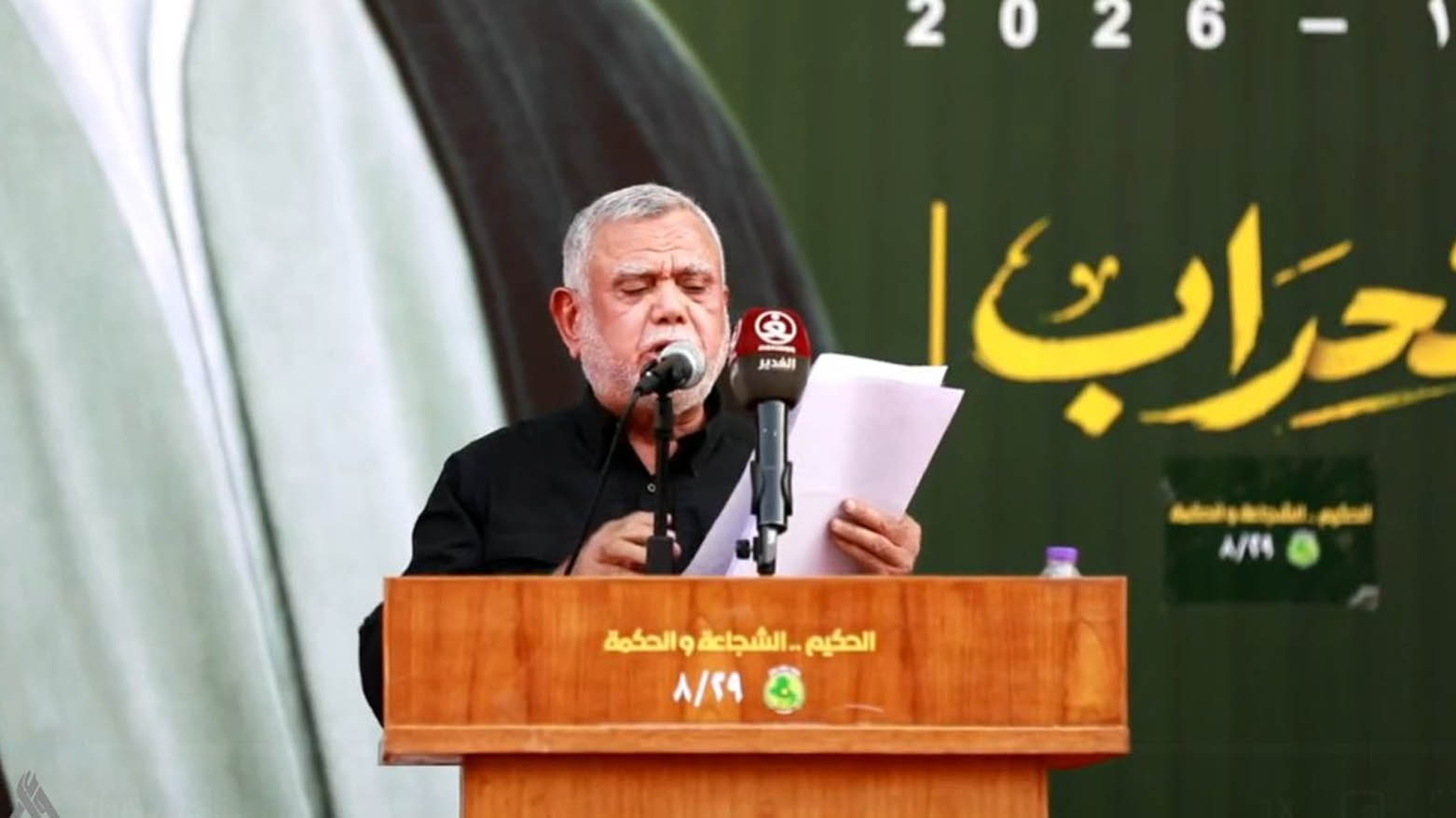
ERBIL (Kurdistan 24) - Hadi al-Amiri, Secretary-General of Iraq's Badr Organization and one of the most influential figures within the Popular Mobilization Forces, declared during a special ceremony on Sunday, that there will absolutely be no confrontation between the state and the resistance, framing the weapons regulation process as a purely Iraqi national matter that must be decided by Iraqis alone, as the Iraqi News Agency confirmed.
"I assure everyone that there will absolutely be no confrontation between the state and the resistance," al-Amiri said. "Regulating weapons is not a foreign decision, but an entirely Iraqi one. Regulating weapons is a legitimate national and constitutional objective and a foundation for building a strong state capable of protecting Iraq and safeguarding its security, sovereignty and dignity."
Al-Amiri called on all parties to exercise restraint and avoid inflammatory positions, warning against giving foreign parties pretexts to extend their influence and impose their dominance over Iraq's security, political, and economic decision-making. "This is a national Iraqi issue, and any decision taken regarding it can only be Iraqi. Iraqis are capable of managing it with great competence and a sense of responsibility," he said, according to the Iraqi News Agency.
The statement positions al-Amiri as a critical mediating figure within the Coordination Framework at the most tense moment of the disarmament process. The Badr Organization, which commands more than 20 brigades inside the PMF, has agreed to place its own weapons under state control, separating it from the holdout factions including Kataib Hezbollah, Harakat al-Nujaba, and Kataib Sayyid al-Shuhada, which have refused to disarm and set sweeping conditions for any participation in a weapons reorganization process.
Al-Amiri's intervention comes as tensions within the Coordination Framework itself have reached a critical point. Iraqi parliamentarian Abu Turab al-Tamimi had previously told Kurdistan 24 that al-Amiri is the only figure the holdout factions trust and respect as a credible interlocutor, making his public call for calm and his framing of disarmament as a legitimate national objective a potentially decisive influence on whether the September 30 deadline produces a settlement or a confrontation.
Two Iraqi government sources told Kurdistan 24 exclusively on August 18, 2026, that the disarmament process had reached a complete deadlock, with Kataib Hezbollah, Sayyid al-Shuhada Battalions, Saraya Awliya al-Dam, Ashab al-Kahf, the Nujaba Movement, and the Karbala Battalions all refusing to surrender their weapons. Kataib Sayyid al-Shuhada issued a formal statement on Friday, reframing the process as a reorganization rather than a disarmament and reserving the right to rearm whenever circumstances require. This formulation directly challenged the government's objective of permanent state control over all weapons.
The Nasr Alliance has warned that failure to reach agreement by September 30 could push Iraq into civil war. The State Administration Coalition, comprising the most prominent Shia, Sunni, and Kurdish political forces, has warned that any armed activity outside the state framework after September 30 will be treated under anti-terrorism law. Al-Amiri's assurance that there will be no confrontation, delivered publicly and in his capacity as the most trusted senior figure within the PMF's political establishment, is designed to hold that space open long enough for dialogue to produce a settlement that avoids both outcomes