Iran Says Oil Tanker Hit Two Mines in Hormuz as US Claim of Clear Strait Is Directly Contradicted
IRGC Navy warns all shipping companies that any vessel violating Hormuz safety rules will share the fate of the burning tanker, in a direct challenge to Trump's Truth Social declaration that all mines have been removed
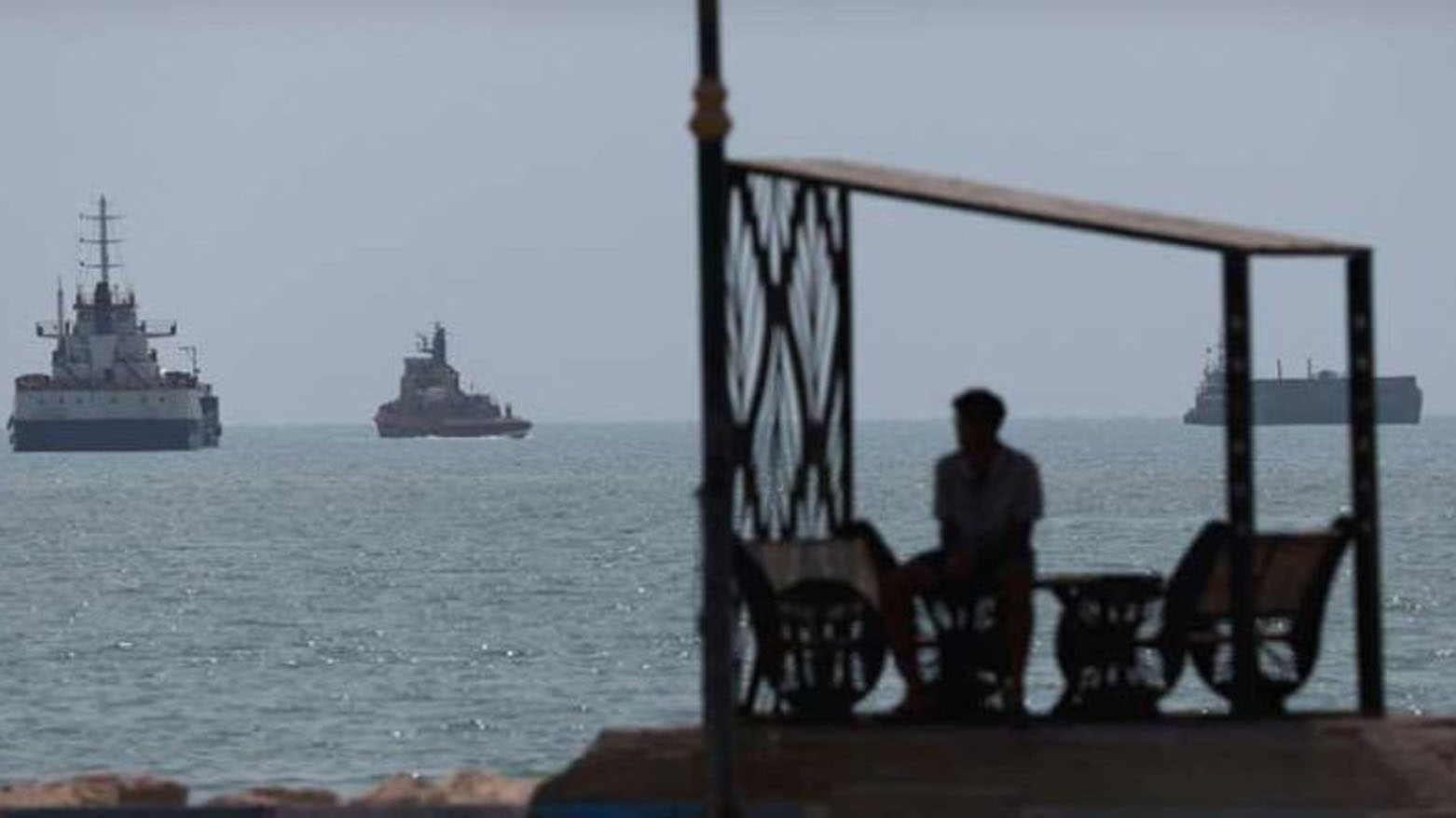
ERBIL (Kurdistan 24) - Iran's Islamic Revolutionary Guard Corps Navy announced on Sunday that an oil tanker caught fire in the Strait of Hormuz after striking two naval mines while attempting to pass through what the IRGC described as an unauthorized route in the southern approach to the strait, directly contradicting President Donald Trump's earlier declaration that all mines in the Strait of Hormuz have been removed and the waterway is fully clear.
The IRGC Navy stated that the tanker was in violation of its rules when it attempted to transit a route not designated by the IRGC, and that it struck two naval mines as a result, causing the vessel to catch fire. The statement did not immediately confirm the tanker's flag, operator, or the condition of its crew.
The IRGC Navy issued a sharp warning to all international shipping companies in the same statement. "The fate of any vessel that violates the safety rules of the Strait of Hormuz will be the same as the fate of the tanker that struck the naval mines," it said, framing compliance with IRGC-designated navigation rules as mandatory and non-negotiable for any vessel seeking to transit the waterway. The statement added that adherence to the guidelines issued by IRGC forces for navigation and maritime traffic in the Strait of Hormuz is obligatory and no vessel may deviate from them, and warned shipping companies not to be drawn into the encouragement and manipulation of the American military.
The announcement places Trump's previous Truth Social declaration in direct and explicit contradiction with events on the water. Trump had posted on Truth Social that "all mines have been removed and/or detonated from within the International Waters of the Strait of Hormuz," citing the US Navy, in a statement designed to encourage commercial shipping to resume transiting the waterway and to reinforce his narrative that the strait is open and operating. Iranian Deputy Foreign Minister Kazem Gharibabadi had already dismissed that claim as "propaganda deception" on Wednesday, warning that Iran would target US minesweepers that entered the area. Sunday's tanker fire, caused by mines that demonstrably remain in the strait, validates Tehran's position and directly undermines Washington's.
The incident arrives as the IRGC had separately declared that the Strait of Hormuz will not be opened under any circumstances if the United States does not accept Iran's conditions, with its spokesman confirming that the IRGC views itself as in full control of the waterway and that no vessel can cross without Iran's approval and management. The tanker fire is the most concrete evidence yet that Iran's mines remain an active threat to commercial shipping attempting to transit outside the IRGC-designated corridor, regardless of American claims to the contrary.
The broader context of Sunday's incident is one of deeply contested narratives about who controls the strait. UK Maritime Trade Operations Center data confirmed last week that nearly 200 ships navigated the strait in the previous week, a nearly 400 percent surge driven by vessels increasingly using the US-backed Omani corridor. Maritime intelligence firm Kpler had said Iran appears to have at least partially lost physical control of the waterway. Sunday's tanker fire, caused by Iranian mines striking a vessel attempting to use an unauthorized route, suggests that while traffic has surged through the Omani corridor, Iran retains the ability to enforce lethal consequences on vessels that deviate from its designated routes, giving Tehran a continued and dangerous form of control over the strait's navigation even as American-escorted shipping moves through it in growing numbers.
As Ghalibaf declared on Saturday, "Either all or none." If Iran cannot safely export its oil, no Gulf state will be allowed to do so either. Sunday's tanker fire, caused by mines that Trump said had been removed, is Iran's most direct operational answer yet to that rhetorical declaration.