Iran Pushes Regional Unity as Missile Exchanges Resume With U.S.
Iranian President Masoud Pezeshkian called for regional unity and cooperation on security and economic goals as renewed U.S.-Iran fighting threatens wider instability.
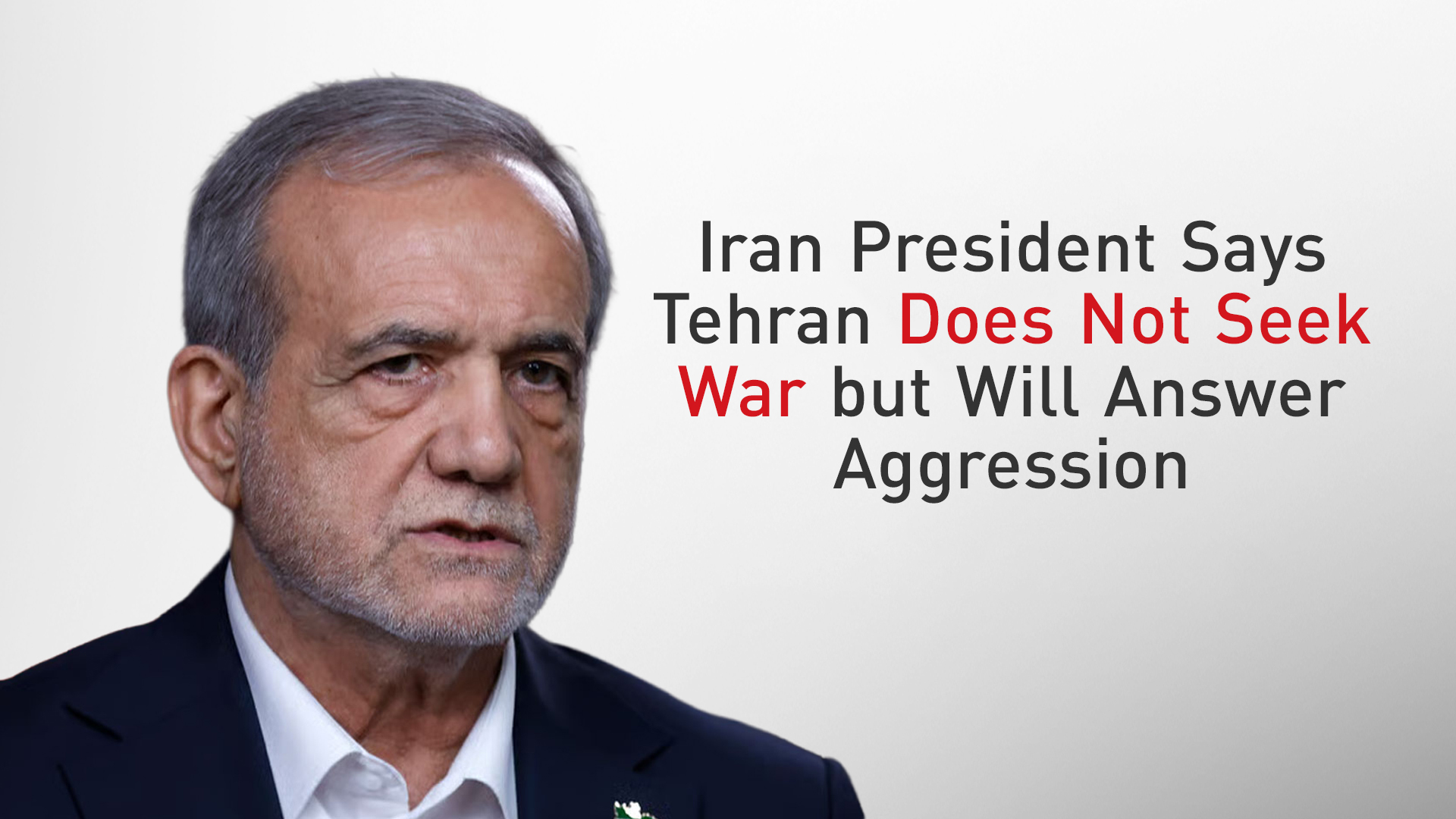
ERBIL (Kurdistan24) - Iranian President Masoud Pezeshkian called for greater unity among regional states Monday, arguing that cooperation is essential to advancing shared economic and security interests as renewed military exchanges between Iran and the United States again threaten to widen instability across the Middle East.
Speaking before leaving Tehran for Kyrgyzstan to attend the 26th Shanghai Cooperation Organization summit, Pezeshkian said instability ultimately damages every country in the region and stressed that Iran was not seeking a wider conflict.
"The history of relations in the region demonstrates that the Islamic Republic of Iran does not seek war," Pezeshkian said, while adding that Tehran would respond "forcefully and firmly" to aggression.
"Instability harms all countries in the region," he said.
His comments came only hours after a renewed exchange of fire involving U.S. and Iranian forces, ending a period in which the confrontation had shifted increasingly toward economic pressure and intermittent operations around the Strait of Hormuz.
Unity linked to economic and security goals
Pezeshkian said greater coordination among regional governments was necessary not only to reduce security risks but also to strengthen economic development.
He presented cooperation as a way for countries in the region to exercise greater control over their own political and security environment rather than allowing prolonged conflicts to determine their future.
"Iran's history in this region stretches back thousands of years and has always been characterized by interaction and coexistence," Pezeshkian said.
He argued that peace, economic activity, security and civilization had historically emerged from such interaction and said governments should work to carry those principles forward.
The Iranian president expressed hope that discussions during the Shanghai Cooperation Organization summit, including meetings between heads of state on its sidelines, could contribute to defining the region's economic, political and security direction.
"The presence of most of the region's heads of state and bilateral talks on the sidelines of this summit can help determine the region's security, economic and political direction," he said.
Comments follow renewed military escalation
Pezeshkian's departure came after U.S.-Iran fighting intensified overnight.
Kurdistan24 reported Monday that Iran said it had launched missile and drone attacks against U.S. military targets in Jordan and the United Arab Emirates in retaliation for an American strike on Larak Island near the Strait of Hormuz.
Tehran said it targeted Al Minhad Air Base in the UAE and facilities at King Hussein and Al-Azraq air bases in Jordan.
Jordan's armed forces confirmed intercepting eight missiles that entered its airspace, although Iran's claims that its strikes inflicted extensive damage have not been independently verified.
The attacks followed a U.S. operation Sunday against Iranian military positions on Larak Island.
Washington said Revolutionary Guard personnel had been preparing rockets carrying sea mines for deployment in the Strait of Hormuz and described its strike as a limited action intended to protect commercial navigation.
Associated Press journalists Konstantin Toropin, Cara Anna and Ben Finley reported that the Larak operation was the first confirmed U.S. strike on Iranian territory in roughly a month.
Iran, by contrast, described the attack as a violation of its sovereignty and said it caused deaths and injuries.
Pezeshkian subsequently said Iran had no interest in initiating another major round of fighting but would respond to attacks against the country.
Contrasting messages from Tehran and Washington
The president's appeal for regional unity also came as U.S. President Donald Trump adopted a markedly different tone.
In an interview aired by Fox News, Trump described Iran as a "failing nation" and argued that the U.S. military and economic campaign was steadily weakening Tehran.
He also asserted that Iran would use a nuclear weapon if it ever obtained one.
"If they had a nuclear weapon, Israel would be gone," Trump said.
He later added: "That means that if they would have had a nuclear weapon, they would have fired it."
Iran has historically maintained that its nuclear program is peaceful and has not formally declared a decision to build nuclear weapons, although rhetoric from some Iranian military officials has hardened significantly during the current conflict.
Trump also praised the U.S. blockade of Iranian ports, describing it as "unbelievable" and saying financial pressure was hitting Tehran hard.
Hormuz remains central
The latest confrontation again places the Strait of Hormuz at the center of the conflict.
Washington says it has cleared internationally recognized shipping lanes of Iranian mines and weakened Tehran's ability to restrict traffic.
Iran maintains that it retains leverage over the waterway and says full reopening should depend on the United States fulfilling commitments Tehran says were included in a June memorandum between the two countries.
Commercial activity remains below prewar levels despite U.S. claims that the strait is increasingly accessible.
AP's Toropin, Anna and Finley reported that a U.S.-led maritime coalition continues to describe shipping through Hormuz as reduced.
The persistence of missile, drone and maritime threats has complicated months of mediation by regional governments seeking to revive negotiations.
SCO summit offers diplomatic platform
Against that backdrop, Pezeshkian is seeking to use the Shanghai Cooperation Organization summit as a venue for wider regional consultations.
The organization brings together major Eurasian states and provides Tehran with a diplomatic platform at a time when relations with Washington remain deeply confrontational.
Pezeshkian's argument is that regional governments possess the capacity to shape their own political, economic and security environment through direct cooperation.
Whether that message gains traction will depend in part on whether the latest U.S.-Iran exchange remains limited or develops into a broader cycle of retaliation.
For now, Pezeshkian is attempting to present Iran as both prepared to retaliate militarily and interested in regional coordination.
His central message before departing Tehran was that those objectives are not, in Iran's view, contradictory: Tehran says it will respond to attacks while simultaneously arguing that long-term security and economic progress require the region's governments to work together rather than allow instability to deepen.