US Approves $5.75 Billion Smart Bombs and Tank Engine Deal for Saudi Arabia
State Department clears 10,000 JDAM-ER guidance kits and 10,000 general-purpose bombs worth $5 billion under Boeing, plus 60 AGT-1500 Abrams tank engines worth $750 million under Honeywell, as Washington deepens Gulf defense partnership at the height of the Iran conflict
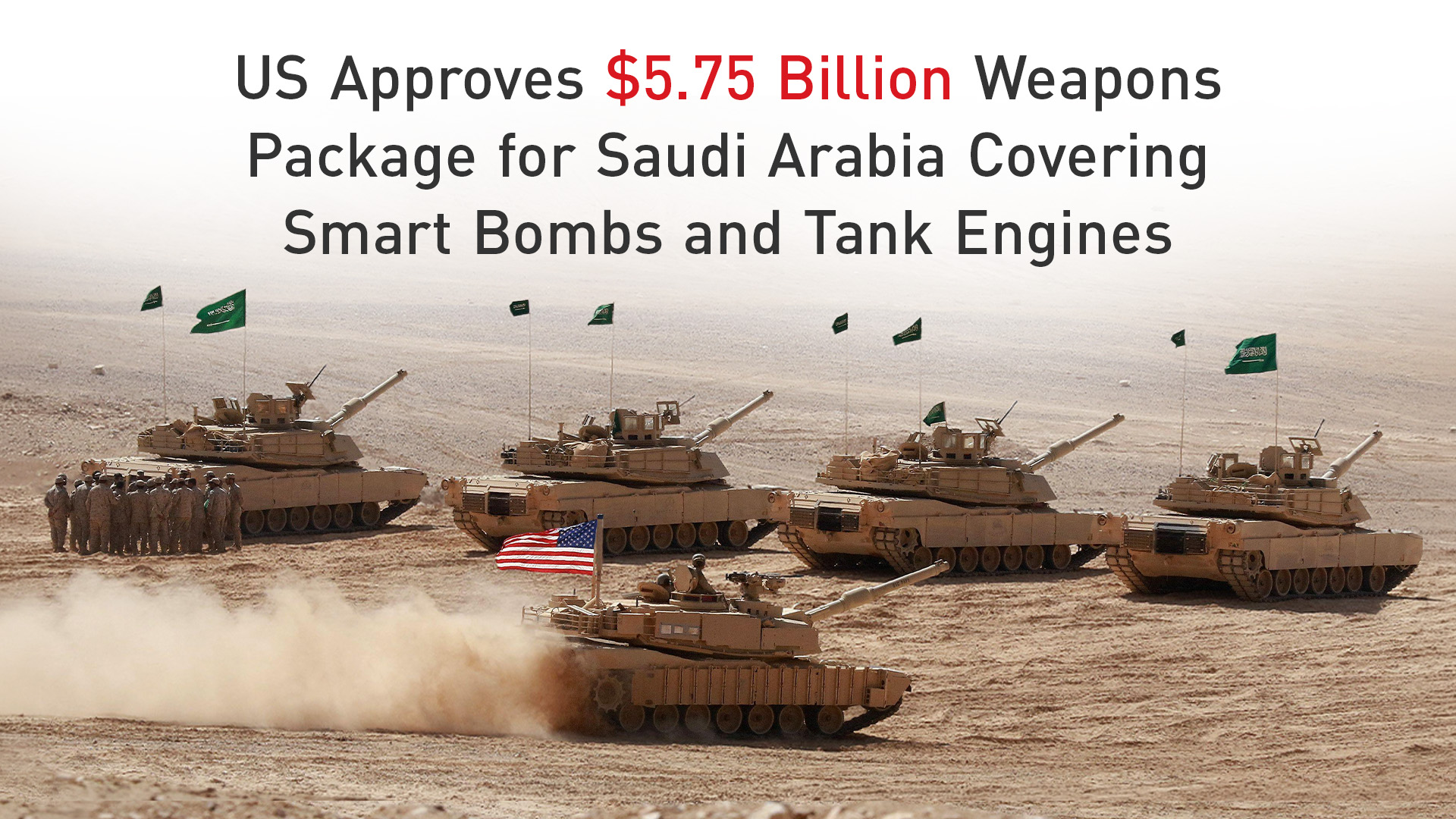
ERBIL (Kurdistan 24) - The United States State Department approved two separate weapons deals for Saudi Arabia on Friday totaling $5.75 billion, covering Boeing-manufactured Joint Direct Attack Munitions-Extended Range precision bomb kits worth $5 billion and Honeywell AGT-1500 tank engines worth $750 million, in one of the largest single US-Saudi defense transactions since the conflict with Iran began, as the State Department confirmed through official notifications to Congress.
The $5 billion JDAM-ER package includes 5,004 KMU-572 Joint Direct Attack Munition guidance kits, 5,000 KMU-556 JDAM guidance kits, 5,004 BLU-111 500-pound general purpose bombs, and 5,000 BLU-117 2,000-pound general purpose bombs, along with detonators, target acquisition equipment, and spare parts, with Boeing serving as the principal contractor, as the State Department's official Foreign Military Sale notification confirmed.
The second deal, valued at $750 million, includes the sale of 60 AGT-1500 engines used in M1 Abrams tanks, along with containers, spare parts, and logistical and technical services, and will be executed by Honeywell. As Defense Here confirmed on Saturday, the AGT-1500 is a gas turbine engine primarily used to power the M1 Abrams main battle tank series and other military platforms, with Honeywell conducting the work at the Anniston Army Base in Alabama.
The JDAM-ER is a particularly significant capability addition for Saudi Arabia's air force. As Defense Here confirmed, the JDAM-ER integrates a wing kit with the existing JDAM guidance package, increasing the standoff range and precision strike capabilities of air-dropped munitions, allowing Saudi aircraft to release precision-guided bombs from significantly greater distances than standard JDAM systems, reducing their exposure to enemy air defenses during strike missions.
The proposed sales will improve Saudi Arabia's capability to meet current and future regional threats while enhancing interoperability with US forces and other Gulf nations, the State Department stated, describing the transactions as supporting US foreign policy and national security objectives by helping to strengthen a major non-NATO ally.
The approvals are Foreign Military Sale notifications to Congress rather than signed contracts, meaning the final order and pricing may differ from the notification ceiling figures. However, the notification represents formal State Department clearance for the sale to proceed, clearing the most significant bureaucratic hurdle in the FMS process.
The timing of the approvals is directly connected to the ongoing US-Iran conflict. Saudi Arabia has faced attacks involving missiles and drones during the wider regional conflict, including attacks attributed to Iranian forces and Yemen's Houthi movement, creating an urgent operational need to replenish and expand its air-delivered precision strike capacity and armored vehicle propulsion systems. The kingdom participated alongside American forces in joint precision strikes on Iranian proxy targets in eastern Iraq on July 28, 2026, and has been one of Washington's most directly engaged Gulf military partners throughout the conflict.
The $5.75 billion Saudi package comes on the same day the State Department approved an $800 million helicopter sale to Iraq covering Bell 412EPX and Bell 407M aircraft with Bell-Textron as principal contractor. As Global Defense Corp confirmed, Washington simultaneously approved additional sales to Oman, underscoring the breadth of the American military equipment supply effort across its Gulf partner network at the height of the Iran conflict.