No Iran Nuclear Deal May Be Needed if Capabilities Are Destroyed, Says U.S. Energy Secretary
US Energy Secretary Chris Wright says Washington remains in conflict with Iran as Hormuz oil flows recover, while the US maintains military and economic pressure on Tehran.
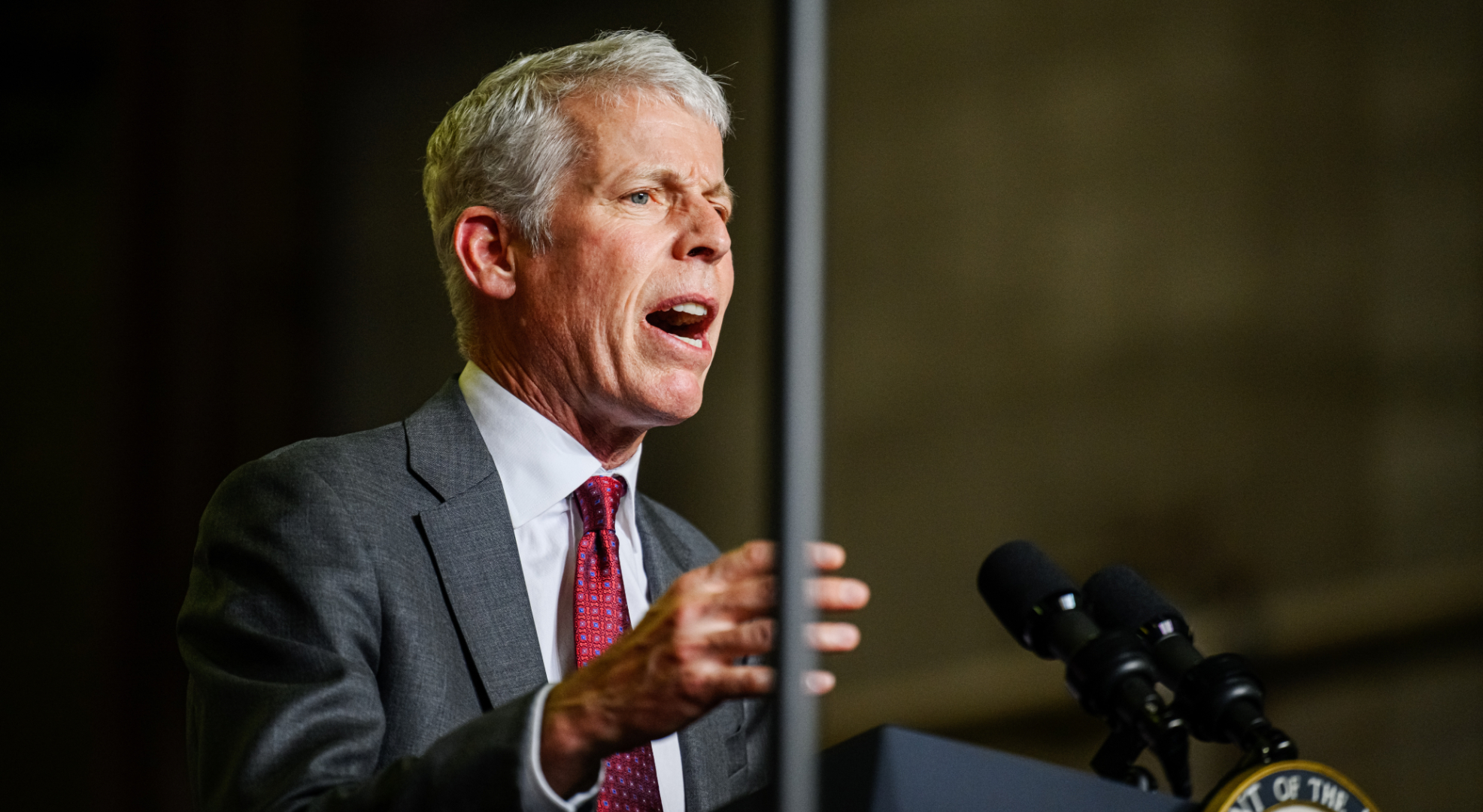
ERBIL (Kurdistan24) - U.S. Energy Secretary Chris Wright said Sunday that Washington remains in an active "conflict" with Iran, while arguing that increasing oil traffic through the Strait of Hormuz and continued pressure on Iranian exports are steadily reducing Tehran's ability to use the waterway as economic leverage.
Speaking with Martha Raddatz on ABC News' "This Week," Wright said the United States had not returned to normal conditions despite President Donald Trump recently describing the six-month confrontation as "small potatoes."
"We're still in a conflict, for sure," Wright said.
His comments came as fighting around the Strait of Hormuz intensified again, with Iran threatening stronger retaliation against further U.S. attacks and announcing plans for a new exclusion zone near the strategic waterway.
Wright said the seven-day average of oil moving through Hormuz had risen to slightly more than 9 million barrels per day, which he described as the highest seven-day average since the conflict began.
He said regional bypass pipelines through Saudi Arabia and the United Arab Emirates lift total oil flows out of the Gulf region to roughly 13 million to 14 million barrels per day, or around two-thirds of prewar levels.
Associated Press reporters Samy Magdy, Julia Frankel and Cara Anna separately noted that Wright's estimate for Strait traffic appeared higher than some 28-day averages tracked by independent shipping-data sources.
Hormuz Remains at Center of US-Iran Economic Fight
Wright said the U.S. Navy's mission was broader than escorting commercial vessels.
He said Washington was also seeking to prevent Iranian oil and other exports from leaving the country as part of an economic pressure campaign intended to force either changes in Tehran's policies or political change inside Iran.
That objective is central to the U.S. counter-blockade of Iranian ports.
Iran, meanwhile, continues to use access to Hormuz as a principal source of leverage.
Tehran's new Supreme National Security Council chief, Mohsen Rezaei, said Sunday that Iran planned to establish what he called a new exclusion or prohibited zone extending from the U.S. naval blockade line toward Hormuz and into parts of the Persian Gulf.
Rezaei said vessels attempting to transit through the area could be placed on an Iranian sanctions list, although the geographic boundaries and practical implications of the proposed zone remained unclear.
The announcement followed another round of maritime attacks.
U.S. Central Command said Saturday that Iran unsuccessfully fired ballistic missiles at an American aircraft carrier and a destroyer. Washington retaliated by striking three oil tankers it said were linked to the Islamic Revolutionary Guard Corps.
Iran then said its forces targeted tankers traveling through what Tehran considers unauthorized routes in Hormuz, along with vessels it described as affiliated with the United States.
The IRGC also claimed Sunday to have struck a U.S. unmanned naval vessel attempting to enter the strait.
CENTCOM spokesman Capt. Tim Hawkins rejected that claim, calling it false.
AFP teams in Tehran, Washington and Dubai reported that Iranian Parliament Speaker Mohammad Bagher Qalibaf warned Sunday that the era of “proportionate responses” had ended and that future attacks on Iran would draw faster and more painful retaliation.
Wright Says Nuclear Agreement May Not Come
Raddatz pressed Wright on whether the administration still expected negotiations to produce a nuclear agreement after six months of war.
Wright said an agreement was not guaranteed.
"There may not be a nuclear agreement," he said, arguing that Washington's alternative was to destroy Iran's ability to develop and deliver a nuclear weapon.
He said any eventual diplomatic agreement could instead come under a future Iranian administration.
His comments appeared to underscore the increasingly military character of Washington's strategy after nuclear negotiations collapsed.
Wright claimed that Iran's air force and navy had effectively been destroyed and that its ability to manufacture missiles had been severely degraded.
Those statements represented the Energy Secretary's assessment and were not independently established in the source material.
He also argued that preventing Iran from acquiring nuclear weapons justified continued military and economic pressure.
Iran has long maintained that its nuclear program is peaceful, while Washington and its allies have accused Tehran of failing to meet international nonproliferation obligations.
Gas Prices Add Domestic Political Pressure
The interview also turned to the economic cost of the conflict for American consumers.
Raddatz noted that average gasoline prices were around $4.10 per gallon, compared with approximately $3.16 around Labor Day a year earlier.
Diesel prices have also risen substantially.
Trump has publicly defended higher fuel prices as a necessary consequence of confronting Iran and preventing Tehran from developing nuclear weapons.
Wright said the administration was working to increase domestic fuel supplies and expected prices to ease as the summer driving season ended.
He pointed to gasoline futures indicating prices for November delivery were roughly 35 cents lower than current levels, though he cautioned against treating his own forecasts as definitive.
The administration has also changed refinery specifications to allow increased gasoline and diesel production, Wright said.
He additionally cited Venezuela as another source of potential supply growth, saying Venezuelan oil exports were up 50% and national production had increased 25%.
Those figures were presented by Wright as administration data and were not independently verified in the provided source material.
The Energy Secretary said the United States expected more regional and international partners eventually to assist its naval operations.
For now, however, the continued rise in Hormuz traffic depends heavily on the presence of U.S. forces.
That creates a strategic contradiction at the heart of Washington's policy: the United States is trying to restore commercial flows through one of the world's most important energy corridors while simultaneously tightening an economic blockade on Iran and remaining engaged in direct military exchanges with Tehran.
With Iran preparing new restrictions around the strait and Washington signaling that pressure will continue, the recovery in oil traffic has not yet translated into a broader de-escalation.
Instead, Hormuz remains both the economic center of the conflict and one of its most dangerous military flashpoints.