Trump Says He 'Doesn't Care' About Iran-Gulf Talks on Strait of Hormuz
Iran and Gulf states to discuss regional security and the future of the strategic waterway in Oman as tensions with Washington remain high
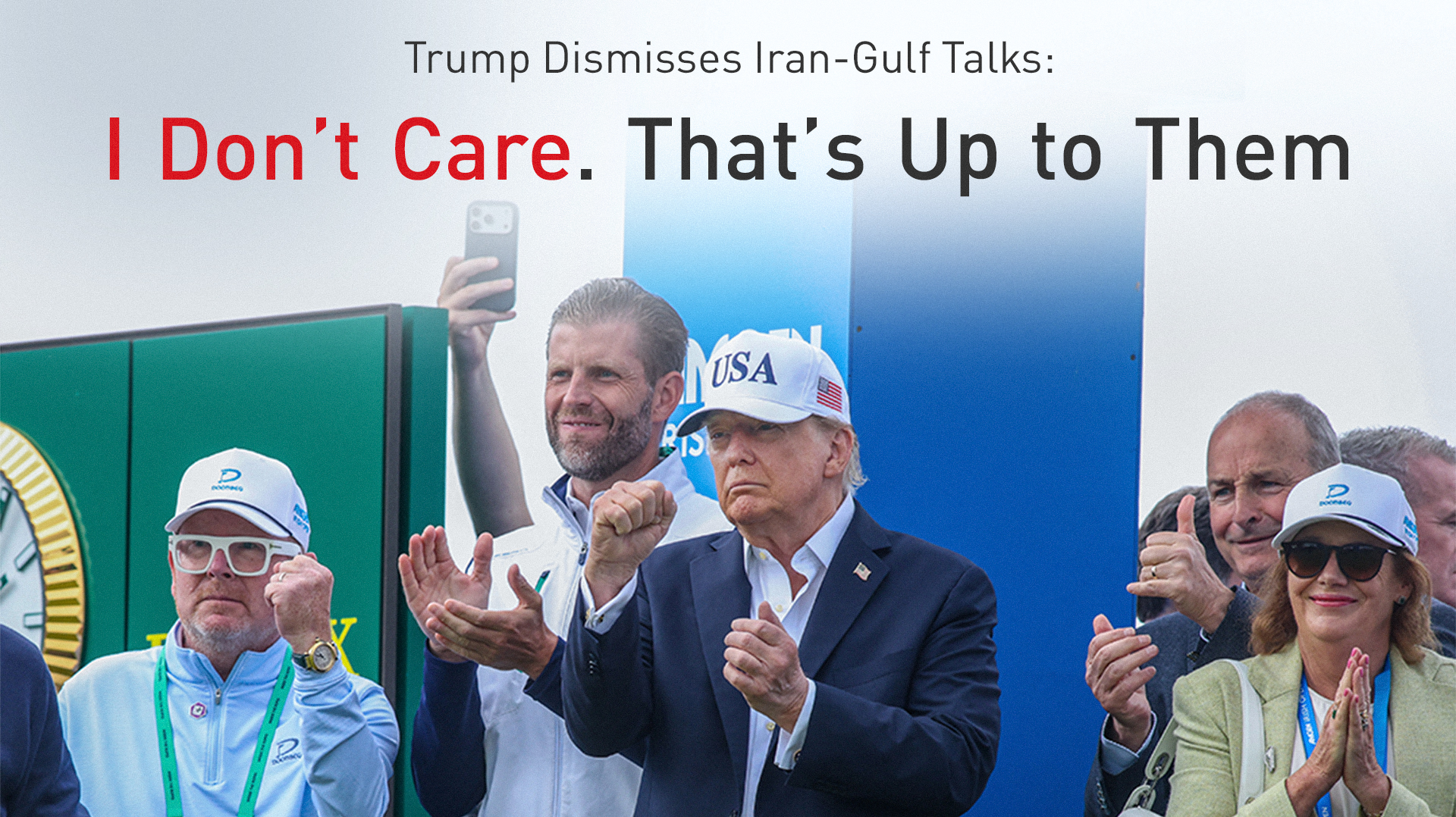
ERBIL (Kurdistan24) — US President Donald Trump said Sunday that he does not “care” about a planned meeting between Iran and Gulf states in Oman to discuss security and the Strait of Hormuz, as Washington and Tehran remain locked in an escalating conflict over the strategic waterway.
“I don't care. That's up to them,” Trump told reporters during a visit to Ireland when asked about the meeting, which is scheduled to take place Monday in the Omani port city of Salalah.
The talks are expected to focus on strengthening regional cooperation on security and addressing tensions surrounding the Strait of Hormuz, a vital maritime passage for global energy supplies.
Iranian state media reported Sunday that the meeting would represent “the first step towards establishing a regional framework for security cooperation” in the Gulf. The official IRNA news agency said the discussions would seek to advance regional coordination over security issues surrounding the strategic waterway.
Iranian Foreign Ministry spokesman Esmaeil Baqaei described the meeting as an important step toward regional stability. His remarks, carried by the ISNA news agency, said the talks would serve as an “essential cornerstone for ensuring stability and security.”
Bahrain, meanwhile, has declined to participate in the meeting, saying it will not join any collective gathering involving Iran until diplomatic relations between the two countries are restored.
Manama said its position had already been conveyed to Oman through official channels, while stressing that it continues to support dialogue as a means of resolving disputes.
Bahrain also said any arrangement concerning navigation through the Strait of Hormuz should comply with the 1982 UN Convention on the Law of the Sea and guarantee the right of all vessels to transit without discrimination, fees or permits.
The meeting comes amid a major escalation between Iran and the United States that has placed the Strait of Hormuz at the center of the conflict.
Iran has been at war since Feb. 28, when US and Israeli strikes killed the country's supreme leader. Tehran subsequently retaliated with attacks across the region and imposed a blockade on the Strait of Hormuz.
The waterway, which lies between Iran and Oman, is one of the world's most strategically important energy corridors.
Before the conflict, roughly one-fifth of global oil supplies passed through the strait, making any prolonged disruption a major concern for international energy markets.
Tehran has also sought to formalize its control over the waterway, including the possibility of imposing fees on vessels passing through it.
Iran has been negotiating with Oman, whose territorial waters extend into the Strait of Hormuz, over arrangements concerning the strategic passage.
Before the current war, the strait was generally open to international commercial shipping, allowing vessels from countries around the world to transit the waterway.
The planned Iran-Gulf meeting in Oman comes as regional states face growing pressure to prevent the conflict from further disrupting maritime trade and energy supplies.
Gulf countries have traditionally sought to maintain working relations with both Washington and Tehran while protecting the security of their territorial waters and energy infrastructure.