President Barzani’s Interview with Al-Sharqiya TV: Full Transcript
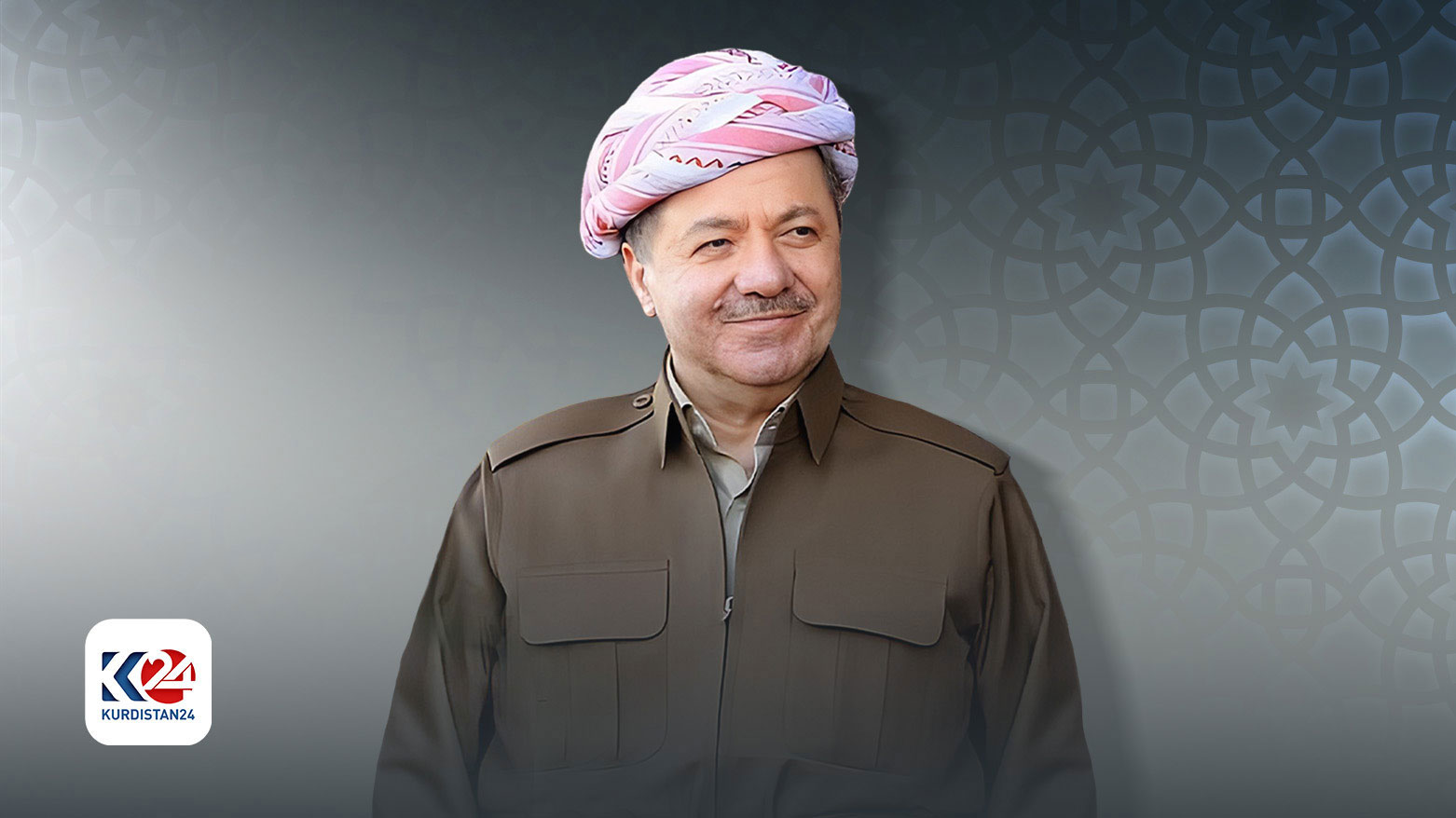
Host: A prominent political figure who was never merely a number in the power equation, but an instrumental force in shaping those equations and directing the compass of the Iraqi political system—born as a democracy more than two decades ago.
During this time, this leader succeeded in transforming the Region into a decisive balancing weight in Iraq’s complex political landscape, to the point where it has come to be seen as a bastion of stability amidst the turbulent waves battering a region undergoing profound geopolitical shifts. As Iraq navigates the phase of sovereignty and what lies beyond, the Kurds rely on him to help steer through the storm that has swept across the Region due to the American-Iranian conflict.
His supporters and admirers believe he is the foremost defender of the federal system and political partnership, as well as the anchor consolidating the Region as a constitutional entity—a formidable force that cannot be bypassed in any domestic partnerships or regional arrangements.
Today, we conduct our dialogue with the "Leader of the Mountain," President Masoud Barzani.
Welcome once again, and we extend a warm welcome to His Excellency, President Masoud Barzani. Welcome, Mr. President, to this interview.
President Barzani:
You are most welcome.
Host:
Of course, we had hoped this interview would take place sooner, but we believe that everything happens in its own due time.
President Barzani:
Of course.
Host:
And now the time has come for this interview. We would like to address your Excellency as the "Leader of the Mountain," as your supporters and followers call you. Let us begin with what might be a broad question, but an essential one for everyone to understand: Has what you dreamed of been achieved? Has what you fought for materialized? Have your long-held aspirations come to fruition?
President Barzani:
A significant part of it has been achieved, but not all.
Host:
What has been achieved?
President Barzani:
I believe we can leave it at that.
Host:
Generally speaking, we ask: what has been accomplished since the regime change after 2003? Saddam’s regime was toppled after a long journey of struggle, bringing us to the post-transition era and the current trials and tribulations. Let us discuss the period from 2003 to the present day: For Iraq as a whole, was the outcome worth this long struggle?
President Barzani:
The struggle of the Kurdish people, from the onset of the September Revolution... the leadership of the revolution took into account that the rights of the Kurdish people could only be realized under a democratic system. For that reason, it raised the central slogan of the revolution: "Democracy for Iraq, Autonomy for Kurdistan."
After 2003, the Parliament—the Kurdistan Region’s Parliament—made the decision to adopt federalism and to cooperate with our other counterparts to rebuild the new Iraq on this foundation, as a federal state. Federalism represented a new and advanced stage toward fulfilling the aspirations of the Kurdish people.
However, as I mentioned, not everything the Kurdish people fought for has been realized. The post-2003 era was a golden opportunity for Iraq as a whole to be rebuilt anew. At the time, we agreed to adopt three foundational principles upon which the new Iraq would be constructed: partnership, balance, and consensus.
Even the Constitution was drafted in the spirit of these principles. Had the Constitution been properly implemented, we would not have faced many of the crises we have endured and continue to face today. In truth, much has been achieved; however, Iraq could have been in a much better position, and the Region could have been better off. Many of these problems would never have occurred had the Constitution been honored—the issue lies in intentions.
Host:
Some politicians harbor hidden agendas driven by foreign interference.
President Barzani:
Regrettably so. We observed after 2003 that the culture of centralized governance and central authority—where everything must emanate from Baghdad—remains prevalent to this day. This is a profound mistake, and external interventions may have also contributed to entrenching and reinforcing this mindset.
Host:
Mr. President, perhaps we projected the principles of consensus, balance, and partnership into the Constitution, drafting it on that foundational premise. But setting aside the Constitution for a moment—and the finer details we have struggled to implement—have we genuinely applied the concepts of balance, partnership, and consensus in actual politics when forming governments?
President Barzani:
No, unfortunately not. We have witnessed a bizarre state of affairs: we negotiate and reach an agreement—on a government agenda, for example, which we formally sign—yet as soon as the government is formed, the Constitution is disregarded, the agreements are forgotten, and personal whims end up taking over. We hope this reality will change going forward.
Host:
Can we say it is merely a matter of personal whims? Or have we only succeeded in kicking the can down the road by deferring crises?
President Barzani:
Personal whims certainly played a part, but it is fundamentally about political doctrine. As I mentioned, the dominant mindset is that of centralized rule; they do not genuinely believe in federalism. What is the definition of federalism? Federalism is the fair and equitable distribution of wealth and power. Yet, they believe in neither the distribution of wealth nor the sharing of power.
Host:
Who are the true believers in federalism?
President Barzani:
There are very few who truly believe in it; the vast majority do not.
Host:
Yet sometimes we say the state is indeed moving toward centralization and consolidating its authority—after all, we are supposed to have one unified state. However, what Iraq suffers from today is being torn between state and constitutional institutions on one hand, and parallel mini-states on the other. Have we truly succeeded in cementing federalism, as you suggest, and did we succeed in eliminating these parallel mini-states? This raises the question: Who actually rules Iraq today—constitutional institutions or the parallel mini-states?
President Barzani:
Certainly, it is not the constitutional institutions that are governing.
Host:
So, it is the parallel mini-states?
President Barzani:
This is a catastrophe—a real dilemma. Moreover, the past exists so that one may learn from it; otherwise, why talk about the past if we do not draw lessons from previous experiences? Centralized rule failed—even with iron and fire, chemical weapons, and the Anfal campaign; they deployed every conceivable means. The outcome was failure: the regime collapsed. Any other regime that adopts the same approach will inevitably collapse as well. What must truly happen is a return to these three foundational principles: partnership, balance, and consensus. This carries immense weight; it may serve as a headline, but it is a momentous headline that entails many critical details.
Host:
What you are stating, Mr. President, is profoundly serious. That is to say: if we do not commit to the balance, consensus, and partnership we originally agreed upon post-2003, and if we do not eliminate these parallel mini-states, the system will collapse?
President Barzani:
Certainly. It cannot possibly sustain itself.
Host:
Well then, ultimately, how will we be able to eliminate these parallel mini-states?
President Barzani:
All of us must cooperate, work together, exchange expertise, and engage in genuine consultations on how we can lead Iraq out of this predicament—out of this crisis.
Host:
Previously, there were two primary political "kitchens" in Iraq: the Erbil kitchen and the Baghdad kitchen. But looking at what is unfolding today—or let me phrase it differently: How were the political parties able to usurp or sideline Erbil’s political decision-making role?
President Barzani:
Of course, Baghdad is the federal capital and the primary center of decision-making. However, those who assumed power imagined that they alone held absolute authority, failing to learn from past experiences. When there was full coordination between Erbil and Baghdad, affairs ran smoothly and with immense success. But whenever there was a rift or an attempt to marginalize Erbil—look at the result—the whole of Iraq plunged into crises. Erbil cannot be marginalized; and by Erbil, I mean the Kurdistan Region.
Host:
Who, in your view, bears the responsibility for sidelining Erbil's decision-making role?
President Barzani:
I have no objection to forming a committee—a committee of experts to thoroughly examine this matter: Where does the responsibility of the Kurdistan Region lie, and where does the responsibility of the federal government (the Center) lie? I do not wish to lay all the blame solely on Baghdad; perhaps the Kurdistan Region has certain shortcomings as well. However, the lion's share of the responsibility rests with Baghdad.
Host:
Mr. President, you belong to the first generation—known for wisdom and pragmatism—along with the other founding fathers of the political process and the political system who dealt with these ongoing disputes among the parties. We are now transitioning toward a second, and perhaps even a third generation, yet these issues remain unresolved. If neither the first generation could resolve these problems, nor can the second, when will they ever be resolved?
President Barzani:
You mean regarding the issues...
Host:
...concerning the relations between Baghdad and the Kurdistan Region, and the matters surrounding the usurpation of decision-making authority.
President Barzani:
Naturally, we have the Constitution, which serves as a roadmap for all of Iraq's problems. In particular, it defines the nature of the relationship between the Kurdistan Region and the federal government, outlining the duties and rights of each side. If we abide by the Constitution and fully implement it, these problems can be resolved with ease. We would not face persistent crises; even if disputes arise, resolving them would be very straightforward, as long as we rely on the Constitution as our ultimate arbiter.
Host:
Mr. President, they only seem to need you during the days of government formation—exclusively during government formation.
President Barzani:
Yes? You mean the Kurdistan Regional Government?
Host:
As soon as the Iraqi federal government is formed: no more visits, no meetings, and no coordination.
President Barzani:
You have answered it yourself. Exactly. Intensive meetings and visits take place, and we agree upon the next government's program. Yet, the moment the government is formed, that program is shelved, and that is the end of it.
Host:
Why not be candid with the public? Why not tell them: "Look, folks, this government agenda is merely temporary"?
President Barzani:
Because we have... that is to say, we joined this government and returned to Baghdad after the KDP (Kurdistan Democratic Party) was subjected to foul play. In truth, there is a signed agreement between the Kurdistan Region—signed by the President of the Kurdistan Region and Deputy Leader of the party, Nechirvan Barzani—and on behalf of the Coordination Framework, signed by Mr. Hadi al-Amiri. Naturally, these subsequent issues and this conflict arose; however, this agreement served as the very foundation for our participation in the government. This agreement must be implemented, or else there will be neither meaning nor justification for our continued presence in the government.
Host:
The terms of this agreement—what are its most prominent provisions?
President Barzani:
We will announce them; we will disclose them soon.
Host:
When was this agreement signed?
President Barzani:
Prior to the formation of the government.
Host:
Prior to the government's formation? Surely, in my assessment or analysis, Article 140 is a fundamental pillar of it, alongside the Oil and Gas Law.
President Barzani:
There is nothing in it outside the Constitution. Everything falls strictly within constitutional parameters; nothing contradicts the Constitution.
Host:
And if it is not implemented, then there is no point in remaining in the government?
President Barzani:
No, there is no point. We will not serve as false witnesses, nor are we merely seeking office. The issue is not about having a ministerial portfolio or a political post. There is a fundamental, long-standing issue we have endured—a question of rights, genuine partnership, and dignity. All of these matters... I remember.
Host:
Looking back chronologically at events, with the formation of every single government, you support incoming prime ministers and hope for the best. Yet, by the time these cabinets conclude their terms, the landscape shifts.
President Barzani:
This serves as evidence of our good intentions and our genuine desire for these governments to succeed. It is true: we endorsed and supported every prime minister. However, it often became apparent that each prime minister’s stance, level of understanding, and openness to solutions varied from one to another. In reality, every prime minister confronted hurdles and challenges because they were not completely free agents—they did not enjoy full constitutional authority, and obstacles were constantly placed in their path.
Host:
Could we say that the prime ministers were stripped of their Power?
President Barzani:
To a certain extent.
Host:
Who controls them?
President Barzani:
Frankly, these political parties—the established parties.
Host:
Can we say that the Coordination Framework bears this responsibility?
President Barzani:
Primarily, of course. The Coordination Framework bears it, because it is the one currently governing. This is a grave mistake—it is impossible for a single component to govern [Iraq] alone.
Host:
So right now, it is solely the Coordination Framework governing?
President Barzani:
Practically. Everything—absolutely everything is in their hands; all powers rest with them.
Host:
Meaning, if we describe this governance, it is primarily Shia rule.
President Barzani:
Is there anyone who can claim otherwise?
Host:
They argue: "We have diverse components represented in the government."
President Barzani:
No. As we stated, the premise was to return to partnership, consensus, and balance—provided this is actually implemented. However, if they persist with the same old approach, then indeed, the single party running the show remains the sole ruler.
Host:
Mr. President, a moment ago you touched upon important matters: that the Kurdistan Democratic Party (KDP) was subjected to a "foul conspiracy." Who conspired against the KDP, and who were the conspirators?
President Barzani:
Certain factions within the Coordination Framework and certain Sunni factions.
Host:
You mean during the days of government formation?
President Barzani:
Prior to the formation—around that period.
Host:
Well, regarding your statement about turning over a new leaf, and given that certain Sunni factions were received in the Kurdistan Region: Does this mean we have genuinely opened a new chapter?
President Barzani:
Yes, we have indeed turned over a new leaf, but we want tangible results from this new chapter. An open page cannot remain open indefinitely without progress; we expect results within a clear timeframe, certainly.
Host:
Regarding this timeframe: surely the agreement signed between Mr. Nechirvan Barzani and Mr. Hadi al-Amiri had a specific duration. Are you waiting for the government to complete its first year to see results, or is that timeframe insufficient?
President Barzani:
Starting right now, this issue must be tabled—brought up for serious review and mechanisms for implementation. Otherwise, we must recognize whether this, too, will end up like previous agreements: shelved and disregarded. If that happens, matters will take a completely different turn.
Host:
So, Mr. President, looking at the political system as a whole: you were subjected to a "foul conspiracy," as you described; the Sadrist Movement withdrew from the political process, entering a state of retirement and boycotting elections; and other factions also feel excluded and marginalized. As a result, we have not progressed—in fact, we are regressing. Is that correct?
President Barzani:
Correct, of course.
Host:
Well then, ultimately, if you were to step away from the political scene, and the Sadrist Movement is already absent from the scene, can governance realistically continue in this manner?
President Barzani:
It would be a fractured, completely paralyzed government. If the Sadrist Movement is absent, if we are absent, and if other parties are excluded, it will naturally be crippled.
Host:
Ultimately, as part of this series of conspiracies, what about what occurred during the parliamentary vote on the cabinet ministers?
President Barzani:
That was part of the conspiracy.
Host:
Only a part of it?
President Barzani:
Yes, that was merely one part.
Host:
A small part. What did they intend to achieve through this plot?
President Barzani:
Perhaps they imagined that, through this, they could display their strength to the KDP (Kurdistan Democratic Party), assuming that as a massive bloc they would single-handedly lead Iraq and isolate the KDP. They were likely under such a delusion.
Host:
Can any rational person think this way? Absolutely not. The Kurds are an essential and foundational part of this country.
President Barzani:
Many have attempted to sideline the KDP throughout history. Yet, they ended up sidelined themselves, while the KDP endured.
Host:
Well, Mr. President, whenever we discuss ongoing support for the government by political parties: How does the Kurdistan Democratic Party assess the government of Mr. al-Zaidi during this period? Will this support continue? Or is this support—as you indicated earlier—strictly contingent upon the implementation of the agreement?
President Barzani:
Of course, brother al-Zaidi is a younger leader and does not share the same extensive political background as his predecessors. We supported him and moved to back him. I have developed a near-conviction that his intentions are sound and good. Therefore, we are trying—alongside others, not just on our own—to support him so that he succeeds in his mission, because the path he has taken is a sound one. However, I know at the same time that he is facing immense challenges.
Host:
Can he truly eradicate corruption?
President Barzani:
If he manages to eradicate corruption? That would be a miracle—he would emerge as a legendary hero. I sincerely hope he succeeds in this endeavor. We have assisted him in this matter; in combating corruption, we supported him vigorously.
Host:
How so?
President Barzani:
Many of these individuals attempted to flee to the Kurdistan Region or hid their embezzled assets in the Kurdistan Region. In full coordination with the Prime Minister’s Office, everything was handed back over to Baghdad.
Host:
Will the political blocs genuinely support him? You have vast experience and know all of them well—are they genuinely sincere in their support and their intentions?
President Barzani:
Speaking for ourselves, we are sincere. As for others, I cannot read other people’s minds.
Host:
By God, you are the most capable of reading them.
President Barzani:
All I can say is that our intentions are sincere.
Host:
Isn't what we are witnessing that some political blocs publicly demonstrate sincere intentions, yet work toward the exact opposite behind closed doors?
President Barzani:
In any case, what he has initiated is good; however, if it stops at this stage, it will have no lasting impact.
Host:
This issue is also tied to the anti-corruption drive and the file of confining arms exclusively to state control.
President Barzani:
And another issue that is more dangerous than both: narcotics.
Host:
True, I agree with you.
Well, regarding the files that the government is tackling—or has declared it is actively pursuing—namely weapons and corruption: the file of confining arms exclusively to state control. A moment ago, you stated that you support al-Zaidi in the anti-corruption drive. But what about confining arms to the authority of the state? Can Mr. al-Zaidi truly bring all weapons under state control?
President Barzani:
For him to do it alone is difficult. In truth, he requires the backing of the Coordination Framework, and ostensibly, as we have heard, the Framework supports him. However, I sincerely hope this issue does not escalate into armed infighting; that would neither serve the interest of Iraq, nor the Kurdistan Region, nor any one of us. But how will this be achieved? Honestly, I view it as difficult—very difficult.
Host:
And within a specified deadline by September 30? It seems difficult.
President Barzani:
It is definitely difficult. Even after September 30, it might require several more months. But if this issue is genuinely resolved, it will be a victory for all of Iraq and for the armed groups themselves. The critical point is that these weapons must be disciplined, and if deployed, they must be used strictly under the orders of the high military command—not with everyone acting arbitrarily at will.
Host:
Mr. President, is this an Iraqi decision or an external one? Let me frame the question more directly: Some argue that this decision lies in Iran's hands. Why are we debating this file internally? Why don't we go directly to negotiate with the Iranians on this matter?
President Barzani:
Frankly, what matters is resolving this file peacefully—whether through discussions with Iran or anyone else, it would be a welcome step. But I see it as difficult; in reality, I see it as very difficult.
Host:
Difficult because it cannot be implemented?
President Barzani:
Because there are individuals and factions profiting and benefiting from the status quo, and they will not willingly surrender their weapons.
Host:
Well, we are currently facing American pressure—heavy US pressure.
President Barzani:
This is also an issue that must be taken into serious consideration; it is a critical matter. If it is not resolved, they will impose sanctions on Iraq. That is what I am saying: resolving this issue—the weapons file—is in Iraq’s vital interest. Failing to resolve it will cause Iraq to suffer immense crises.
Host:
Major crises like the ones we hear about: sanctions and international isolation?
President Barzani:
All of these. All of these would be applied to Iraq.
Host:
We saw discussions before the Prime Minister departed for New York indicating that the deadline might be extended until June 30, 2027.
President Barzani:
If it is implemented—if it is implemented, yields a positive outcome, and solves this problem—then let it be extended to June 30.
Host:
Mr. President, we often rely merely on good intentions. We discuss government programs that are easy to put on paper, but exceedingly difficult to implement. As a result, we struggle to enforce state control over weapons and ensure a purely sovereign Iraqi decision, because this file is subject to US-Iranian balances of power and strategic understandings. Do you believe that if a genuine agreement is reached between the United States and Iran, Iraq will be able to resolve this and successfully bring weapons under the exclusive control of the state?
President Barzani:
I believe that Iraq's overall situation is fundamentally contingent upon how the confrontation between the United States and Iran unfolds. That is to say, it is directly intertwined.
Host:
Mr. President, one can recall a previous statement of yours in which you asked: "If the Americans withdraw, what is the guarantee that ISIS will not return?"
President Barzani:
I said it then, and I reiterate it once again right now.
Host:
Yet we have security forces, we have the Popular Mobilization Forces (PMF), we have the army, we have the Counter-Terrorism Service, and we have the Peshmerga.
President Barzani:
Perhaps I can take us back to the year 2011. At that time, of course, there were roughly 100,000 American troops stationed in Iraq. Numerous meetings took place in Baghdad—and I participated in several of them—debating whether we should enter into a bilateral agreement with the Americans or if they had to withdraw entirely.
In one of those meetings, everyone was present, including the Minister of Defense and the Minister of Interior. I said to them: "Brothers, instead of continuing this debate among ourselves, let us ask those who are directly responsible for the security portfolio: the Minister of Defense and the Minister of Interior."
The Minister of Defense at the time was, I believe, Abdul Qadir al-Obeidi, and the Minister of Interior was, I think, Jawad al-Bulani—I am not entirely sure—but the point is, we asked them: "[To the Defense Minister] Do you have the military capability to protect the country?" He replied: "By God, I have nothing." The Minister of Interior said: "By God, I cannot even protect a single police station."
Yet, some politicians insisted on their stance out of political posturing and grandstanding. I even remember asking the attendees: "Tell me, couldn't a single American officer walk into this room right now and arrest all of us?" One of them answered: "Not even an officer—a single private could do it." I said to them: "Wouldn't it be better then to reach an agreement so that, at the very least, the formal occupation comes to an end and we reclaim our sovereignty?"
The Americans withdrew; then ISIS invaded. Today, I fear the exact same scenario repeating itself—the very same scenario.
Of course, the situation is different now. Back then, they were forces that arrived defining themselves as an occupying power and acted accordingly. Today, the context is entirely different. In 2014, after ISIS swept in, the Iraqi government at the time pleaded with the United States, European nations, and NATO: "Come rescue us; for God's sake, help us!"
Indeed, had it not been for that assistance—particularly American and Coalition air support—we would not have defeated ISIS. To be frank, even if they were not directly aiding the Hashd (PMF), without that broader support, achieving that monumental victory over ISIS would have been impossible.
It is true that ISIS suffered a crushing defeat and no longer retains its former strength and operational capabilities, but it remains a persistent threat. Moreover, these foreign troops are currently present at the formal request of the Iraqi government for a defined mission: to provide support to the Iraqi Army and the Peshmerga against ISIS.
Now, some assume—and I pray to God their assumption proves correct—that ISIS is finished and that there is no longer any need for these forces to stay. Let us wait and see how this issue unfolds.
Host:
It is not merely that ISIS is finished. The issue is interconnected: the withdrawal of foreign forces has been linked to confining arms to the authority of the state—meaning that if one condition is met, the other follows.
President Barzani:
Supposedly, this is the pretext used by the armed factions: that as long as these foreign forces remain... In truth, these are not occupation troops; they arrived upon the formal request of the legitimate Iraqi government to assist Iraq against ISIS. The factions assert: "If they do not leave and withdraw, we will not surrender our arms." Whether they would actually surrender their weapons or not remains to be seen.
Host:
Are new conditions being introduced? Previously, we heard about foreign troop withdrawals in exchange for surrendering or restricting weapons. From the series of interviews we conducted with political leaders, the takeaway was that it is no longer just about foreign troops, but also Turkish forces, sovereignty over Iraqi airspace, acquiring air defense systems... details that cannot be resolved overnight. Ultimately, does this represent a retreat from this file? Is there a genuine fear that if weapons are strictly confined to state hands, certain groups will lose their leverage within the political process?
President Barzani:
As I mentioned moments ago, I see this objective as very difficult to achieve. In reality, these preconditions are designed precisely to prevent the goal from ever being realized.
Host:
Then what is the alternative, Mr. President, to surrendering weapons? Do we simply remain trapped in this status quo?
President Barzani:
Our colleagues in the Coordination Framework must resolve this issue. Once again, I emphasize that I hope it does not escalate into armed infighting—that option must be ruled out entirely. However, a viable solution must be found; otherwise, the entire country is heading toward the unknown. Ultimately, we are all in the same boat, and we are not prepared to tie our destiny to reckless behavior.
Host:
During the penultimate meeting of the State Administration Coalition, attended by Mr. Nechirvan Barzani, a unanimous vote was taken by the members present that after September 30, anyone bearing unauthorized arms must be confronted, explicitly labeling them as "terrorists." Now, step by step, there has been a retreat: from the term "disarmament" to "restriction," from "restriction" to "regulation," and from "terrorists" to "brothers." There is a major backtracking. What is the secret behind this retreat?
President Barzani:
By God, I ask myself the exact same question.
Host:
So can we say that Iran has succeeded in pressuring certain parties to backtrack on this issue?
President Barzani:
What matters is the outcome: Where is Iraq heading?
Host:
So, Mr. President, all of you political parties are partners in this country. Have you not spoken with your partners to mediate with the factions to halt the targeting of the Kurdistan Region, for instance?
President Barzani:
We have spoken with them numerous times, not just once. Everyone passes the buck and denies responsibility: "It has nothing to do with us, they are not our people, we do not know them, no one knows who they are, they are rogue infiltrators," they often claim. Every time, they come up with a different excuse. However, we know several of them by name, which specific organization they belong to, and all the relevant details.
Host:
Given your ongoing cooperation with the American side, will you comply with the withdrawal of foreign forces from the Kurdistan Region?
President Barzani:
This matter is subject to the decision of the federal government. Based on my understanding, the forces will not simply withdraw; rather, bilateral agreements will be established between the United States—as well as other European nations—and Iraq. Consequently, the status, obligations, and rights of the Kurdistan Region will be an integral part of these agreements.
Host:
This issue will be incorporated into the agreements?
President Barzani:
It will not occur in isolation from the Kurdistan Region—that is, if agreements are concluded.
Host:
Up to this moment, do you have understandings in place with foreign partners, for example?
President Barzani:
If bilateral agreements are established, the Kurdistan Region will be an integral party to them.
Host:
Regarding the agreements we hear about: just two days ago, for instance, the Chargé d'Affaires and the Foreign Minister formalized the handover of Camp Victoria, and other base transfers are taking place. Is the Kurdistan Region included in these handovers?
President Barzani:
Certainly. In the Kurdistan Region, they have virtually evacuated their bases—all of them have been vacated. In truth, their presence was never quite like that in Baghdad. As for Erbil Airport and Harir Airbase, they vacated them two or three years ago.
Host:
What is the alternative to the Coalition's withdrawal? Are there prospective partnership frameworks—such as defense pacts or strategic bilateral agreements?
President Barzani:
As I mentioned to you, this will be covered under the bilateral agreements to be negotiated between these respective nations and Baghdad.
Host:
If we look at advanced understandings with Washington: the Kurdistan Region maintains strong relations with Washington. Can these ties be leveraged to enhance cooperation between the Kurdistan Region and Washington? Furthermore, can you play a constructive bridging role between Washington and Baghdad regarding files such as bringing weapons under state control, financial aid, the US dollar supply, and broader economic stability?
President Barzani:
Certainly. The Kurdistan Region will play a very positive role in cooperating with both Baghdad and Washington to resolve these issues. The Kurdistan Region has previously undertaken this role, although within certain limits.
Host:
Yet all of this remains tied to a single factor—the issue of the armed factions. You surely heard a few days ago about the airport measures and the restrictions on Iranian flights entering Iraq. Over the past couple of days, you have seen the sharp political escalation directed against the al-Zaidi government. Does this situation truly warrant such a confrontational stance?
President Barzani:
I believe this is a misguided stance. First of all, suppose Iraq fails to comply, and the United States—with the stroke of a pen and a very simple administrative measure—cuts off dollar liquidity to Iraq. Where would Iraq turn? What could it possibly do then?
Host:
They argue: "We have historical ties, religious bonds, and ideological connections."
President Barzani:
That is true, but this represents the core conflict between the United States and Iran. We sincerely hope this conflict is resolved through dialogue and that relations return to normal. But why should Iraq pay the price? Why must Iraq foot the bill?
Host:
Iraq only complies out of fear of sanctions.
President Barzani:
It tries to navigate a solution. But if it fails to comply, and even a single facet of sanctions is imposed—specifically withholding dollar liquidity from Iraq—what then? Iraq’s entire economy is completely reliant on oil revenues. If Iraq fails to pay public sector salaries for just two or three months, what will happen to the country? Let those who engage in political grandstanding answer that! What alternative solution do they actually possess?
Iraq must comply while striving to reach a workable arrangement. Given Iraq's exceptional circumstances, strategic relations, and the presence of the holy shrines in Karbala and Najaf, the United States might show a degree of flexibility on specific aspects.
Host:
What about your relationship with Iran today? Is it strained due to the presence of Iranian Kurdish opposition groups in the Kurdistan Region? Or has the atmosphere returned to what it was in the past?
President Barzani:
In truth, our relations have existed for a very long time, not just recently. However, I have been genuinely astonished: we are not a party to this conflict between the United States and Iran. Yet, to this day, more than a thousand missiles and drones have struck the Kurdistan Region. Why? That remains the question.
During the peak of hostilities, when we questioned the Iranians as to why this was happening, they would justify it by claiming: "It was an inadvertent error," "faulty intelligence," "we are in a state of war," or "we do not have full command and control." Yet even after the conflict subsided, at least relatively, they targeted command headquarters and struck the private residences of officials. Naturally, this is baffling, and at the same time a matter of deep dismay and outright condemnation. I genuinely do not understand what they want from us.
Host:
So, what do you anticipate for the future of this confrontation between Iran and the United States?
President Barzani:
Well, the current status quo must change; it simply cannot continue. I hope it resolves peacefully, but this state of affairs is unsustainable—neither for them nor for the rest of the region. It generates a state of anxiety and instability across all spheres.
Host:
Do you foresee the collapse of the Iranian regime, or are we heading toward a negotiated settlement between the United States and Iran?
President Barzani:
In truth, there is an essential point that must be highlighted: the Iranian people are the ones who protected the regime. Therefore, it is the Iranian people who decide. I do not believe any meaningful change can be imposed on Iran from the outside. Only the Iranian people have the power to either bring about change or preserve the system.
Host:
Because the nature of their society dictates that change must be generated internally by the Iranian people themselves.
President Barzani:
The people alone possess the ability to either change the regime or protect it.
Host:
Was the Kurdistan Region unable to step in as a mediator to de-escalate tensions between Iran and the United States?
President Barzani:
"Wise is the person who knows their own limits."
Host:
Mr. President, recently we have heard a lot about the unification of the Peshmerga forces. Frankly, as a concept, this sounds relatively new to the public. What was the arrangement previously? Why did you pursue unification, and what is the fundamental purpose of unifying the Peshmerga in the first place?
President Barzani:
Historically, the Peshmerga units were split: part belonged to the KDP (Kurdistan Democratic Party) and part to the PUK (Patriotic Union of Kurdistan). After 2003, a unified parliament and a single regional government were established, alongside the Ministry of Peshmerga Affairs. However, to a certain degree, while these units were administratively tied to the Ministry, they retained partisan affiliations in other aspects. What has been accomplished now is that all these units fall directly and exclusively under the authority of the Ministry of Peshmerga Affairs—meaning the political parties no longer have any command over them. This is a very positive and significant milestone.
Host:
There are parallels here, as similar discussions surround the Popular Mobilization Forces (PMF)—where calls are made to decouple the PMF from political parties and place it strictly under the authority of the Commander-in-Chief of the Armed Forces through a similar mechanism.
Mr. President, regarding the issue of Peshmerga salaries: from time to time, we see this dispute resurface in public debate. Ultimately, when will this file be settled once and for all?
President Barzani:
In reality, the issue is not merely the salaries of the Peshmerga—it is the budget of the Kurdistan Region as a whole.
Host:
What is the Kurdistan Region's budget share for 2027?
President Barzani:
It is supposed to be calculated based on the census, even if it is not entirely precise. The latest census showed numbers higher than what had been previously allocated. In principle, it must strictly reflect population size.
Host:
We heard objections from KDP (Kurdistan Democratic Party) lawmakers regarding the allocated percentage, but we never learned what exact percentage they proposed.
President Barzani:
Initially, the agreed share was 17%, yet they never once transferred the full 17%. Later, they slashed it to less than 10% [or around 12%]. In reality, based on the census that was conducted—excluding areas outside the Kurdistan Region, namely the disputed territories—it came out to around 14.5%. Therefore, the allocated share should rightfully be around 14% to 14.5%.
Host:
Mr. President, let us address the pending constitutional rights under the Iraqi Constitution, the foremost of which is Article 140. I would like to draw upon your frankness and your presence in this interview, which we consider a historic dialogue: What are the real reasons behind the failure to implement Article 140? Are they purely internal domestic factors, external dynamics, or something else entirely?
President Barzani:
Honestly, it could be a combination of both internal and external factors.
Host:
Let us address them one by one.
President Barzani:
First, Article 140 is a constitutional provision. Some claim that this article has expired—it does not expire. This article only expires if the Constitution itself expires. As long as the Constitution stands, this article remains fully valid. Had it been implemented, the situation today would be entirely different.
First and foremost, for the Kurds and for the Kurdistan Region, abandoning this article is completely out of the question, even if its implementation has stalled. Some may argue that the article has lapsed, but it does not lapse.
Furthermore, I am astonished by the current mindset: the Kurdistan Region is part of Iraq. Erbil is the capital of the Kurdistan Region, but just like Baghdad, Basra, and Mosul, it is an Iraqi city. Kirkuk is the same. For these disputed areas, the Constitution clearly outlined the mechanism: normalization, followed by a referendum. The local population should be the ones to decide: "Do you wish to be administratively part of the Kurdistan Region or under the federal government?" Whether they choose to join the Kurdistan Region or remain under direct federal administration, nothing fundamental changes—they remain an integral part of Iraq.
Evading the implementation of this article has truly harmed Iraq and severely strained relations between the Kurdistan Region and Baghdad. The sooner this article is implemented, the better it will be. We will continue working with all other parties; this constitutional clause must be enacted, and the people must be allowed to make their choice.
Host:
Those are the internal factors. What about the external reasons?
President Barzani:
Regarding external reasons, there are certain regional sensitivities, in truth.
Host:
Mr. President, why do you almost exclusively sign agreements with Mr. Hadi al-Amiri?
President Barzani:
Because he officially represents the Coordination Framework.
Host:
I recall he was also the head of the Article 140 Implementation Committee. Yet, did you not manage to reach a definitive outcome with him?
President Barzani:
Now we are going to reopen all of these files.
Host:
Will the Oil and Gas Law file be reopened as well?
President Barzani:
Of course. In fact, there is an interesting story behind this that I will share with you and the viewers.
In 2007, several meetings were held in Baghdad and here in Erbil to draft the Federal Oil and Gas Law. We brought in Canadian, European, and international experts from various countries that share similar federal systems to assist us. Experts from the Ministry of Oil in Baghdad and from the Kurdistan Region participated, in the presence of both the US and British Ambassadors.
The British Ambassador, who had a good sense of humor, remarked during one of the intense debates: "If you cannot reach an agreement between yourselves, why not just grant the Kurdistan Region's oil to Scotland?"—given that he was Scottish himself.
Eventually, we finalized an outstanding draft law with the full consensus of petroleum experts from the federal Ministry of Oil and the Kurdistan Region's Ministry of Natural Resources. The plan was for the draft to proceed to the Council of Ministers (the Cabinet) and subsequently be submitted to Parliament. However, at the Cabinet level, the minister concerned not only rejected it, but regrettably hurled insults at the Kurdish people.
He said: "Why should we bind ourselves to this law and these obligations? The Kurds cannot even distinguish between water and oil underground." That derailed the bill, and the problem has lingered unresolved to this day.
Whether we revive that draft or introduce a new bill, we are ready at any moment to settle this fundamental dispute once and for all. Let us sit down and resolve it.
After all, Articles 111 and 112 of the Constitution state that oil and gas belong to all the Iraqi people—we have absolutely no issue with that. Producing (existing) fields located in the Kurdistan Region are managed jointly by the federal government alongside the Kurdistan Region, whereas newly developed fields are managed by the Kurdistan Regional Government together with Baghdad.
During the drafting of the Constitution, debates lasted for three to four days over the precise wording: whether to use the term "together with" or "in coordination with," so as to make joint management a binding legal obligation.
We have no problem if we proceed strictly according to the Constitution. We have already instructed our representatives and our party’s leadership bureau in Baghdad to open this file with all other political parties and conclude this issue. We sincerely hope they will reach a definitive solution.
Host:
Mr. President, allow me to be completely candid with you: both sides are enduring a deep crisis of trust. Given what you have experienced with certain political parties or from Baghdad, the trust that once existed when we toppled Saddam’s regime and founded this new political order has eroded. Likewise, they view you through that exact same prism of mistrust. What is the remedy for this, as it becomes increasingly entrenched? There is an undeniable trust deficit between both parties, correct? When will it ever be resolved?
President Barzani:
We must cooperate. Both sides need to take proactive steps forward. It cannot be that one side remains stationary and demands the other make all the concessions; both of us must take steps forward and meet at common ground.
Furthermore, we have every legitimate right to harbor doubts and exercise caution. Let us remember our history: 122,000 citizens from Kurdistan—including women and children—remain buried in mass graves across the southern deserts to this day. For the first time in modern history, a state used chemical weapons against its own citizens. Over 4,500 villages were completely flattened.
Yet, after all these atrocities committed against the Kurdish people, we still returned to Baghdad and declared: "We are part of Iraq, and we want a democratic, federal Iraq built upon these three foundational principles [partnership, balance, and consensus]." Despite all those past horrors, we returned with open arms and demonstrated our good will—yet they are the ones holding grievances against us!
Host:
And the Kurdistan Region ended up targeted once again—this time by drones.
President Barzani:
Indeed. The mistrust is real. Nevertheless, we must make every effort to rebuild and restore this trust.
Host:
Two decades have passed since the Constitution was drafted and adopted. Is the Constitution still a genuine guarantor of Kurdish rights, or has it devolved into a mere façade for empty constitutional slogans and centralization?
President Barzani:
It is a sound constitution. However, if it is not adhered to—just as they failed to uphold it in the past—what value does the Constitution hold? Furthermore, the Preamble explicitly states that adherence to this Constitution is the fundamental guarantee for preserving the unity of Iraq: its people, its land, and its sovereignty. I might not recall the verbatim wording, but the Constitution clearly establishes that the sole guarantee of Iraq’s unity is strict adherence to the Constitution itself. I do not know what more can be said beyond that.
Host:
Mr. President, we will conclude with our final theme: foreign relations. Before looking at foreign relations as they relate specifically to the Kurdistan Region, let us begin with Iraq as a whole. Up to this very moment, Iraq remains caught in a struggle for influence and an ongoing confrontation between the United States and Iran. We have been turned into a battleground for this conflict, with influence divided between the Americans and the Iranians, continuing in this manner to this day.
Neither US-Iranian hostilities, nor their diplomatic negotiations, nor even the 2015 Iran Nuclear Deal had a positive bearing on our situation—we simply remained an arena for settling foreign scores. When will Iraq possess genuine sovereign decision-making, fully in command of its own destiny, insulated from foreign interference and external conflicts?
President Barzani:
Who is truly to blame? Neither America, nor Iran, nor any other foreign nation. The blame rests squarely on the shoulders of the Iraqis themselves. "If you do not bend your back, no one can ride upon it."
It is up to the Iraqis to decide to safeguard and defend their own sovereignty, while maintaining the best possible relations with their neighbors and the international community. But when the time comes for Iraq to say "No," it must possess the resolve to say "No" to this party or that.
Host:
Mr. President, let us look at how these dynamics reflect upon the Kurdistan Region. Major shifts have taken place across the region recently. For instance, regarding the situation in Syria: Syrian Kurds look up to your Excellency as a leader. We have heard that Mazloum Abdi told you: "You are the leader and our spiritual father; I respect you, revere you, and will follow your guidance." You even jokingly remarked to him: "You are a Syrian Kurd, and I am an Iraqi Kurd."
How do you view the situation of the Kurds in Syria today? Do you support the establishment of an autonomous Kurdish region in Syria, or do you favor a unified Syrian state?
President Barzani:
As you know, the Kurds in Syria are a cherished part of our nation; we are one people. We had hoped they would attain far more than what they have achieved today. Nevertheless, a new opportunity is emerging in Syria. In truth, we are not in favor of armed conflict or wars. In reality, they could have achieved much more, but what happened happened, regrettably.
Right now, the priority is to assist them in preserving their status, reaching a viable understanding with the central government in Damascus, and supporting them in building their standing and their country. Their situation remains undeniably difficult—very difficult.
Host:
In both instances, two critical events befell the Kurds where the Americans played a decisive role. You recall during the final days of the independence referendum, the Americans stood aside; and during pivotal moments in Syria, they also withdrew backing from the SDF (Syrian Democratic Forces). Ultimately, does this mean the Kurds—both of Iraq and Syria—were subjected to American betrayal?
President Barzani:
Let me answer you differently: If you do not rely on yourself and have faith in your own strength, and instead place your entire reliance on external powers—even if that power is the United States—one day you will inevitably fall.
Host:
Mr. President, to conclude our interview: What is the future of Iraq? Where is Iraq heading amidst all these regional conflicts, the financial turbulence we are enduring, the political deadlocks, the dilemmas surrounding weapons and state control, and this pervasive crisis of mistrust? Where is Iraq heading?
President Barzani:
We must exert every conceivable effort alongside our Shia and Sunni partners to forge solutions for this situation, rather than leaving it to fate or allowing crises to continuously spiral out of control. We must actively seek constructive solutions and place our trust in God.
Host:
What do you expect from the al-Zaidi government?
President Barzani:
First, we wish him every success. All we ask of him and his government is simply that they uphold and implement the Constitution—nothing more.
Host:
And what do you expect from Mr. Hadi al-Amiri? To implement the signed agreement?
President Barzani:
Both signatures must be honored: the signature of Nechirvan Barzani and the signature of Hadi al-Amiri. For our part, we remain fully committed to Nechirvan’s signature, and the Coordination Framework must likewise commit to and honor the signature of Hadi al-Amiri.
Host:
I thank you very much, Your Excellency, former President of the Kurdistan Region, Mr. Masoud Barzani, for all your valuable insights. Thank you for accepting our invitation and for your gracious openness in answering all these questions.
President Barzani:
Thank you.
Host:
Are you optimistic, Mr. President?
President Barzani:
I am always optimistic. Always optimistic. I remain ever optimistic.
Host:
Thank you very much.
President Barzani:
You are most welcome.