Trump Endorses Netanyahu for Re-Election, Links Israel Vote to Future of US Campaign Against Iran
US president issues ‘complete and total endorsement’ of Israeli prime minister ahead of Oct. 27 election, warning Washington may have to continue the fight against Tehran without him
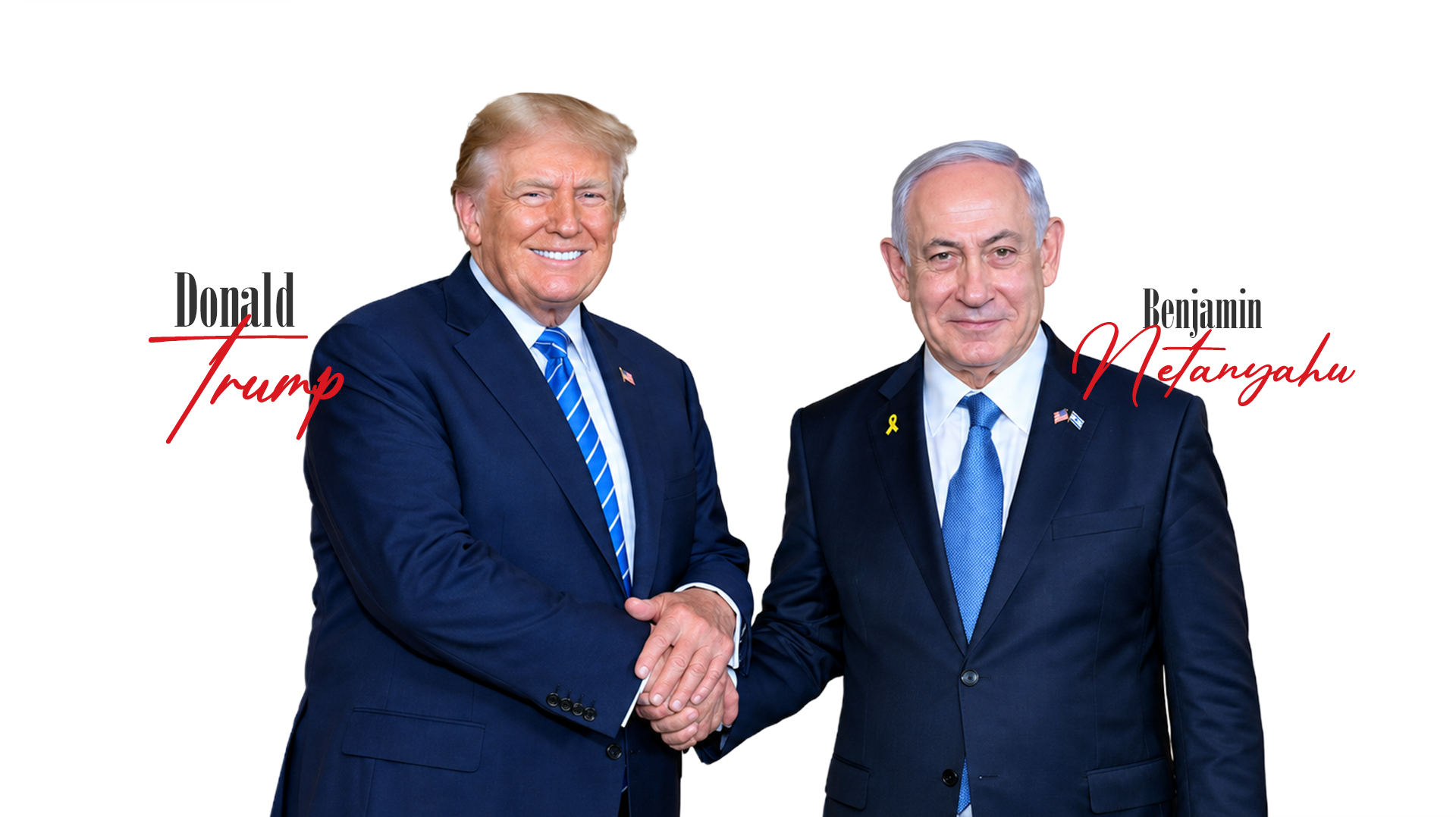
ERBIL (Kurdistan24) — US President Donald Trump on Sunday publicly endorsed Israeli Prime Minister Benjamin Netanyahu for re-election, praising him as a strong wartime leader and key partner in confronting Iran, while warning that a change of government in Israel could leave Washington carrying out the campaign against Tehran on its own.
In a lengthy statement published on his Truth Social platform late Sunday, Trump described Netanyahu as a “Great Warrior Prime Minister” and an “even greater Partner for Peace,” crediting him with helping to weaken Iran militarily and financially.
Trump argued that Iran's longstanding anti-Israel and anti-American rhetoric represented an existential threat, referring to the slogans “Death to Israel, Death to America!” and asserting that the country could eventually act on those threats.
“What Country can survive when things such as this are allowed to be said, because eventually, they always end up being true?” Trump wrote, adding that Iran had been “systematically destroyed, both Militarily and Financially.”
The US president warned that Washington would have to continue the campaign against Iran without Netanyahu if Israeli voters chose another leader.
“If Israel has the wrong Leader, which would be anyone other than Bibi, America will have to do this work ourselves, and I am not inclined to do so,” Trump wrote.
He concluded by declaring his “Complete and Total Endorsement” of Netanyahu in the upcoming Israeli election, adding: “BIBI NETANYAHU WILL NEVER LET YOU DOWN!”
The endorsement comes as Israelis prepare to vote on Oct. 27 in parliamentary elections that could determine whether Netanyahu remains in office after decades at the center of the country's political life.
The election follows the Hamas-led attack of Oct. 7, 2023, and the subsequent regional conflicts involving Israel, Gaza, Lebanon and Iran.
Netanyahu Says Trump Partnership Will Help Eliminate Iranian Threat
Prime Minister Netanyahu said on Sunday that his close relationship with US President Donald Trump would help the two leaders “eliminate the Iranian threat” if he wins the upcoming election, reinforcing the central role of Iran in his campaign.
In a video released by his Likud party shortly after Trump's public endorsement, Netanyahu urged Israeli voters to heed the US president's support, declaring that “we have crushed Iran.”
“Our partnership will continue in order to eliminate the Iranian threat over the next two years, or even sooner,” Netanyahu said, presenting continued cooperation with Washington as a key component of his security agenda.
His remarks underline the importance both leaders attach to their partnership as Israel approaches a closely contested election, with their shared hardline approach toward Tehran emerging as a prominent campaign theme.
Netanyahu's comments also echo Trump's warning that a change in Israeli leadership could leave Washington responsible for continuing the campaign against Iran without the same level of cooperation from Jerusalem.
Israel's upcoming election and Netanyahu's political future
Israel's election will determine the composition of the 120-member Knesset, the country's parliament, from which the next government will be formed. The vote is scheduled for Oct. 27, following the dissolution of the outgoing parliament on July 17.
Netanyahu's Likud party is seeking to maintain power amid a highly polarized political environment, with the prime minister's handling of the Oct. 7 attack, subsequent military campaigns, relations with Washington and domestic controversies central to the campaign.
Recent polling has indicated a competitive race between Netanyahu's political bloc and a collection of opposition parties. Former Israeli military chief Gadi Eisenkot, who leads the Yashar party, has emerged as a prominent challenger and a potential candidate to lead an alternative government.
Eisenkot and other opponents have criticized Netanyahu's leadership and questioned whether his government has achieved its stated military and strategic objectives.
Netanyahu's supporters, meanwhile, argue that his experience and security policies are essential to confronting Iran and other regional adversaries.
However, Israel's parliamentary system means that winning the largest number of seats does not automatically guarantee the premiership. A prospective prime minister must be able to assemble a government supported by a majority of the Knesset, requiring coalition negotiations among parties with differing political and ideological priorities.
The election also takes place amid continuing divisions over the government's judicial policies, the war in Gaza, military service exemptions for ultra-Orthodox Jews and the country's broader security direction.
Netanyahu's long career and repeated returns to power
Born in Tel Aviv in 1949, Netanyahu has become Israel's longest-serving prime minister. He first assumed the office in 1996, serving until 1999, before returning to power in 2009 and remaining in office until 2021. He returned for a third period in 2022 and has led the country since then.
The Israeli parliament's official biography records six elections in which Netanyahu was chosen to serve as prime minister. His cumulative time in office exceeds 18 years, giving him an unparalleled position in the country's political history.
Before becoming prime minister, Netanyahu served as Israel's ambassador to the United Nations from 1984 to 1988 and held senior government positions, including deputy foreign minister and finance minister.
He became leader of Likud in 1993 and subsequently built a political identity around national security, opposition to Iran's regional influence and a right-wing approach to the Israeli-Palestinian conflict.
His political career has also been marked by controversy. Netanyahu's governments have faced repeated disputes over settlements in the occupied West Bank, relations with the Palestinians, judicial independence and the conduct of military operations.
The Hamas-led attack in October 2023 intensified scrutiny of his leadership, particularly over the security failures that preceded the assault. His opponents have argued that he bears political responsibility for the failure to prevent the attack, while his supporters have emphasized the continuing security threats facing Israel.
Netanyahu's position has also been complicated by his criminal trial. In 2019, he was indicted on charges including bribery, fraud and breach of trust in three separate cases. He denies wrongdoing, and the allegations remain subject to judicial proceedings.
Despite the legal cases and political opposition, Netanyahu has remained eligible to seek re-election.
What Israeli law says about Netanyahu running again
Israeli law does not impose a fixed limit on the number of terms a prime minister may serve. Netanyahu can therefore seek another term if his party participates in the election and he can secure the parliamentary support necessary to form a government.
Under Israel's Basic Law: The Knesset, Israeli citizens aged 21 or older are generally eligible to stand for election, subject to specified legal disqualifications. The law does not automatically bar a candidate from parliamentary elections because they face criminal charges.
The legal position concerning an indicted prime minister has been debated in Israel, but the country's Supreme Court rejected petitions in 2020 seeking to prevent Netanyahu from forming a government while facing criminal charges.
The court did not establish a general prohibition against an indicted prime minister assuming office.
Netanyahu's ongoing trial therefore does not, by itself, prevent him from running for re-election or being appointed to form a government. A final criminal conviction and its legal consequences would raise different questions under Israeli law.
His eligibility to contest the election does not resolve the political debate over whether he should remain in office. Opponents argue that the criminal proceedings and security failures under his leadership undermine public confidence, while supporters maintain that voters should decide his political future at the ballot box.
Opposition seeks an alternative to Netanyahu
Netanyahu faces an opposition made up of several parties that differ on economic policy, religion, security and the Palestinian issue but share opposition to his continued leadership.
Eisenkot, a former chief of staff of the Israel Defense Forces, has positioned himself as a prominent alternative. He has criticized the government's handling of the conflicts that followed the Oct. 7 attack and argued that Netanyahu has prioritized political and personal considerations over broader strategic objectives.
Other opposition figures have challenged Netanyahu over the government's judicial overhaul proposals, which prompted mass demonstrations in 2023, as well as his handling of the war in Gaza and relations with the United States.
The opposition's main challenge is to convert dissatisfaction with Netanyahu into a workable parliamentary majority. Its component parties do not share a unified position on every major policy question, and coalition arithmetic could prove decisive even if Likud loses seats.
Arab-led parties could also influence the formation of the next government, although Netanyahu and several leading opposition figures have ruled out partnering with them, potentially complicating efforts to assemble a majority.
The election is therefore not simply a referendum on Netanyahu's personal popularity. It will also determine which political blocs can cooperate to govern and whether a change in leadership is possible under Israel's parliamentary system.
Trump and Netanyahu: a close partnership centered on Iran
Trump's endorsement underscores the close political and strategic relationship he has maintained with Netanyahu, particularly over Iran.
During Trump's first presidency, the United States recognized Jerusalem as Israel's capital, recognized Israeli sovereignty over the Golan Heights and brokered the Abraham Accords, which normalized relations between Israel and several Arab states.
The two leaders have also shared a hardline approach to Iran's nuclear and regional activities. Trump withdrew the United States from the 2015 nuclear agreement with Iran in 2018 and restored extensive sanctions, while Netanyahu has long argued that Tehran's nuclear ambitions and support for armed groups pose a direct threat to Israel.
Their alignment has continued during the current conflict with Iran. US and Israeli strikes on Iranian targets began on Feb. 28, 2026, triggering a wider regional confrontation and intensifying concerns over the security of energy infrastructure, shipping routes and US military facilities.
Trump's latest statement presents Netanyahu as an indispensable partner in that campaign and suggests that the Israeli election could affect Washington's willingness to continue military operations.
However, the relationship has not been without strategic differences. Recent reporting indicates that the leaders have discussed the possibility of renewed major military action against Iran, while Trump has also shown hesitation over the timing and potential consequences of further escalation. Diplomatic efforts to end the conflict have continued alongside military planning.
The election therefore creates a political dilemma for both leaders. Netanyahu has an incentive to demonstrate that his security strategy has strengthened Israel, while Trump must weigh his support for the Israeli prime minister against the risks, costs and wider consequences of a prolonged conflict with Iran.
Trump's endorsement makes that connection unusually explicit: he has tied his preferred outcome in Israel's election to the future of the US campaign against Tehran.
His statement is a political intervention in a foreign country's election, although the extent to which it will influence Israeli voters remains uncertain.
For Netanyahu, the backing of the US president offers a powerful demonstration of international support at a critical moment in his political career.
Whether it translates into an electoral advantage will depend on Israeli voters and the ability of the competing political blocs to form a government after Oct. 27.