Kurdish Poet Hazhar Shamiloglu Launches New Book at Baku International Book Fair
Shamiloglu is a prominent Kurdish literary figure and cultural activist in Azerbaijan. Born into a literary family in the Kalbajar region, he is the son of the late Kurdish scholar, poet, and researcher Shamil Asgarov.
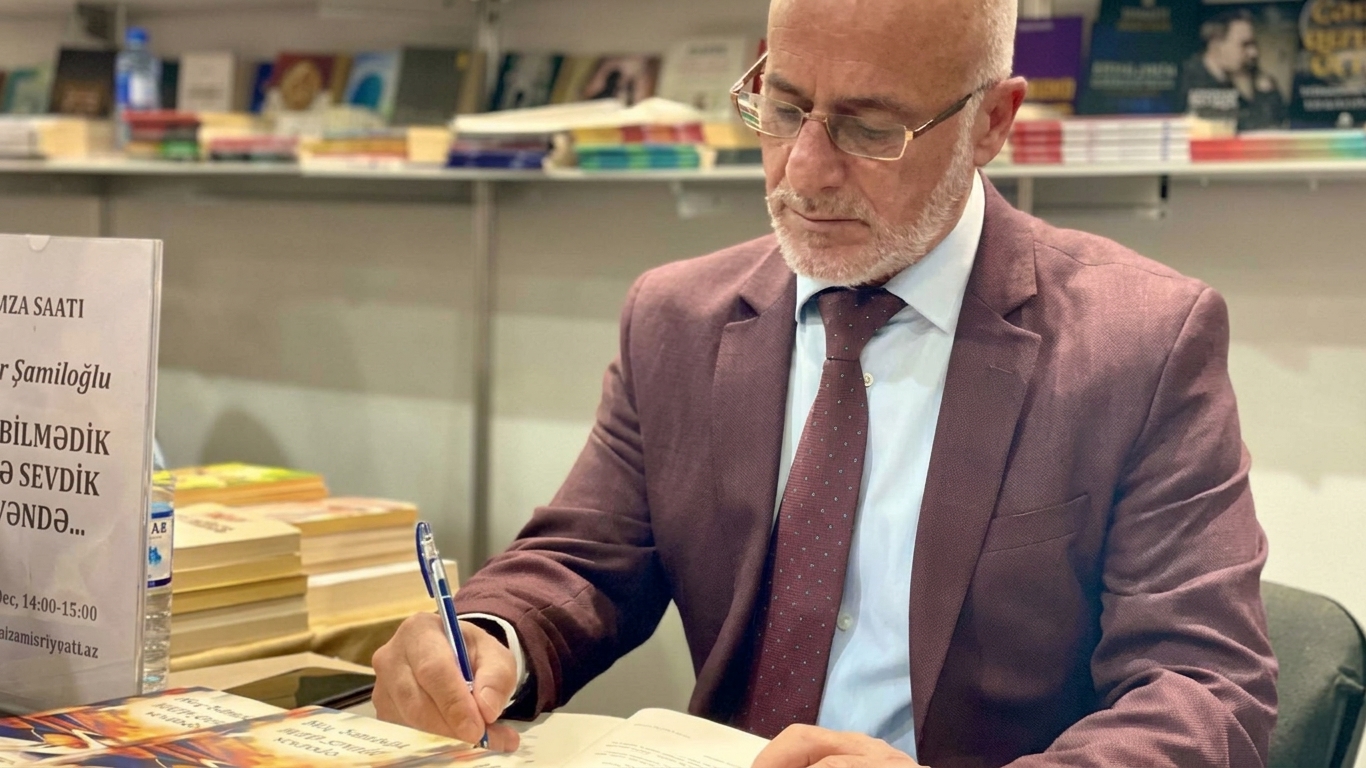
ERBIL (Kurdistan24) — Kurdish poet and cultural activist Hazhar Shamiloglu launched his latest book, I Never Understood How I Loved While I was in Love, at the 12th Baku International Book Fair in Azerbaijan.
The launch and book-signing ceremony took place at the Mojro Publishing booth, attracting writers, cultural figures, researchers, and members of Kurdish youth organizations and groups.
The 128-page book brings together some of Shamiloglu’s best-known poems alongside new works in Azerbaijani, offering readers a collection of his literary contributions.
Shamiloglu is a prominent Kurdish literary figure and cultural activist in Azerbaijan. Born into a literary family in the Kalbajar region, he is the son of the late Kurdish scholar, poet, and researcher Shamil Asgarov. He has published 25 books in various languages, writing in Azerbaijani Turkish and Kurdish.
Beyond his literary career, Shamiloglu has spent more than three decades raising international awareness of the occupation of Kalbajar and the wider Nagorno-Karabakh conflict.
The book launch also highlighted the enduring presence of the Kurdish community in Azerbaijan, where Kurds have lived for generations. Estimates of the community's size vary considerably, with official figures placing the population at between 6,000 and 13,000, while unofficial estimates that include descendants living in cities such as Baku and Sumqayit suggest a significantly larger population.
The conflict over Nagorno-Karabakh and the occupation of territories including Kalbajar and Lachin in the 1990s led to the displacement of many residents, including Kurds. Over time, shared religious affiliations and longstanding coexistence contributed to cultural and linguistic assimilation. Nevertheless, organizations such as the Ronahi Cultural Center continue to work to preserve Kurdish cultural identity.
The history of Kurds in Azerbaijan is also connected to Red Kurdistan, a Soviet-era administrative entity established in 1923 and dissolved in 1929. Centered in Lachin, it encompassed areas including Kalbajar, Gubadli, and Zangilan and was established to administer the region's Kurdish population within a designated territorial unit.
Despite its short existence and subsequent demographic changes and displacement, Red Kurdistan remains a significant chapter in the history of Kurds in the Caucasus.
