Rains Expose Basic Service Gaps in Baghdad’s Zafaraniyah
Residents of Zafaraniyah in southern Baghdad urge the government to pave muddy alleys as the rainy season begins, saying they paid for water and power.
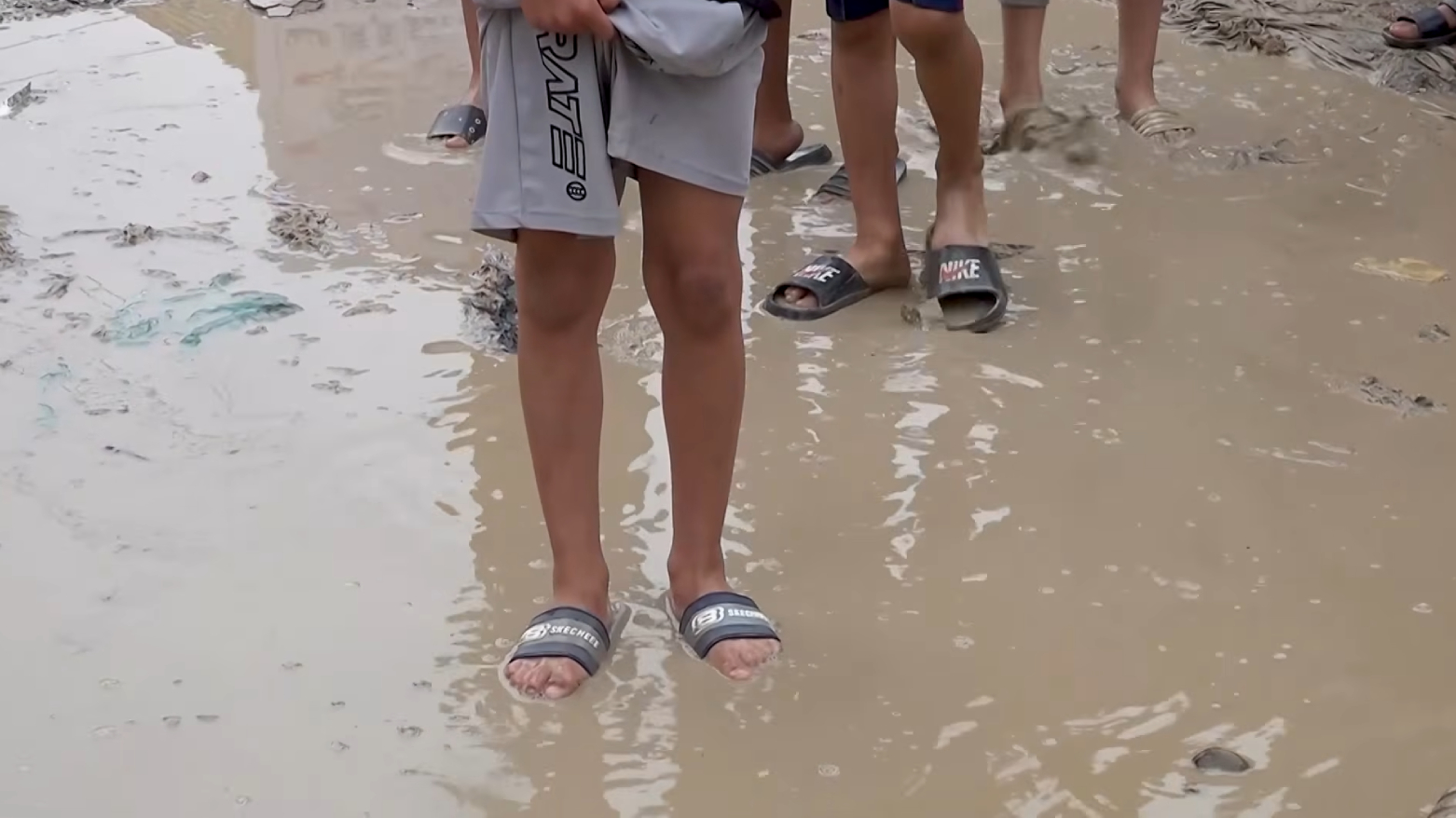
ERBIL (Kurdistan24) - Residents of the Zafaraniyah area in southern Baghdad are calling on the government to pave and concrete their unpaved alleys as the rainy season begins, saying even light rain turns the neighborhood’s streets into mud and that officials’ promises have gone unfulfilled.
Sami Anoush, a resident of the area, said to Kurdistan24 on Saturday: “On rainy days, a martyr’s wife put her children under her abaya (Loose robe) and took them to school, with mud covering all of them. We have only asked for our alleys to be concreted, because we have drawn water and electricity at our own expense.”
With the start of the rainy season, the shortage of basic services has resurfaced in Baghdad and its surrounding districts and subdistricts.
Zafaraniyah is among the areas where residents are affected by unpaved and unconcreted alleys, and they move through mud and sludge every day when it rains.
Residents have demanded for years what they describe as their most basic right, the paving and concreting of their streets. According to the people of the area, officials’ promises have remained only on paper.
Saif Mohammed, a member of the Zafaraniyah area council, said there are students and elderly people in the area who cannot leave their doorsteps in winter.
He said officials who visit only at election time to ask for votes are now absent and do not feel the residents’ problems.

Seraj Ghazi, another resident, said: “We have run water, sewage and electricity to the neighborhood at our own expense, but we do not have the financial means to concrete the alleys, and the government must take on that responsibility.”
The situation in Zafaraniyah is a small example of the difficult reality faced by most areas around Baghdad.
In the north, south and east of the capital, hundreds of neighborhoods still have no sewage network, basic infrastructure or even a school, and their daily life is paralyzed with every wave of rain.
Although a large budget is allocated for services every year, residents of these areas are demanding a fundamental solution to their problems, so that their area can be freed from the mud of the winter season like any other urban area.