Kurdish Soprano Pervin Chakar Holds Opera Masterclass in Sulaimani
Kurdish soprano Pervin Chakar launches a four-day opera masterclass in Sulaimani and visits a museum preserving the city's diverse cultural heritage.
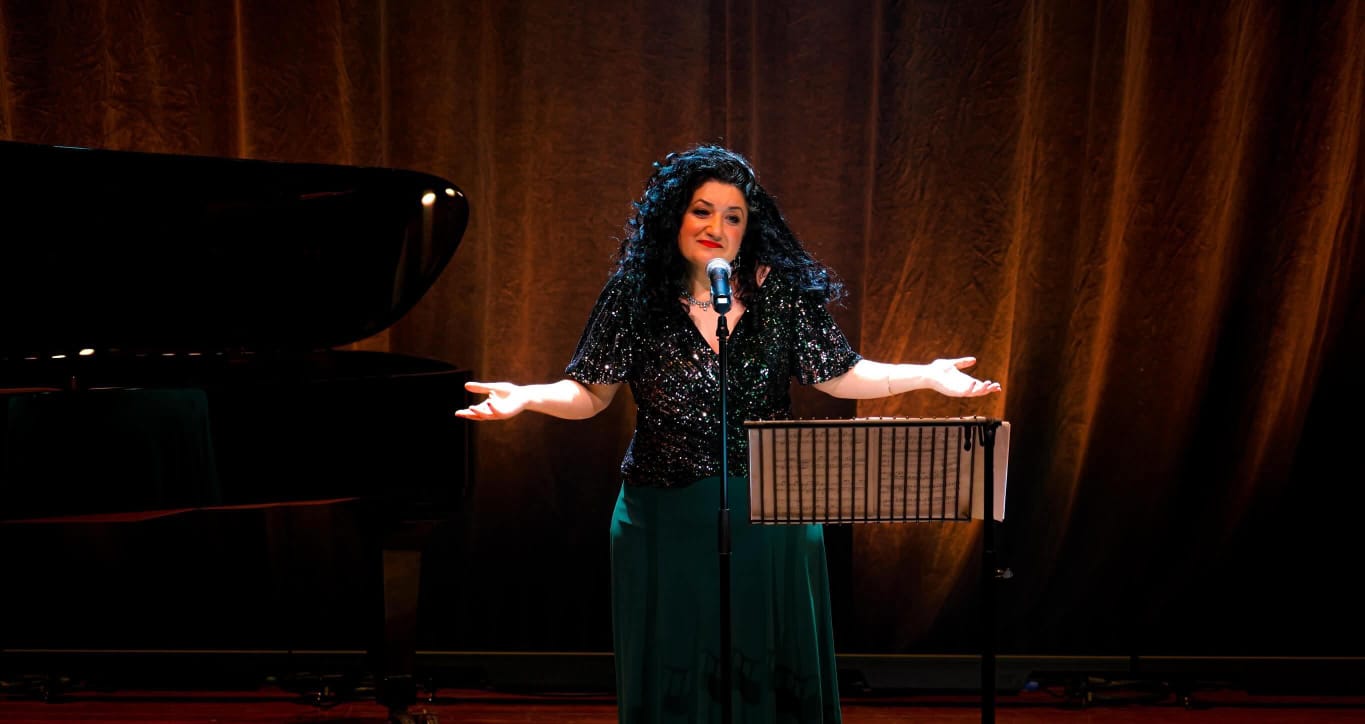
ERBIL (Kurdistan24) - Kurdish soprano Pervin Chakar, whose career has taken her to opera stages across Europe, is bringing that experience to Sulaimani, where a four-day masterclass at the University of Sulaimani is introducing young musicians to the techniques and demands of classical singing.
Held at the Music Department of the university's College of Fine Arts, the program focuses on vocal technique, classical singing and opera.
For Chakar, however, the lessons carry an additional purpose: giving emerging Kurdish performers the preparation to pursue an international career without setting aside the musical traditions and languages in which they grew up.
Speaking to Kurdistan24, Chakar described the initiative as an opportunity to share what she has learned during years of professional performance.
She argued that Kurdish musical heritage and Western classical music should not be treated as competing traditions, but as forms of expression that can enrich each other.
"Talent has no geography, but it needs proper education and international standards in order to develop," she said. "A young Kurd should have the opportunity to sing melodies in their mother tongue while also being able to perform works by masters such as Mozart, Verdi and Puccini on the world's stages."
Her remarks capture the ambition behind the four-day program: musical education that equips students to work across traditions rather than requiring them to choose between them.
The presence of an internationally established Kurdish singer at a local university also places questions of training, opportunity and cultural identity at the center of the masterclass.
Bringing Opera Education Closer to Home
Chakar's own training took her far beyond the region. Born in Mardin, Northern Kurdistan, in 1981, she pursued vocal studies in Italy, completing a master's degree at the F. Morlacchi Conservatory in Perugia.
She went on to earn international recognition, receiving awards and developing concert and recording projects that bring together Western classical music and Kurdish folk influences.
That combination informs her approach to teaching.
The disciplines of classical vocal performance, which require sustained technical study, need not erase the distinctive qualities of Kurdish song, she suggested. Instead, she wants younger artists to gain the skills needed to present their own cultural repertoire while also engaging confidently with the wider operatic canon.
The Sulaimani classes are not her first effort to take that experience into an educational setting.
Chakar recalled holding her first masterclass at the Sezai Karakoç Cultural Center in Amed (or also known as Diyarbakir), another occasion on which she sought to share professional knowledge with young musicians.
She thanked the University of Sulaimani for hosting the latest program and said such initiatives were intended to help young people find their place in the international arts community.
No details were provided about the number of participants or the individual pieces being studied during the four days.
What Chakar has emphasized is the relationship between training and access: a talented voice needs instruction, standards and opportunities to develop if its potential is to reach an audience beyond its immediate surroundings.
Her emphasis on Kurdish-language performance alongside Mozart, Verdi and Puccini also reflects a career in which opera has been a means of carrying Kurdish stories to listeners who may encounter them for the first time through music.
A Visit to Sulaimani's Cultural Memory
Chakar's time in the city has extended beyond the classroom. On Saturday, Nov. 21, 2026, she shared an account on Instagram of a visit to The Kurd's Heritage Museum, on historic Mawlawi Street in central Sulaimani.
In her post, she drew attention to the museum's work preserving objects and memories associated with the communities that have lived in the city.
She described a collection that began in 2000 through the efforts of heritage specialist Erfan Othman and artist Barzan Qadir, who initially gathered traditional Kurdish objects using their own resources.
According to Chakar's account, the collection expanded through purchases, donations and inherited family possessions.
The museum now occupies the upper floor of the historic Farah Hotel, which opened in the early 1920s and is described as Sulaimani's oldest hotel. After restoration of the building, the museum officially opened on Nov. 14, 2015, coinciding with the city's foundation anniversary.
One section particularly interested the soprano: a collection of Jewish heritage objects associated with families who once lived in Sulaimani before emigrating to Israel. Chakar said it contains approximately 25 items, including three rare Torah scrolls, parts of a Mizrahi Torah and examples of Jewish craftsmanship.
For her, the objects spoke to the city's history as a home to more than one community. She wrote that the museum preserved "the memories of different communities, traditions and lives" that contributed to the region's cultural identity.
"Preserving heritage means preserving our collective memory and passing it on to future generations," she added.
That concern with transmission closely parallels the purpose she has set out for her masterclass. In one setting, Chakar is discussing how musical knowledge passes from experienced performers to students; in the other, she is drawing attention to how material objects carry the traces of earlier generations.
Kurdish Memory in Her Music
Chakar's work has also brought Kurdish historical memory into her compositions and performances. In 2023, she announced an album dedicated to victims of the 1988 chemical attack on Halabja, drawing on a poem by Kurdish writer Sherko Bekas.
The project, announced ahead of the attack's 35th anniversary, was scheduled for release on March 14, 2023.
Chakar told Kurdistan24 at the time that she wanted the music to honor those killed and their families, and to encourage listeners unfamiliar with the tragedy to learn about it.
Her inspiration followed a visit to Halabja after a performance at the Erbil Citadel. At the Halabja museum, she encountered a poem by Bekas, whose writings about the city helped shape her decision to create a commemorative musical work.
The album involved compositions by Chakar, Tommaso Saturnia and Ezgi Tekin. In discussing the project, Çakar described singing "Çwardey Mang Bû" in Italian and Sorani, demonstrating the multilingual approach that also informs her current teaching philosophy.
She said she had composed and performed a poem in Zazaki, another expression of her interest in sustaining linguistic heritage through music.
Read More: Kurdish Artist Releases Album in Honor of Halabja Victims
For Chakar, the purpose was not simply to place Kurdish material beside European classical forms, but to make cultural memory audible to audiences across linguistic boundaries.
Her interest in Kurdish artists of earlier generations has also reached beyond music.
In July 2023, Kurdistan24 reported that Chakar had announced the discovery, following extensive research, of the grave of Kurdish ballet pioneer Leyla Bedir Khan at Saint-Cloud Municipal Cemetery in Paris.
Bedir Khan, who performed on international stages and later established a dance school in France, represents another chapter in the history of Kurdish artists working within European performance traditions.
Read More: Burial Place of Ballet Dancer Leyla Bedir Khan Found
Chakar's public attention to her burial place reflected a wider interest in preserving the stories of those performers.
In Sulaimani, these interests meet in a practical setting.
The four-day masterclass offers an occasion to pass on professional techniques, while Chakar's visits and previous projects place that instruction in conversation with Kurdish language, history and artistic inheritance.
Her message to students is that developing the ability to perform opera at an international level need not mean leaving Kurdish music behind. She wants young singers to have both: the education to approach demanding classical works and the confidence to carry their own songs onto the same stages.