Live

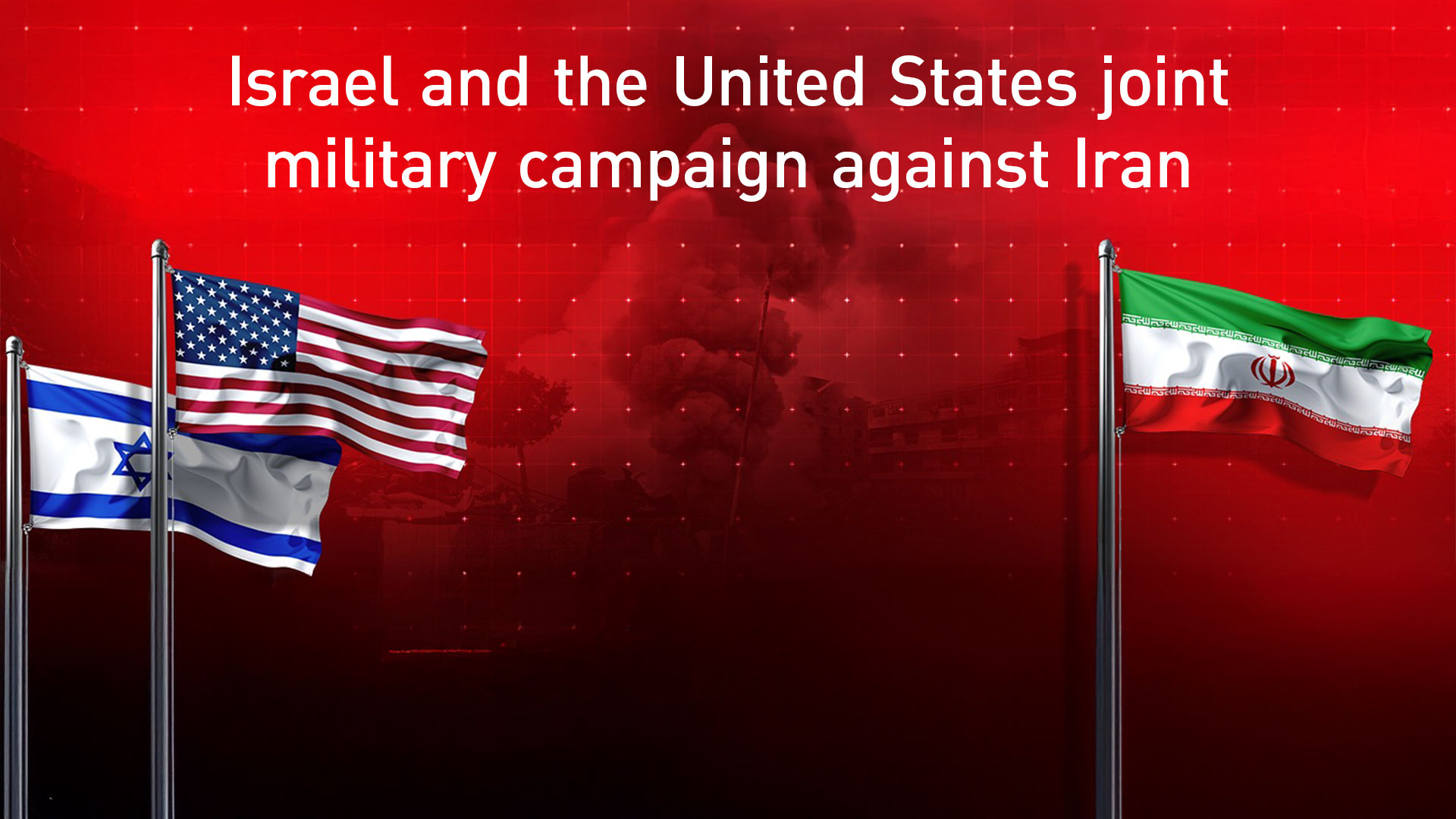
Israel and the United States joint military campaign against Iran

A coordinated offensive by Israel and the United States targets strategic military sites across Iran, marking a dramatic escalation in regional tensions.

Iran
Graphic Designed by Kurdistan24
Shared

Iran's Qalibaf: Revolutionary Guards Are Symbol of Iran's Power, Security, and Border Protection

Ahora Qadi
Ahora Qadi
Ahora Qadi

Mohammad Baqer Qalibaf, Speaker of Iran's Parliament, issued a message on the occasion of Iran's Army Day, stating: "The Islamic Republic of Iran's army is a symbol of power and security, a force with deep roots in the hearts of the people."

Qalibaf noted that commanders and devoted forces of the army have always been on the front lines in all fields, including military wars, natural crises, and services. He said: "Having such brave commanders and soldiers is a source of pride for the Iranian people."

The Parliament Speaker highlighted the army's history of activities, stating: "From the early days of the Revolution's victory and confronting armed unrest and the eight-year Iran-Iraq war, to the 12-day war and the recent direct confrontation of the army with the US and Israel, this force has demonstrated the truth of power and devotion to its nation."

He also noted that the army stands under the command of the leaders of the Islamic Republic (Imam Khomeini, Ayatollah Ali Khamenei, and Ayatollah Mojtaba Khamenei) and has shown that it will not surrender to threats, protecting the country's independence and dignity until its last breath.

At the end of his message, while congratulating Army Day, Qalibaf paid respects to the memory of martyrs, wounded, and freed prisoners of the army.

 

Key Points

Netanyahu Warns Conflict With Iran far From Over, Says New Developments Possible 'at any Moment' Read More

Iran Conditions Strait of Hormuz Reopening on End to U.S. Naval Blockade Read More

Iran Reviews New U.S. Proposals as Strait of Hormuz Tensions Escalate Read More

US ramps up pressure on Iran with troop deployment and blockade as talks edge toward restart Read More

Trump Criticizes Italy’s Meloni Over Refusal to Back Iran War Read More

First Cross-Border Aid Shipments Reach Iran as Humanitarian Needs Mount Read More

Trump Says Iran Has Contacted U.S. Seeking Deal ‘Very Badly,’ After Weekend Talks Collapse Read More

UKMTO Warns of Sweeping Maritime Restrictions as US-Enforced Blockade of Iran Comes into Effect Read More

U.S. Enforces Iran Naval Blockade as Trump Warns of Immediate Strikes on Approaching Vessels Read More

ASEAN Urges U.S., Iran to Continue Talks as Hormuz Crisis Threatens Global Oil Flow Read More

Auto updates

Iraqi Central Bank Denies Reports of U.S. Dollar Halt

Dr. Kamaran Aziz
Dr. Kamaran Aziz
Dr. Kamaran Aziz

Conflicting reports of a currency freeze highlight Washington’s financial leverage over Baghdad.

On Monday, April 20, 2026, the Central Bank of Iraq (CBI) officially rejected reports that the United States had suspended shipments of physical U.S. dollars to Baghdad.

The denial followed claims by regional media, including Al-Hadath, that Washington had halted currency transfers and security coordination as part of a crackdown on Iran-aligned militias.

These reports come on the heels of April 17 U.S. State Department sanctions against seven militia commanders from groups like Kata’ib Hizballah and Asa’ib Ahl al-Haqq.

While the CBI insists the flow of cash is normal, the U.S. Embassy in Baghdad remains under a Level 4 "Do Not Travel" alert, citing ongoing militia threats in federal Iraq. 

The conflicting signals underscore the high-pressure environment as Iraqi leaders attempt to form a new government under the shadow of potential U.S. economic sanctions and demands for militia disarmament.

 
Click to Read More

Netanyahu Warns Conflict With Iran far From Over, Says New Developments Possible 'at any Moment'

Kurdistan 24 Digital Media

Israeli Prime Minister Benjamin Netanyahu said the confrontation with Iran remains ongoing and could escalate further at any time, underscoring the fragile state of the conflict.

Speaking alongside Argentine President Javier Milei on Sunday, Netanyahu said the US-Israeli effort against Iran is "not over yet."

"Any moment could bring us new developments," he said. "Who knows what tomorrow or the day after tomorrow will bring?"

He added that the United States and Israel "shall achieve our objectives and achieve more hope, more light for the free peoples of the world."

During a separate meeting with Milei in Jerusalem, Netanyahu reiterated the message, stating, "We are at war with Iran. The issue is not over, and at any moment new developments could occur."

 
Click to Read More

Iran Halts Decision on Diplomatic Talks Over U.S. Hostilities

Dr. Kamaran Aziz
Dr. Kamaran Aziz
Dr. Kamaran Aziz

On Monday, April 20, Iranian Foreign Ministry spokesperson Esmail Baghaei announced that Tehran has not yet decided whether to participate in a second round of negotiations with the U.S. and international mediators. Baghaei accused Washington of continuously violating existing ceasefire clauses, citing alleged U.S. non-compliance with Lebanon agreements, an attempted maritime blockade, and an attack on an Iranian commercial vessel. He blamed U.S. and Israeli military activities for rising tensions in the Persian Gulf and Strait of Hormuz.

Additionally, Baghaei revealed that recent diplomatic efforts in Islamabad and Tehran involved a 15-point U.S. plan and a 10-point Iranian counter-proposal, resulting in a specific, consolidated package. However, citing past U.S. strikes on Iranian territory during negotiations, Baghaei emphasized that Iran will proceed based strictly on its national interests. U.S. and Israeli officials have not yet responded to the allegations.

 
Click to Read More

Iran Executes Two Accused of Espionage Amid Regional Ceasefire

Dr. Kamaran Aziz
Dr. Kamaran Aziz
Dr. Kamaran Aziz

Iranian authorities executed two men at dawn on Monday after convicting them of espionage for Mossad, Israel's intelligence agency. The executions of Mohammad Masoom-shahi and Hamed Validi were confirmed by Mizan Online, the Iranian judiciary's official news agency. The men were convicted of "moharebeh" (waging war against God) and collaboration with Israel.

These executions are the latest in a series of capital punishments carried out by Tehran since the outbreak of direct conflict with Israel and the United States on February 28. Notably, the executions took place while a fragile, two-week ceasefire—implemented on April 8—remains in effect. International rights groups note that Iran is the world's second most prolific executioner, following China. The executions underscore Tehran’s ongoing internal security crackdown, which continues to operate independently of the temporary pause in regional military hostilities.


Hezbollah Accuses Israel of Ceasefire Violations

Dr. Kamaran Aziz
Dr. Kamaran Aziz
Dr. Kamaran Aziz

The Deputy Chairman of Lebanese Hezbollah's High Political Council, Mahmoud Qamati, told Kurdistan24 that Israel is actively violating the U.S.-brokered 10-day ceasefire. Qamati alleged that Israeli forces continue to deploy drones, shell territory, and demolish homes, resulting in civilian casualties.

Emphasizing full combat readiness, Qamati warned that Hezbollah forces have their "hands on the trigger," with missile systems prepared for immediate deployment if the truce collapses.

The ceasefire, announced by U.S. President Donald Trump, aims to facilitate diplomatic talks and humanitarian aid following weeks of intense conflict. The war has displaced approximately 20 percent of Lebanon's population and triggered a severe internal crisis, culminating in the Lebanese government ordering a halt to Hezbollah's military activities and expelling the Iranian ambassador.


Iran Threatens Retaliation After U.S. Seizes Cargo Ship

Dr. Kamaran Aziz
Dr. Kamaran Aziz
Dr. Kamaran Aziz

Iran vowed imminent retaliation after U.S. Marines boarded and seized the Iranian-flagged commercial vessel M/V Touska in the Gulf of Oman. The operation occurred after the USS Spruance disabled the ship's propulsion following a six-hour standoff over the U.S. naval blockade. Iranian forces reportedly launched retaliatory drones toward U.S. warships shortly after the seizure.

The maritime confrontation has triggered severe diplomatic fallout. Iran's Khatam al-Anbiya Central Headquarters labeled the U.S. action "maritime piracy." The Strait of Hormuz remains closed by Iranian forces, causing a surge in global oil prices and prompting the UKMTO to elevate the regional threat level to "critical."

Prospects for a negotiated settlement are rapidly deteriorating. While a U.S. delegation led by Vice President JD Vance is expected in Pakistan for talks, Iranian state media indicates Tehran does not plan to participate, citing extreme mistrust following ongoing maritime hostilities and U.S. threats against Iranian infrastructure before the ceasefire's Wednesday expiration.


U.S. Marines Seize Iranian Vessel in Arabian Sea

Dr. Kamaran Aziz
Dr. Kamaran Aziz
Dr. Kamaran Aziz

Maritime escalation threatens to derail fragile ceasefire negotiations in Islamabad.

U.S. Central Command (CENTCOM) confirmed Monday that U.S. Marines boarded and seized the Iranian-flagged commercial vessel M/V Touska in the Arabian Sea. The operation occurred after the USS Spruance disabled the ship's propulsion following a six-hour standoff over the U.S. naval blockade.

The seizure has triggered severe diplomatic fallout. Iran's joint military command labeled the action "maritime piracy," while state media reported retaliatory drone launches toward U.S. ships. The Strait of Hormuz remains closed by Iranian forces, causing a surge in global oil prices.

Prospects for a negotiated settlement are rapidly deteriorating. While a U.S. delegation led by Vice President JD Vance is expected in Pakistan for talks, Iranian state media indicates Tehran does not plan to participate, citing extreme mistrust following ongoing maritime hostilities and U.S. threats against Iranian infrastructure.


Pezeshkian: Washington Cannot Unilaterally Deprive Iran of Its Nuclear Rights

Dr. Kamaran Aziz
Dr. Kamaran Aziz
Dr. Kamaran Aziz

A fragile two-week truce nears expiration as Washington and Tehran clash over maritime and nuclear red lines.

Iranian President Masoud Pezeshkian warned U.S. President Donald Trump that Washington cannot unilaterally deprive Iran of its nuclear rights, further complicating ongoing ceasefire negotiations mediated by Pakistan.

U.S. President Donald Trump characterized the discussions as "very good" but publicly rejected any Iranian pressure regarding the contested Strait of Hormuz.

Meanwhile, Iranian Vice President Mohammad Reza Aref asserted Tehran’s authority to manage the strategic waterway, warning that Iran will secure its maritime rights diplomatically or operationally.

The diplomatic standoff over nuclear material and maritime control occurs as the current two-week truce approaches its expiration this week.

Simultaneously, state and independent monitors report the six-week conflict has resulted in over 3,500 fatalities.

If indirect talks in Islamabad collapse, Israeli and U.S. forces have indicated preparations to strike Iranian energy infrastructure, threatening an immediate return to region-wide military engagement.

 
Click to Read More

Iran Conditions Strait of Hormuz Reopening on End to U.S. Naval Blockade

Dler Mohammed
Dler Mohammed
Dler Mohammed

Iran said Saturday that the Strait of Hormuz will not fully reopen unless the United States lifts its naval blockade on Iranian ports, underscoring the fragility of ongoing negotiations and raising fresh concerns over global energy flows.

Mohammad Bagher Ghalibaf, speaking in a televised address, acknowledged “progress” in talks with Washington but stressed that significant differences remain. “We are still far from the final discussion,” he said, referring to negotiations aimed at ending the conflict involving the United States, Israel, and Iran.

A two-week ceasefire linked to the broader confrontation is set to expire on Wednesday, adding urgency to diplomatic efforts. Meanwhile, Donald Trump said “very good conversations” were underway but warned Tehran against attempting to “blackmail” Washington.

 
Click to Read More

Iran Rejects Nuclear Demands Amid Diplomatic Deadlock

Dr. Kamaran Aziz
Dr. Kamaran Aziz
Dr. Kamaran Aziz

Efforts to finalize a permanent end to the six-week war remain deadlocked as a temporary, two-week ceasefire nears expiration.

Iranian Deputy Foreign Minister Saeed Khatibzadeh announced that Tehran will not transfer enriched uranium to the US, calling the matter non-negotiable.

Khatibzadeh also stated that Iran demands the inclusion of Lebanon in any comprehensive truce.

Independent and state monitors report the conflict has resulted in over 3,500 fatalities.

The Human Rights Activists News Agency (HRANA) places the toll at 3,636, including 1,701 civilians.

The Strait of Hormuz remains closed to commercial transit due to a US Central Command naval blockade and reciprocal Iranian military directives.

Concurrently, Israeli officials report updated military coordination with the United States to strike Iranian energy facilities if diplomatic channels in Islamabad collapse.

 
Click to Read More