US ramps up pressure on Iran with troop deployment and blockade as talks edge toward restart
The US increased military pressure on Iran with troop deployments and a naval blockade, while Trump signaled imminent talks, as regional tensions and diplomatic efforts unfolded simultaneously
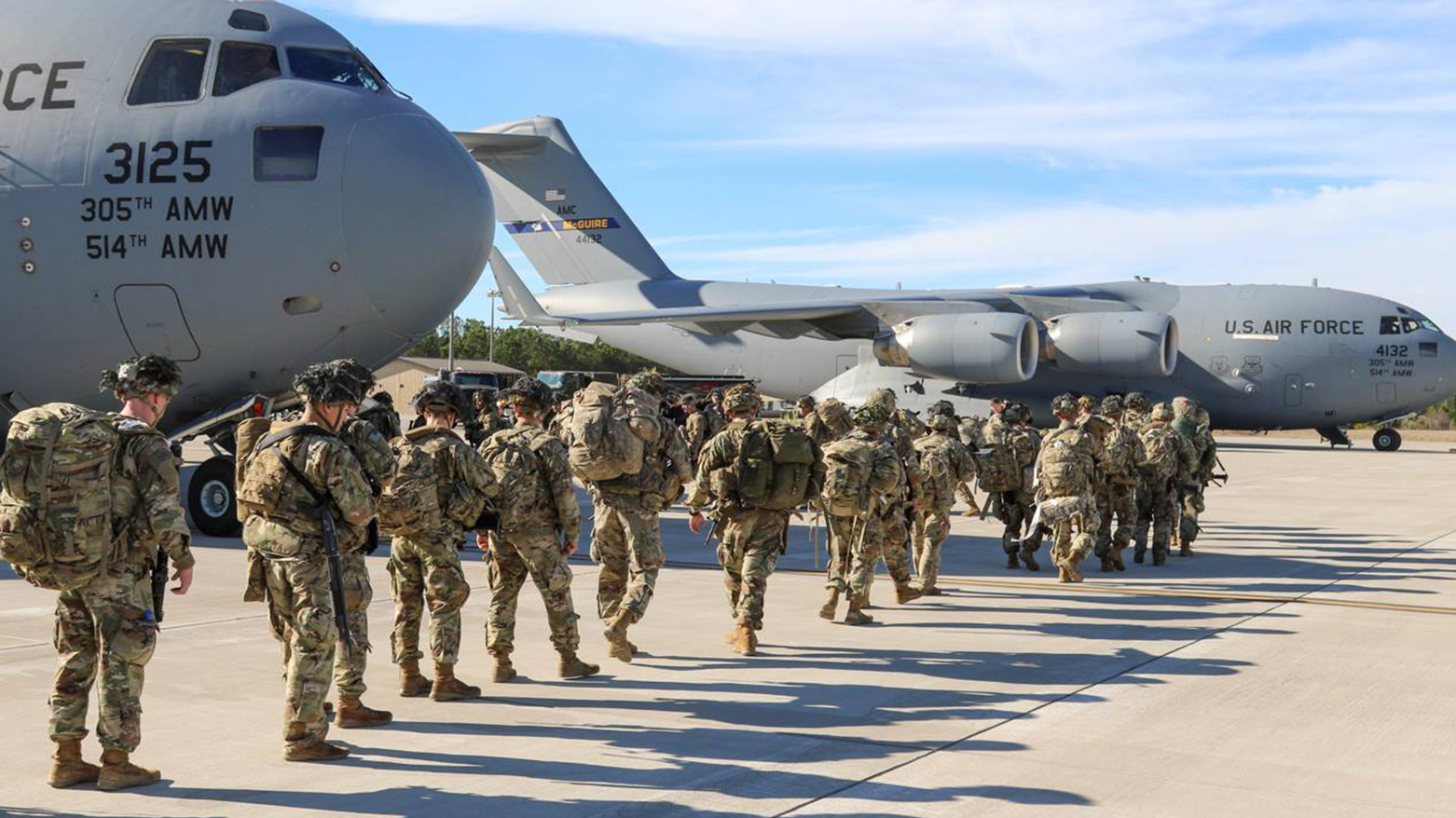
ERBIL (Kurdistan24) — The United States intensified pressure on Iran on Wednesday, combining a large-scale military deployment with a naval blockade, as President Donald Trump signaled that peace talks with Tehran could resume within days.
The Pentagon is sending thousands of additional troops to the Middle East as part of a broader effort to force Iran toward a deal that could end the weeks-long conflict. The move comes alongside a maritime blockade that Washington says has cut off Iran’s seaborne trade.
The incoming forces include approximately 6,000 troops aboard the aircraft carrier USS George H.W. Bush, accompanied by several escorting warships. An additional 4,200 personnel from the Boxer Amphibious Ready Group and its embarked Marine Corps task force, the 11th Marine Expeditionary Unit, are expected to arrive near the end of the month.
These reinforcements are set to join an estimated 50,000 US personnel already in the region, as a two-week ceasefire approaches its expiration on April 22.
At the same time, US Central Command said the blockade had been “fully implemented,” claiming American forces had “completely halted economic trade going into and out of Iran by sea.” However, maritime tracking data indicated that several ships departing Iranian ports had crossed the Strait of Hormuz despite the blockade.
Trump indicated that diplomacy could resume soon, telling the New York Post that a new round of talks with Iran could take place in Pakistan “over the next two days” after earlier negotiations ended without a breakthrough. In a separate interview with FOX Business, he said the war was “very close to being over.”
Senior Pakistani sources said Islamabad is working to organize a second round of talks, as Prime Minister Shehbaz Sharif began a four-day diplomatic visit to Saudi Arabia, Qatar, and Turkey to support mediation efforts.
The diplomatic push comes as tensions across the region remain high. Israel and Lebanon agreed to launch direct negotiations following a rare face-to-face meeting in Washington, even as fighting between Israel and Hezbollah continued despite the ceasefire with Tehran.
Lebanese state media reported Israeli strikes south of Beirut, while Iran-backed Hezbollah fired dozens of rockets at Israel. The developments raised concerns in Washington that the Israel-Hezbollah conflict could undermine the fragile ceasefire with Iran and broader efforts toward de-escalation.
Lebanon became involved in the conflict after Hezbollah launched attacks on Israel in support of Iran, prompting an Israeli ground offensive and sustained strikes.
Diplomatic engagement between Israel and Lebanon resumed Tuesday, when their ambassadors held their first direct, high-level talks since 1993, mediated by US Secretary of State Marco Rubio. The US State Department said all sides agreed to begin direct negotiations at a mutually agreed time and venue.
Israel’s envoy described the meeting as “a wonderful exchange” between parties “united in liberating Lebanon” from Hezbollah, while Lebanon’s representative called the discussions “constructive” and emphasized the need for a ceasefire.
Meanwhile, analysts say the US strategy is aimed not only at restricting Iran’s revenue but also at increasing pressure on China, the largest buyer of Iranian oil, to influence Tehran’s position on reopening the Strait of Hormuz.
China and Russia signaled coordination on the issue, as Chinese President Xi Jinping hosted Russia’s top diplomat Sergei Lavrov, with both countries pledging to work toward de-escalation in the Middle East.
At the center of the US-Iran negotiations remains the long-standing dispute over Tehran’s nuclear program. Vice President JD Vance said the United States has offered Iran a “grand bargain,” under which Tehran would be expected to commit to not developing a nuclear weapon.
Trump has insisted that any agreement must permanently prevent Iran from becoming nuclear-armed, while Tehran maintains its nuclear program is intended for civilian purposes.
Reports indicate the United States proposed a 20-year suspension of Iran’s uranium enrichment program during earlier talks in Islamabad, while Iran suggested a five-year suspension of nuclear activity, which US officials rejected.
Vance said Trump had pledged to “make Iran thrive” if it agreed to forgo nuclear weapons, adding that negotiations would continue in an effort to reach a deal.
The convergence of military escalation and renewed diplomatic efforts underscores the fragile balance between conflict and negotiation, as regional tensions and global interests collide.