Netanyahu Warns Conflict With Iran far From Over, Says New Developments Possible 'at any Moment'
The Israeli prime minister has warned that the conflict with Iran could escalate at any moment, as ceasefire talks continue in Pakistan amid unresolved disputes and ongoing regional tensions.
ERBIL (Kurdistan 24) — Israeli Prime Minister Benjamin Netanyahu said the confrontation with Iran remains ongoing and could escalate further at any time, underscoring the fragile state of the conflict.
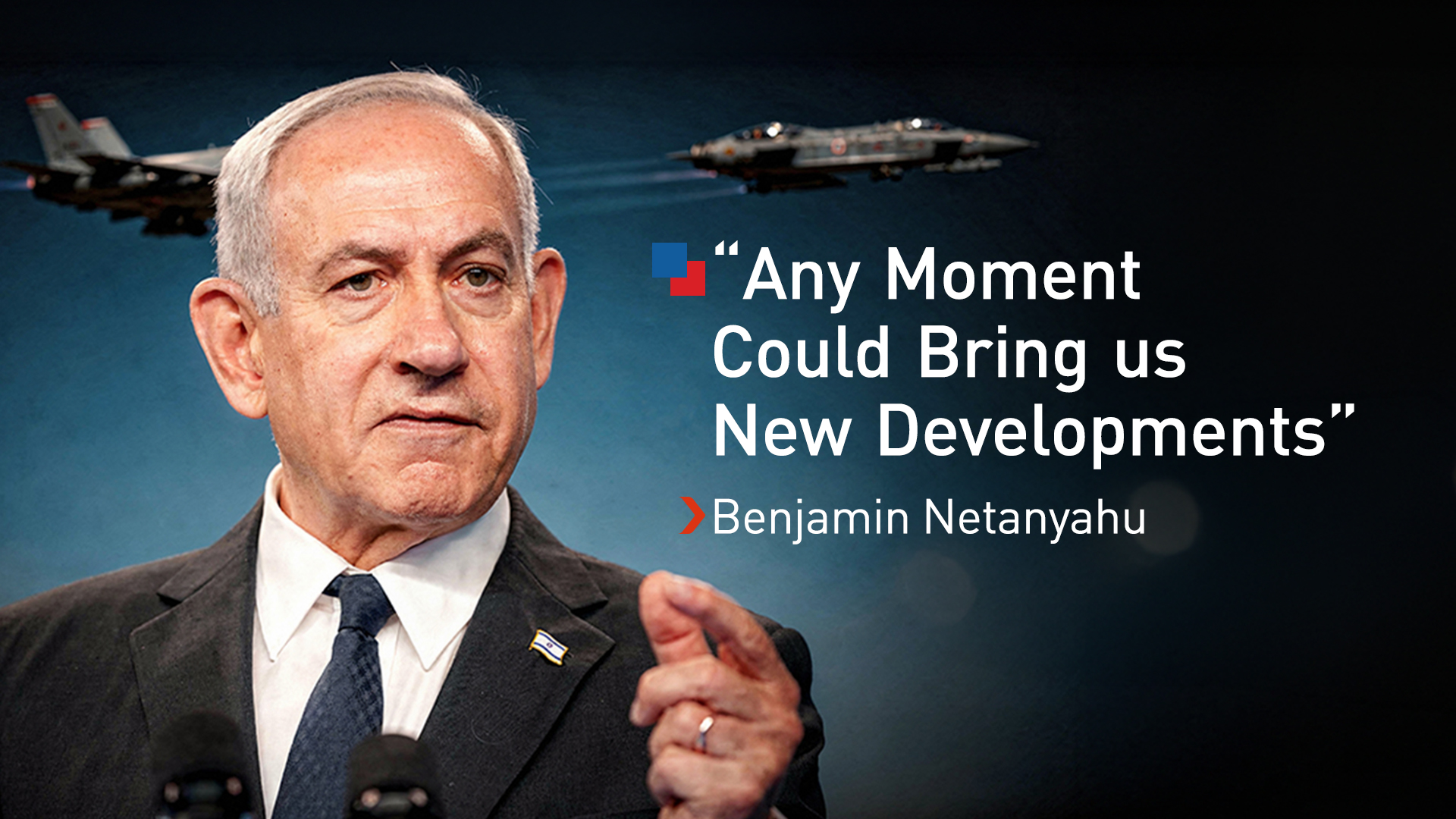
Speaking alongside Argentine President Javier Milei on Sunday, Netanyahu said the US-Israeli effort against Iran is "not over yet."
"Any moment could bring us new developments," he said. "Who knows what tomorrow or the day after tomorrow will bring?"
He added that the United States and Israel "shall achieve our objectives and achieve more hope, more light for the free peoples of the world."
During a separate meeting with Milei in Jerusalem, Netanyahu reiterated the message, stating, "We are at war with Iran. The issue is not over, and at any moment new developments could occur."
He also added: "From Israel’s perspective, the war is still ongoing, and no endpoint has been set."
The remarks come as a new round of negotiations between senior Iranian and US delegations is expected to take place this week in Islamabad, as part of efforts to transform a temporary ceasefire into a lasting agreement.
In the background, the conflict has expanded beyond direct confrontation between the US and Israel on one side and Iran on the other, involving Iran’s regional allies, including Hezbollah in Lebanon, the Houthis in Yemen, and the Popular Mobilization Forces (PMF) in Iraq, while Tehran’s missile arsenal continues to play a central role despite extensive strikes.
US assessments indicate that roughly half of Iran’s missile launchers remain intact, even after thousands of strikes targeting military infrastructure.
Negotiations in Pakistan, which followed more than 20 hours of initial talks, have so far failed to produce a final agreement, with key disagreements over the nuclear program and maritime access through the Strait of Hormuz.
Meanwhile, the two-week ceasefire set to expire on April 22 remains fragile, with no confirmed extension, leaving the outcome uncertain.
The conflict between the United States, Israel, and Iran began on Feb. 28, 2026, following large-scale airstrikes by Washington and Tel Aviv targeting multiple military and political sites in Tehran and other Iranian cities.
The strikes caused widespread destruction of military and civilian infrastructure and resulted in thousands of casualties. In response, Iran launched multiple missile attacks against US and Israeli interests and targets across the region.
Tehran also moved to close the Strait of Hormuz to commercial shipping, a step that significantly impacted global energy markets and the wider economy.
The continuation of hostilities prompted regional countries to intensify mediation efforts. On April 8, 2026, a two-week ceasefire was announced through direct mediation by Pakistan, temporarily halting fighting between the parties.
Since then, diplomatic efforts have continued in Tehran and Islamabad, with ongoing discussions aimed at converting the temporary ceasefire into a permanent agreement and bringing the conflict to an end.
Netanyahu’s comments highlight the uncertainty surrounding these efforts, as military tensions persist alongside diplomatic negotiations.