No new COVID-19 cases in Kurdistan Region, while Iraq toll rises to 2,003 confirmed cases
The Kurdistan Region announced on Wednesday that it had not recorded any new COVID-19 infections in areas under its jurisdiction within the past 24 hours, while the Federal Government of Iraq reported 75 new cases and two deaths.
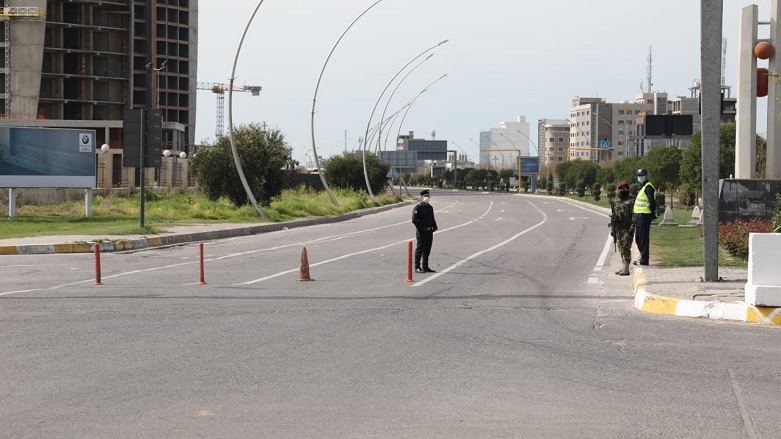
ERBIL (Kurdistan 24) – The Kurdistan Region announced on Wednesday that it had not recorded any new COVID-19 infections in areas under its jurisdiction within the past 24 hours, while the Federal Government of Iraq reported 75 new cases and two deaths.
The Kurdistan Regional Government’s (KRG) Ministry of Health said in a statement that during the past 24 hours, it had conducted medical tests for 1,612 people suspected of having COVID-19 across the region, noting that none came back positive.
The statement added that the total number of confirmed coronavirus cases in the Kurdistan Region remained at 366, including five deaths and 325 recoveries.
According to the statement, 176 people had been placed in quarantine during the past 24 hours. Moreover, the total number of people placed in quarantine since the beginning of the pandemic reached 9,372 individuals. Only 1,528 currently remain in quarantine, the statement added.
Meanwhile, on Wednesday evening, Iraq’s Ministry of Health and Environment announced two new deaths and 75 new cases of COVID-19 across the country.
According to the health ministry’s figures, the total number of COVID-19 cases reached 2,003 individuals, 92 deaths, and 1,346 recoveries.
On Tuesday, the World Health Organization (WHO) in Iraq applauded the Kurdistan Region’s ongoing response to the coronavirus pandemic, pointing to the stark contrast in the relatively small number of known infections in the autonomous region compared to the rest of Iraq.
The highly contagious disease was first reported by Chinese authorities in late 2019 and has since spread to over 180 countries worldwide.
It has infected over 3.1 million people and killed nearly 225,000 to date, according to government-reported data compiled by Johns Hopkins University.
The actual figures could be dramatically higher due to insufficient testing capabilities or underreporting, particularly in countries that have weak health systems.
Editing by Karzan Sulaivany