For second day in a row, Iraq reports over 4,000 new COVID-19 cases
The number of cases Iraq announced on Saturday was also a new all-time high, breaking the record from the previous day.
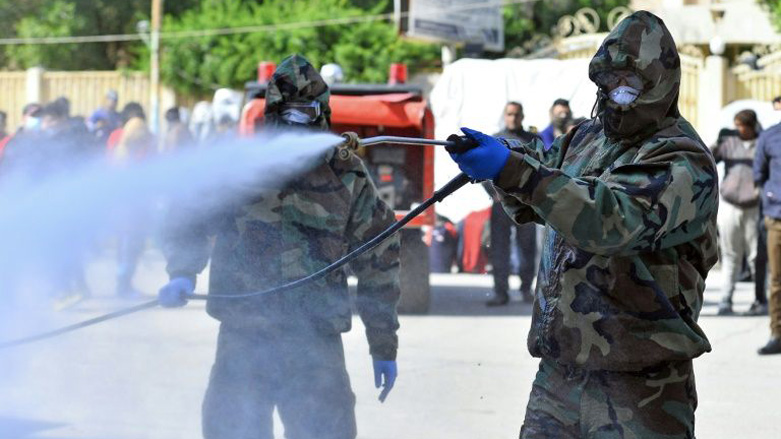
ERBIL (Kurdistan 24) – The Iraqi Ministry of Health and Environment on Saturday announced over 4,000 new coronavirus cases, marking the second day the country recorded such a high number of infections in a day.
The number was also a new record.
The ministry said in a statement that health workers had conducted 18,295 coronavirus tests within the past 24 hours, of which 4,293 came back positive.
Since the start of the pandemic, Iraq has carried out 1,263,650 tests, as per the ministry's figures.
The statement added that the total number of infections reached 172,583, including 122,700 recoveries, which is about 71 percent of the overall infections. According to official data, there have also been 5,785 fatalities due to the disease.
Read More: COVID-19: Iraq records highest daily infections of over 4,000
Similar to the situation nationally, the Kurdistan Region has also been recording an increasingly higher number of coronavirus cases, as testing also ramped up, and lax containment measures appear to have led to the further spread of the virus.
According to the Iraqi authorities, the increasing daily infections in Iraq is due, in large part, to public complacency and carelessness, and the resulting failure of significant numbers of people to follow the health regulations.
The nature of the highly contagious coronavirus is that once public health authorities lose control of the situation, the disease spreads at an exponential rate. That now seems to be happening in Iraq.
This problem is particularly acute with this disease because even those who do not appear to suffer symptoms can spread it. Thus, people can, unknowingly, give it to others.
On Friday, the Iraqi health ministry said it had dedicated a 550-bed hospital to ever-increasing coronavirus patients. It also said it had set up three laboratories for diagnosing the disease.
Editing by Khrush Najari