Israel Orders New Strikes on Beirut Suburbs as Lebanon Fighting Escalates
In a joint statement, Israeli Prime Minister Benjamin Netanyahu and Defense Minister Israel Katz said they had instructed the Israeli military to target Hezbollah positions in Beirut’s Dahiyeh district
ERBIL (Kurdistan24) — Israel announced Monday that it would resume strikes on Beirut’s southern suburbs, a Hezbollah stronghold largely spared from major attacks in recent months, as the Israeli military pushes deeper into Lebanese territory in its most extensive ground operations in two decades.
In a joint statement, Israeli Prime Minister Benjamin Netanyahu and Defense Minister Israel Katz said they had instructed the Israeli military to target Hezbollah positions in Beirut’s Dahiyeh district.
“In light of the repeated violations of the ceasefire in Lebanon by the terrorist organization Hezbollah and the attacks on our cities and citizens, Prime Minister Benjamin Netanyahu and Defense Minister Israel Katz have instructed the IDF to strike terror targets in the Dahiyeh district of Beirut,” the statement said.
The announcement marks a significant escalation in the conflict, which has continued despite a ceasefire that formally came into effect on April 17. Both Israel and Hezbollah have repeatedly accused each other of violating the truce, while military operations and cross-border attacks have persisted.
The latest developments come as the United Nations Security Council prepares to hold an emergency meeting on Lebanon following Israel’s expansion of military operations and its seizure of the medieval Beaufort Castle in southern Lebanon over the weekend.
Netanyahu described the capture of the strategic fortress, known locally as Qalaat al-Chakif, as “a dramatic stage and a dramatic shift” in Israel’s campaign against Hezbollah.
“Now my directive is to deepen and expand our hold in places that were under Hezbollah's control,” Netanyahu said in a video statement.
The castle overlooks large areas of southern Lebanon and was previously used by Israeli forces during their occupation of the region, which ended in 2000.
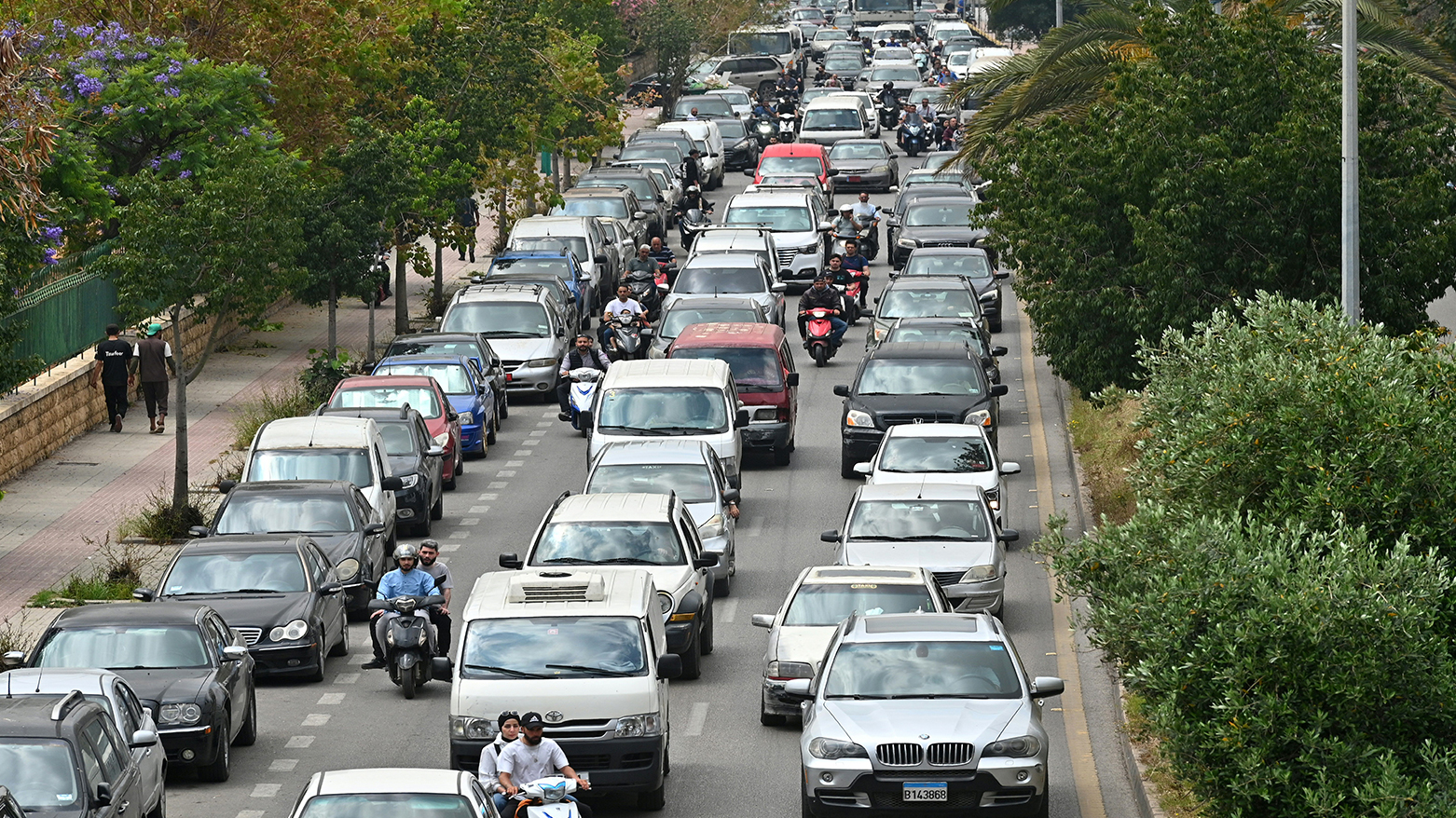
The prospect of renewed strikes on Beirut triggered scenes of panic in the southern suburbs of the capital. AFP correspondents reported families fleeing the area on scooters and in vehicles carrying basic belongings after warnings of impending attacks spread throughout the district.
Hadi, a 24-year-old resident, said hopes for stability following the ceasefire had quickly faded.
“That feeling did not last long,” he told AFP. “Our fears intensified this morning after I received a series of messages about orders to bomb the southern suburbs, which caused widespread panic, and we immediately left the area.”
Earlier Monday, the Israeli military issued evacuation warnings for nine towns and villages in Lebanon’s Sidon and Jezzine districts before launching strikes, according to Lebanon’s state-run National News Agency.
Hezbollah, meanwhile, said it fired a missile toward the Israeli city of Tiberias and carried out attacks against Israeli forces operating inside Lebanon.
Lebanese President Joseph Aoun condemned what he called a “vicious and reprehensible Israeli aggression” and pledged to “work to end the suffering of the Lebanese people, and people in the south in particular.”
International concern over the fighting continues to grow. French President Emmanuel Macron, whose government requested the emergency Security Council session, said that “nothing justifies the major escalation underway in south Lebanon” and called for an immediate halt to hostilities.
The escalation also threatens broader diplomatic efforts aimed at ending the regional conflict. Iran, which is engaged in negotiations with the United States over a wider settlement, reiterated Monday that a ceasefire in Lebanon remains a key condition for any agreement.
Diplomatic efforts continue despite the worsening violence. A senior U.S. official said Secretary of State Marco Rubio recently spoke with both Aoun and Netanyahu, stressing that Hezbollah must halt attacks first to advance negotiations.
Military delegations from Lebanon and Israel met in Washington on Friday, and additional U.S.-mediated talks are scheduled for Tuesday and Wednesday.
According to Lebanon’s Health Ministry, Israeli attacks have killed more than 3,412 people in the country since early March. On the Israeli side, reportedly 26 people—including 25 soldiers and one civilian contractor—have been killed since the conflict began.