Jailed Kurdish leader rules out running for Turkey presidential elections
Demirtas, now over 13 months in a supermax prison in the Turkish province of Edirne, came to prominence in 2014 when he ran for president against the then Prime Minister Recep Tayyip Erdogan.
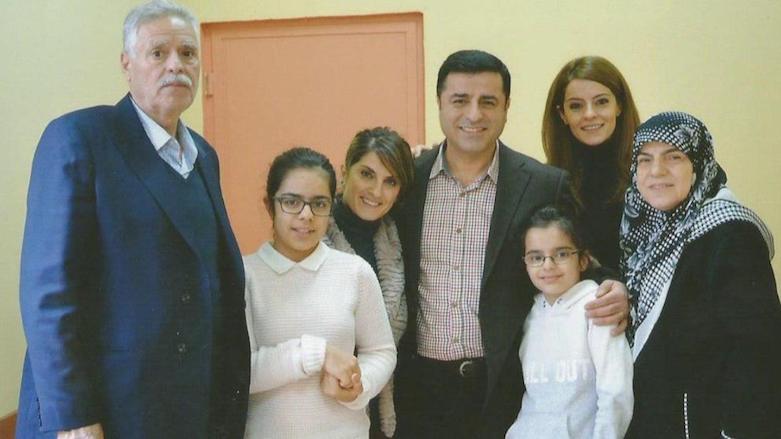
ISTANBUL, Turkey (Kurdistan 24) – Imprisoned Co-chair of Turkey’s pro-Kurdish Peoples’ Democratic Party (HDP) Selahattin Demirtas this week said he had no plans to become a candidate for the country’s 2019 elections, including for the presidency.
“I am a man of struggle, and it does not matter what position I am a candidate for. No matter what the circumstances I will continue work for human rights, democracy, and peace. Currently, I have no plans to be nominated for any duty,” he told the German daily Bild in an interview from prison.
Demirtas, now over 13 months in a supermax prison in the Turkish province of Edirne, came to prominence in 2014 when he ran for president against the then Prime Minister Recep Tayyip Erdogan.
Once branded as “the Kurdish Obama” by international media outlets for his swift rise, the 44-year-old former human rights lawyer managed to gain support from 9.7 percent of voters from across Turkey.
President Erdogan, also the leader of the ruling Justice and Development Party (AKP), hopes to secure another five years in the elections set for November 2019.
Local and parliamentary elections are also to be held the same year, in case the AKP does not call them earlier.
With Demirtas’ disqualifying himself—at least for now—from running for the president, it is unclear if the opposition that wants to deny Erdogan a second tenure to stop what they view as an increasing authoritarianism will manage to nominate a powerful figure.
The HDP which is bracing an ongoing year-long government crackdown, along with other opposition parties, particularly the Republican People’s Party (CHP), lead the opposition.
The upcoming elections will be the first of its kind, as voters will go to the ballot box for the first time to elect an empowered president whose post was largely ceremonial before a constitutional referendum in April this year in which Erdogan and his AKP claimed a contested victory with a narrow 51 percent margin.
Under Demirtas, the HDP forcefully opposed strengthening the President with executive powers to circumvent legislative check and balances.
Erdogan is now invested with the ability to dissolve the Parliament, declare a state of emergency, issue decrees, and form a cabinet as well as the capacity to appoint top judicial, bureaucratic, and military officials without a parliamentary vote of confidence.
The Kurdish leader, who was instrumental during the talks and ceasefire between the Kurdistan Workers’ Party (PKK) and the Turkish government, has described his continued detention as “being a hostage” to Erdogan’s plan of “forging a one-man rule” in the country.
Prosecutors have asked for up to 142 years for Demirtas, and already sentenced him and several other lawmakers to decades of imprisonment on various charges of separatism and terror-related allegations, including claims of insulting Erdogan.
Editing by Karzan Sulaivany