HRW: Iraq mass executions 'revenge rather than justice'
Human Rights Watch (HRW) has condemned the Iraqi government's sudden execution of twelve prisoners in Baghdad, done in response to the kidnapping and killing of sixt security force members by the Islamic State (IS).
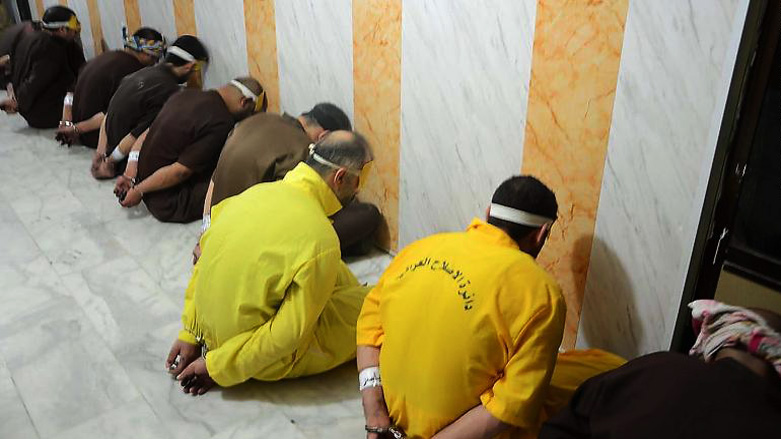
ERBIL (Kurdistan 24) – Human Rights Watch (HRW) has condemned the Iraqi government's sudden execution of twelve prisoners in Baghdad, done in response to the kidnapping and killing of six security force members by the Islamic State (IS).
“The recent ISIS killings were heinous, but for Iraq to respond with a batch execution of death row inmates reeks of revenge rather than justice," said HRW's senior Iraq researcher Belkis Wille in a Friday press release.
"These executions are particularly troubling given the flaws we documented at these ISIS trials. What Iraq needs today is justice based on fairness and individualized guilt.”
A statement released on Friday by the office of Prime Minister Haidar al-Abadi read, “Based on the directive of the Iraqi Prime Minister Haider al-Abadi, twelve convicted terrorists whose sentences had passed the decisive stage were executed on Thursday.”
The swift executions were carried out after Abadi ordered “just retribution” against those on death row on terrorism charges after the bodies of the six had been found, following the passage of a three-day deadline by which time IS demanded that Sunni female prisoners held in Iraqi prisons were to be released.
“Our security and military forces will take forceful revenge against these terrorist cells,” Abadi told senior military officials and ministers on Thursday, according to Al Jazeera. “We promise that we will kill or arrest those who committed this crime.”
Though HRW "opposes the death penalty in all countries and under all circumstances," it says that its use as part of Iraq's deeply-flawed criminal justice system is especially inappropriate. "In Iraq, where the trials of ISIS suspects fail to meet even the most basic markers of due process, its application is particularly concerning."
The human rights organization's statement continued, saying that the group had previously "monitored trials which often last no longer than 10 minutes, where judges are sentencing individuals to death based on broad allegations of ISIS affiliation, where often the sole piece of evidence used is a confession."
"Defendants frequently tell judges they were tortured in order to extract that confession, a claim which judges rarely are willing to investigate, even where the apparent signs of torture may be visible."