Syrian FM says unaware of Kurdish rights in Syria’s new constitution
Syrian Foreign Minister Walid Muallem on Thursday told Kurdistan 24 he is unaware of what rights the Kurds will have in Syria’s new constitution.
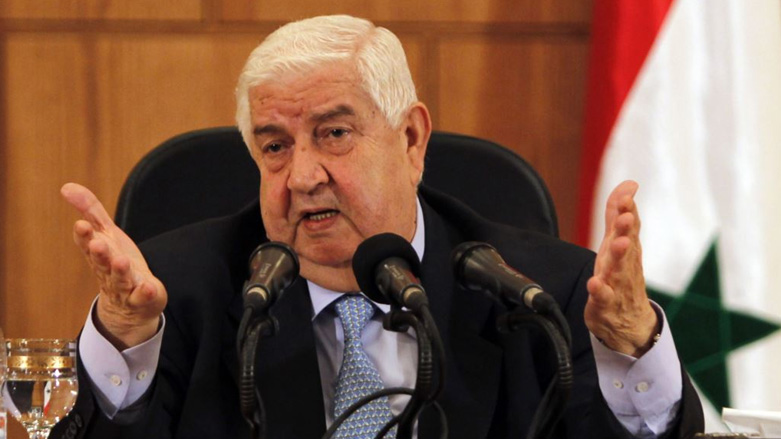
ERBIL (Kurdistan 24) – Syrian Foreign Minister Walid Muallem on Thursday said he is unaware of what rights the Kurds will have in Syria’s new constitution.
Russian Foreign Minister Sergey Lavrov received his Syrian counterpart Muallem in Moscow to discuss topics related to the current situation in the war-torn country.
Kurdistan 24 correspondent Khoshawi Mohammed asked Muallem whether the Syrian government would consider the rights of the Kurdish people in the country’s new constitution and whether there would be autonomy for the Kurdish people in the north.
“First of all, I’d like to say, I do not directly deal with the issues of formulating the constitution, this is up to the constitutional committee,” Muallem responded during a joint press conference with Lavrov.
“I want to emphasize that Kurdish brothers are citizens like everyone else in Syria,” he continued.
“Also, I do not know what rights will be included in the new constitution. I cannot say clearly what kind of government will be established in Syria; this will be decided by the Syrians themselves and the parties involved.”
The Kurds are the largest non-Arab ethnic minority in Syria. The Kurdish population is estimated to be two million, about 10 percent of Syria’s population.
Throughout history, the Syrian government has viewed Kurdish identity as a threat and has suppressed the group’s political and cultural rights.
Syrian Kurds mostly reside in the north of the country known as Syrian Kurdistan (Rojava). The Syrian government has denied them nationality for nearly half a century. However, in April 2011, Damascus finally decided to give the Kurds citizenship.
The citizenship problem has long poisoned relations between the government and Syria’s Kurds, who were banned from employment in the public sector as they were not considered citizens and yet could not emigrate as they did not have Syrian passports.
Today, the Kurds control large swaths of territory in northern Syria which they liberated following the Islamic State’s occupation of most of the region and surrounding areas in 2014.
Editing by Karzan Sulaivany