Commission gives guidelines for campaigning in Kurdistan election
“What is important to us is that [the campaigning] does not affect the lives of people, block driving on the street, and does not annoy locals.”
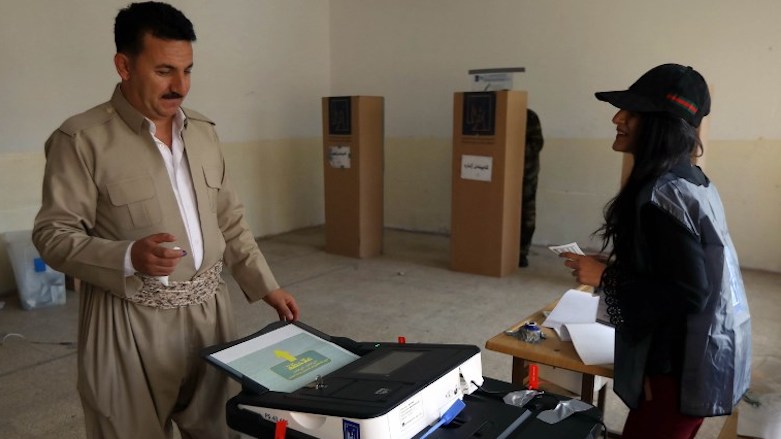
ERBIL (Kurdistan 24) – Kurdistan’s electoral commission on Tuesday announced the guidelines for campaigning in upcoming regional elections during a meeting with representatives of political parties.
Shortly after the meeting, Aram Najmaddin, Director of the Independent High Electoral and Referendum Commission's (IHERC) office in Erbil, told Kurdistan 24 that campaigning would begin on Wednesday.
On Sept. 30, voters will elect lawmakers to serve in the next parliament of the semi-autonomous region.
“Campaigning will begin tomorrow, will go on for 23 days, and will end 48 hours before the vote,” Najmaddin started, adding that parties and candidates are prohibited from advertising in government buildings, public parks, and religious sites.
After the announcement, a source familiar with the decision-making process told Kurdistan 24 that the campaign would not begin on Wednesday, but instead on September 11.
He stated that the commission does not seek to limit the freedoms of various parties unduly and, as such, had decided that campaigning would be permitted on busy Erbil roadways, giving Iskan Street as an example. Iskan has a bustling nightlife, filled with vendors and restaurants offering popular local foods and is one of the most popular among the city’s youths.
“What is important to us is that [the campaigning] does not affect the lives of people, block driving on the street, and does not annoy locals.”
IHERC, which is overseen by the Kurdistan parliament, has also called on all parties to refrain from using slander and libelous statements as part of their vote-getting strategies, especially in various media outlets run or supported by political groups and figures.
As part of the process, the commission and political parties will be able to lodge complaints on any entity found to have broken the rules laid out on Tuesday. According to the 2014 law governing IHERC, the body will then review the claim and fine any candidate found to have violated the rules—to which they have to respond to within three days or face stricter punishments.
After the election, candidates and all parties are given 15 days to remove all posters, signs, and other campaign materials from public view. When this period has passed, the commission, in coordination with local municipalities, will remove them and then fine whichever group that failed to comply with the deadline.
Campaign posters from the May 12 national election can still be seen on streets in the Kurdistan Region and residents have expressed their concerns, calling for shorter campaigns and enforced cleanups after elections are concluded.
Najmaddin also underlined that it is mandatory for all voters to have either their passports or their ID and Civil Status card with them on election day to be able to cast ballots.
Editing by John J. Catherine