UNICEF calls for support to protect over 151,000 displaced Iraqi children from winter
UNICEF on Monday drew attention to the plight of hundreds of thousands of internally displaced children in Iraq whose lives are threatened by freezing temperatures and floods that have affected large parts of the country.
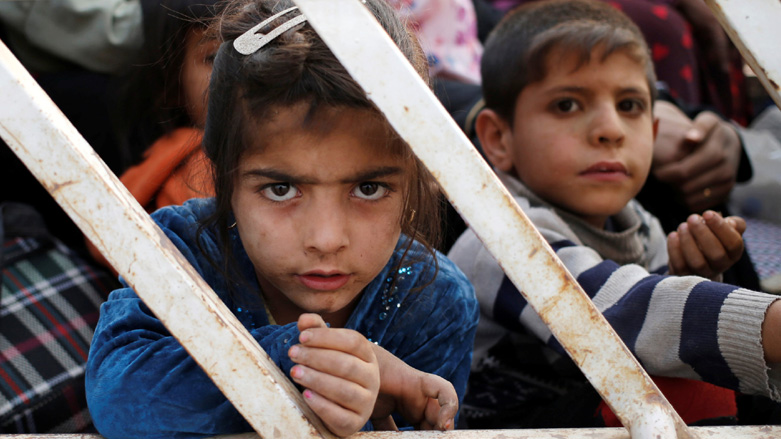
ERBIL (Kurdistan 24) – UNICEF on Monday drew attention to the plight of hundreds of thousands of internally displaced children in Iraq whose lives are threatened by freezing temperatures and floods that have affected large parts of the country.
“As the world celebrates Nadia Murad’s incredible story of survival and her work for human rights, let us remember that there are many vulnerable children in Iraq who still need our support, even if the worse of the violence may be over,” said Peter Hawkins, UNICEF’s Representative in Iraq.
Nadia Murad, a Ezidi survivor ofthe Islamic State (IS), is the first Goodwill Ambassador for the Dignity of Survivors of Human Trafficking for the United Nations. This year, Murad along with Denis Mukwege were jointly awarded the Nobel Peace Prize for “their efforts to end the use of sexual violence as a weapon of war and armed conflict.”
Winters are usually harsh in Iraq with ongoing rains. Temperatures can fall below zero in the north and the semi-autonomous Kurdistan Region, where most of the Ezidis and other displaced children live.
A number of displaced families live below the poverty line, in dilapidated housing with poor heating, or in camps with little protection from the cold. It impossible to afford fuel for heating and winter clothing to keep their children warm, UNICEF said in a statement.
“The devastating floods have made this winter even more difficult for displaced children who are extremely vulnerable to hypothermia and respiratory diseases. No child should be subjected to such risks. Every child deserves to be warm and healthy,” added Hawkins.
UNICEF reported it is providing winter clothes including boots, scarves, and hats to approximately 161,000 children in Sinjar (Shingal), Erbil, Duhok, Nineveh, Anbar, Diwaniya, Basra, Salahuddin, Baghdad, and Sulaimani, including through cash support.
Its winter campaign aims to reach the most vulnerable children, aged between three months and 14 years of age, living in camps for the internally displaced and in hard-to-reach areas.
However, over the past few years, the Kurdistan Regional Government (KRG) officials have repeatedly called on the international community to increase humanitarian assistance to refugees and displaced people residing in the Kurdistan Region, stating most of the burden lies on the shoulders of the KRG and its people as aid from international organizations is very limited.
The Kurdistan Region has been home to almost two million refugees and internally displaced persons (IDPs) since the turn of the decade. Currently, there are 1.4 million of them residing in the region, according to the Kurdistan Region’s Joint Crisis Coordination Center (JCC).
Editing by Nadia Riva