Mahmoud Qamati Draws a Line: No Talks, No Recognition, No Compromise
Hezbollah formally rejected the ongoing US-mediated direct negotiations between Lebanon and Israel, citing legal violations, while warning of an orchestrated plot to ignite a Lebanese civil war.
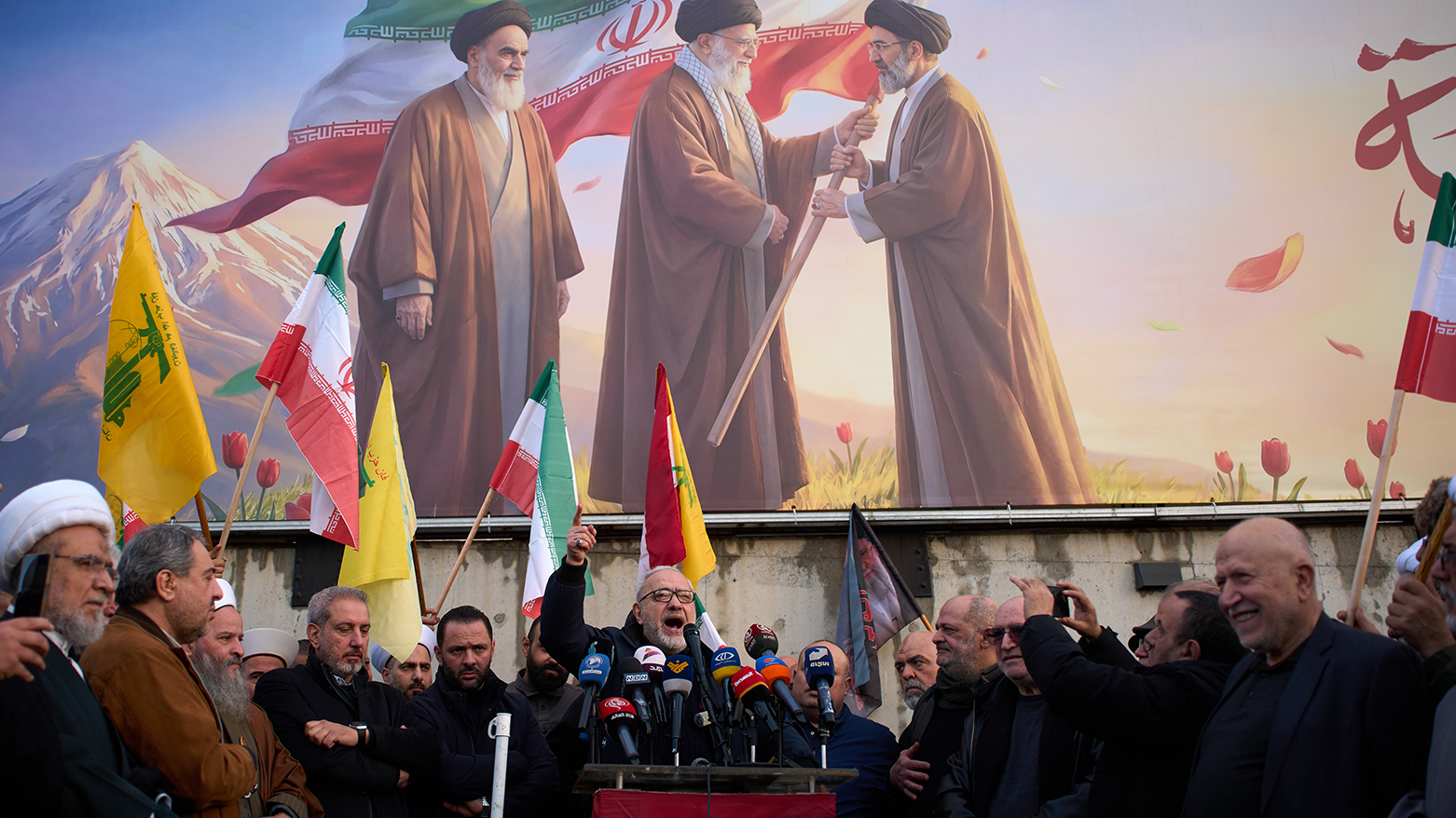
ERBIL (Kurdistan24) - A senior Hezbollah official has categorically rejected ongoing US-brokered direct negotiations between the governments of Lebanon and Israel, issuing a stern warning that the diplomatic framework is destined to fail while accusing foreign actors of orchestrating a plot to ignite a civil war in Lebanon.
In an exclusive statement to the Kurdistan24 on Saturday, Mahmoud Qamati, the Deputy Chairman of Hezbollah’s Higher Political Council, characterized the direct talks occurring in Washington as an illegal recognition of the Israeli state.
The militant group's formal dismissal of the diplomatic track follows an announcement by US President Donald Trump extending a fragile bilateral ceasefire by three weeks.
The parallel developments highlight a deepening institutional fracture in Lebanon's response to a severe regional conflict, which escalated dramatically after Hezbollah launched an intensive military campaign against Israel in early March 2026 following the U.S.-Israel war with Iran that resulted in the death of Iranian Supreme Leader Ayatollah Ali Khamenei.
Rejection of Diplomatic Frameworks
Qamati emphasized that direct negotiations with Israel are rejected by the organization "in every way."
He argued that such diplomatic steps constitute a formal and unacceptable recognition of an enemy state.
Furthermore, he noted that direct dialogue explicitly contradicts the established boycotting law previously passed by the Lebanese parliament, rendering the government's participation structurally invalid from Hezbollah's perspective.
According to the Hezbollah official, the current negotiations are fundamentally flawed because the Lebanese government entered the process without possessing any strategic "points of strength."
To reinforce the domestic political opposition to the talks, Qamati indicated that Nabih Berri, the Speaker of the Lebanese Parliament, aligns with this resistance.
Berri, according to the statement, only supports an indirect diplomatic process and remains opposed to the direct face-to-face negotiations currently underway.
The Washington Talks and Ceasefire Extension
Hezbollah's stern rejection arrived one day after President Trump confirmed the progression of high-level talks in the United States.
On Friday, Trump disclosed via a message on the Truth Social network that he had convened a highly significant meeting at the presidential office involving designated representatives from both Israel and Lebanon.
The Washington diplomatic sessions included key US administration and diplomatic figures: Vice President J.D. Vance, Secretary of State Marco Rubio, US Ambassador to Israel Mike Huckabee, and US Ambassador to Lebanon Michael Issa.
Trump characterized the discussions as highly successful, utilizing the platform to outline a specific policy directive.
The US President stated that the United States is firmly committed to assisting the Lebanese government in protecting its country's sovereignty specifically against the influence of Hezbollah.
As an immediate and tangible outcome of the high-level diplomatic sessions, it was decided that the ongoing ceasefire between Israel and Lebanon would be extended for an additional three weeks.
Despite the formalized extension brokered in the United States, the operational reality on the ground remains highly volatile. The initial ceasefire, which was officially announced nearly two weeks prior to the Washington meeting, is subjected to daily violations.
According to the previous reports, Israeli forces continuously bombard Hezbollah military positions. In direct retaliation, Hezbollah consistently responds by launching coordinated missile and drone strikes against Israeli territory.
Domestic Weapons Dispute and Internal Chaos
Addressing Lebanon's internal structural challenges, Qamati warned of a "dangerous plot" designed to manufacture internal chaos and provoke a civil war.
He explicitly condemned the US administration's role, declaring President Trump a partner in the killing of citizens and officially branding him as an enemy.
The Deputy Chairman stated that diplomatic pressures exerted on Israel and the United States over the past 15 months have resulted in complete failure.
He insisted that this extensive diplomatic experience must not be repeated and affirmed that Hezbollah will no longer remain silent, vowing to respond to any Israeli violation regardless of its origin point.
Regarding the highly contested issue of Hezbollah’s military arsenal, Qamati firmly rejected any external mandates.
He stated that the organization will not permit any foreign interference regarding its weapons, asserting that the matter will be resolved exclusively between domestic political forces and the Lebanese army, entirely without the intervention of external states.
Regional Escalation and Historical Precedent
Qamati anchored the group's current military posture in historical precedent, asserting that the experience of the 1982 Lebanon War proved that occupation is defeated exclusively by force, rather than at the negotiating table.
He stated that Hezbollah's military efforts will continue unabated until the final liberation of Lebanese land.
This operational stance follows a period of unprecedented regional escalation.
Hezbollah officially entered the active regional war on March 2, 2026. This entry was a direct reaction to the Feb. 28 U.S. and Israeli airstrikes on Iran that resulted in the death of Supreme Leader Ayatollah Ali Khamenei.
In a coordinated military effort designed to support Iran following Khamenei's death, Hezbollah initiated intensive offensive campaigns targeting strategic areas in northern Israel.
The group specifically focused its aerial assets on military positions located near the city of Haifa.
The intensity of the multifaceted conflict surged immediately; throughout the month of March 2026 alone, combined joint operations conducted by Hezbollah and Iran successfully executed more than 850 distinct missile and drone attacks directed against Israel.
Concurrently, Houthi forces operating in Yemen formally announced that their respective strikes on Israel were being executed in direct military coordination with both the Iranian government and Hezbollah operatives.