Envoys Arrive, but No Table Set: Iran Keeps Distance in Pakistan Talks
US envoys Jared Kushner and Steve Witkoff are in Islamabad for indirect talks with Iran to end the conflict and the Strait of Hormuz blockade. While Tehran rules out face-to-face meetings, the White House remains hopeful for a deal as oil prices remain 50% higher than pre-war levels.
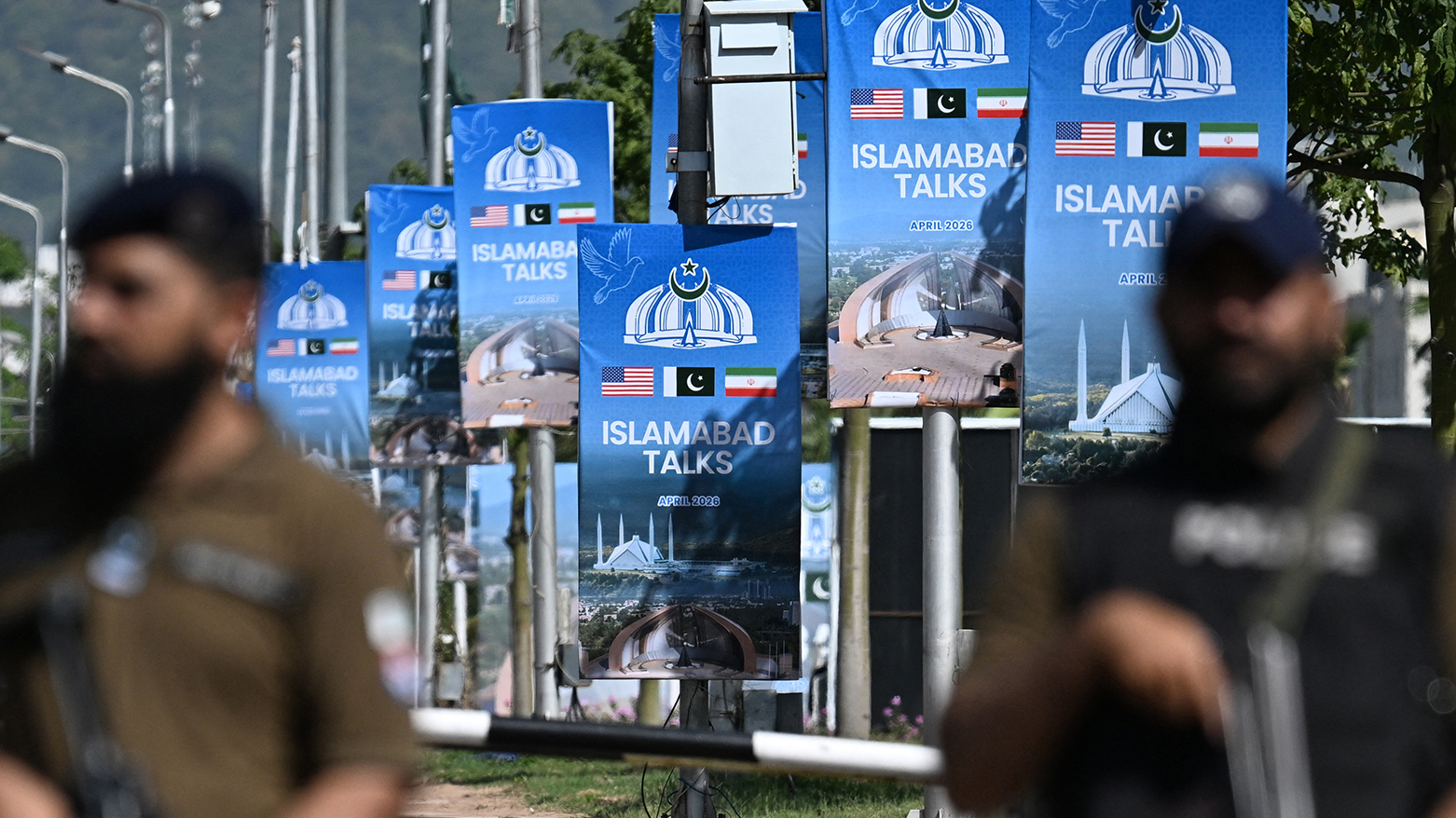
ERBIL (Kurdistan24) - United States envoys are traveling to the Pakistani capital on Saturday to initiate a new round of peace negotiations with Iran amid a fragile ceasefire, though the prospect of direct bilateral talks remains uncertain, Agence France-Presse reported. As American delegation, headed by both Steve Witkoff and Jared Kushner, head to Islamabad, the Associated Press noted that Iranian officials have publicly ruled out face-to-face meetings with the U.S. delegation, opting instead for indirect messaging.
These diplomatic maneuvers are further complicated by deep leadership divisions within Tehran, as highlighted by The Wall Street Journal, and the notable absence of U.S. Secretary of State Marco Rubio from the proceedings, a departure from traditional diplomatic protocols detailed by The New York Times.
White House Press Secretary Karoline Leavitt indicated that the U.S. delegation was sent by President Donald Trump specifically to engage in conversations with representatives of the Iranian government. Speaking in an interview on the Fox News Channel, Leavitt stated that the administration is "hopeful that it will be a productive conversation and hopefully move the ball forward to a deal."
She noted that the U.S. had observed "some progress from the Iranian side in the last couple of days." This, as Leavitt stated, caused the U.S. President make the decision to send both of his emissaries Witkoff and Kushner to "hear the Iranians out."
While Vice President JD Vance led the initial round of negotiations in Islamabad two weeks ago, which concluded without an agreement, Leavitt confirmed he would not travel this time but remains deeply involved.
Vance, Secretary of State Marco Rubio, and the president’s national security team are currently on standby to fly to Pakistan if their presence is deemed necessary, according to the White House.
Despite Washington’s characterization of the meetings as an "in-person conversation," Iranian state television broadcasted that Foreign Minister Abbas Araghchi has no plans to meet directly with the Americans. Instead, the Pakistani government will serve as an intermediary to convey proposals between the two sides.
Iranian Foreign Ministry spokesman Esmaeil Baqaei wrote on the social media platform X that "No meeting is planned to take place between Iran and the U.S." Baqaei expressed gratitude to Islamabad for its "ongoing mediation & good offices for ending American imposed war of aggression."
Araghchi, who arrived in Islamabad late Friday, stated on social media that his trip was focused on bilateral matters and regional developments.
Following his time in Pakistan, an Iranian spokesman confirmed that Araghchi is scheduled to visit Oman and Russia to continue discussions aimed at ending the conflict that began on Feb. 28, when Israeli and U.S. forces launched the war against the Islamic Republic.
The diplomatic efforts are facing internal hurdles on the Iranian side.
According to reporting from The Wall Street Journal, tensions among Iranian leaders regarding negotiations with the United States have erupted into public view, pitting "hard-liners" against more "moderate" officials.
However, the nuances of the situation become even more pronounced in the convergence of Iran’s internal political discourse, where a striking degree of rhetorical uniformity has emerged across factional lines. Messaging from senior officials suggests a deliberate suspension, or at least strategic deemphasis, of the conventional “hardliner–moderate” dichotomy in favor of a consolidated national posture.
For instance, Iranian President Masoud Pezeshkian, Parliament Speaker Mohammad Bagher Qalibaf, and Chief Justice Gholam-Hossein Mohseni-Eje'i each issued nearly identical statements on X, declaring: “In Iran, there are no ‘hardliners’ or ‘moderates.’ We are all Iranians and revolutionaries. With the ironclad unity of nation and state, and obedience to the Supreme Leader, we will make the aggressor regret. One God, one nation, one leader, one path; victory for Iran, dearer than life.”
The uniformity underscores a broader effort to project cohesion at the highest levels of the political system, particularly in moments of heightened external pressure.
Nevertheless, despite the outward projection of unity, the report by The Wall Street Journal indicates that underlying divisions within Iran’s political leadership have materially affected the negotiation process. During the initial round of talks in early April, mediators observed that the Iranian delegation became noticeably ambiguous on key issues it had previously signaled a willingness to address, contributing to a breakdown in momentum.
On the American side, the structure of the diplomatic team has also drawn attention.
The New York Times reported that Secretary of State Marco Rubio’s absence from the high-stakes negotiations underscores his focus on his simultaneous role as the president's national security adviser, while President Trump outsources core diplomacy to other envoys.
Historically, secretaries of state have spearheaded major negotiations, such as when former Secretary of State John Kerry spent at least 18 days meeting with his Iranian counterpart over a 20-month period to secure a previous nuclear agreement.
In contrast, Rubio did not attend the talks earlier this month, missed several meetings held over the past year in Geneva and Doha, and has only visited six foreign cities this year, including a stop in Milan for the 2026 Winter Olympics.
The urgency of the talks is underscored by the severe economic and energy disruptions caused by the effective closure of the Strait of Hormuz. Iran has imposed a de facto blockade on the vital waterway, allowing only a minimal number of ships to transit, which has thrown global energy markets into turmoil.
In response, President Trump issued a 90-day extension to the Jones Act waiver on Friday, a mechanism designed to stabilize energy prices by making it easier for non-American vessels to transport oil and natural gas.
The White House stated that data compiled since the initial 60-day waiver was issued in March showed that "significantly more supply was able to reach U.S. ports faster."
Following the announcement, the price of Brent crude oil retreated, fluctuating between $103 and more than $107 a barrel, though it remains nearly 50 percent higher than when the war commenced.
European Council President Antonio Costa emphasized the global stakes on Friday, declaring that the strait "must immediately reopen without restrictions and without tolling," calling it vital for the entire world.
Simultaneously, the United States is maintaining a stringent blockade on Iranian ports. President Trump recently ordered the military to "shoot and kill" any small boats suspected of placing mines in the strait. Speaking to reporters on Friday, U.S. War Secretary Pete Hegseth stated that "Iran has an important choice, a chance to make a deal, a good deal, a wise deal."
Hegseth confirmed that a second U.S. aircraft carrier will join the blockade in the coming days.
The U.S. currently has three aircraft carriers operating simultaneously in the region for the first time since 2003: the USS George H.W. Bush in the Indian Ocean, the USS Abraham Lincoln in the Arabian Sea, and the USS Gerald R. Ford in the Red Sea.
U.S. Central Command noted that this deployment includes 200 aircraft and 15,000 sailors and Marines.
The conflict has exacted a heavy human toll across multiple fronts. Authorities report that at least 3,375 people have been killed in Iran, while more than 2,490 have died in Lebanon since fighting erupted between Israel and the Iran-backed militant group Hezbollah.
Additionally, 23 people have died in Israel, 15 Israeli soldiers have been killed in Lebanon, and 13 U.S. service members have lost their lives throughout the region.
The United Nations peacekeeping force in southern Lebanon (UNIFIL) announced Friday that an Indonesian peacekeeper died from wounds sustained in a March 29 attack, bringing the total number of UNIFIL fatalities to six, comprising four Indonesians and two French personnel.
While President Trump announced a three-week extension of a ceasefire between Israel and Lebanon on Thursday, violence persists on the ground. The Lebanese health ministry reported that Israeli strikes in the southern part of the country killed six people on Friday.
In the southern Lebanese village of Deir Aames, the Israeli military ordered residents to evacuate, alleging that Hezbollah was using the area to launch attacks.
Military exchanges continued, with Israel reporting the downing of a drone over Lebanon following the launch of a Hezbollah surface-to-air missile, while Hezbollah claimed it shot down an Israeli drone over the outskirts of Tyre.
The prospect of a comprehensive peace agreement in Lebanon remains contentious. Following meetings with Israeli and Lebanese envoys, President Trump expressed optimism about a potential three-way meeting involving Israeli and Lebanese leaders, nations that have been officially at war for decades.
However, Mohammed Raad, the head of Hezbollah's parliamentary bloc, urged the Lebanese government to withdraw from direct talks with Israel, warning that the lasting peace deal sought by the U.S. president "will in no way enjoy Lebanese national consensus."
In response, Israeli Prime Minister Benjamin Netanyahu released a video statement asserting that Israel has initiated a process to reach a historic peace with Lebanon, adding that "it's clear to us that Hezbollah is trying to sabotage this."
The human impact of the continuing violence was starkly visible in the southern Lebanese city of Tyre, where 48-year-old Mohamad Ali Hijazi searched through rubble following an Israeli airstrike that struck minutes before the ceasefire took effect.
Hijazi, who had been living in France, told Agence France-Presse he had not slept for five days as he looked for mementos of his killed family members, stating his life had been destroyed.
U.S. envoys have traveled to Pakistan for indirect negotiations with Iranian officials aimed at ending the conflict and resolving the blockade of the Strait of Hormuz.