PM Masrour Barzani welcomes Germany’s extension of anti-ISIS mission
On Friday, the Prime Minister of the Kurdistan Region, Masrour Barzani, welcomed the decision of the German parliament to extend the German military mission against ISIS—in both the US-led Coalition fighting the terrorist organization and in NATO’s parallel training mission in Iraq—until 2022.
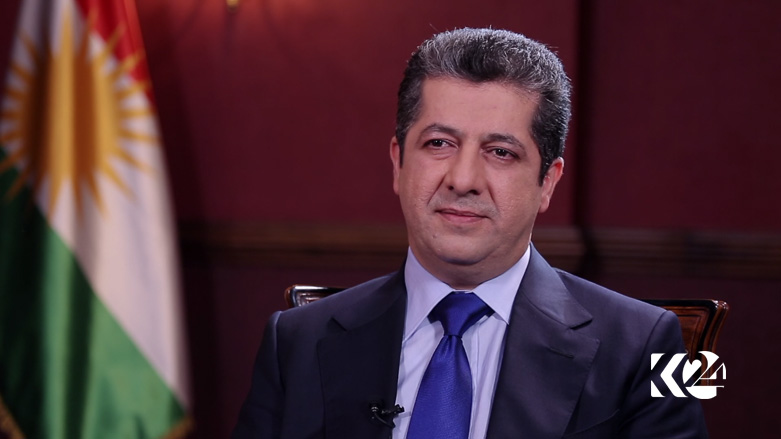
ERBIL (Kurdistan 24) – On Friday, the Prime Minister of the Kurdistan Region, Masrour Barzani, welcomed the decision of the German parliament to extend the nation's military mission against ISIS—in both the US-led Coalition fighting the terrorist organization and in NATO’s parallel training mission in Iraq—until 2022.
“I join @HeikoMaas in welcoming the #Bundestag’s decision to extend the German armed forces' mandate in the global anti-ISIS coalition and NATO mission in Iraq until January 2022,” Barzani tweeted, noting that “Germany has been central to the war on ISIS and support for the Peshmerga, including training.”
I join @HeikoMaas in welcoming the #Bundestag’s decision to extend the German armed forces' mandate in the global anti-ISIS coalition and NATO mission in Iraq until January 2022.
— Masrour Barzani پابەندین# (@masrour_barzani) October 30, 2020
Germany has been central to the war on ISIS and support for the Peshmerga, including training -mb.
Similarly, the President of the Kurdistan Region, Nechirvan Barzani, tweeted, “We appreciate Germany’s continued assistance to the Kurdistan Region. Iraq and the region still need the support of the global coalition to defeat ISIS.”
I thank Germany for extending its forces’ mandate as part of the global coalition against ISIS in Iraq. We appreciate Germany’s continued assistance to the Kurdistan Region. Iraq and the region still need the support of the global coalition to defeat ISIS.
— Nechirvan Barzani (@IKRPresident) October 30, 2020
Read More: ISIS still 'threat to the Kurdistan Region, Iraq, and the whole world:' Peshmerga official
“The so-called ‘Islamic State’ terrorist organization remains dangerous. [ISIS] is still actively organizing underground in Iraq and Syria,” Maas affirmed, “and it is still carrying out attacks.”
The terrorist organization “has taken advantage of the fact that, during the (COVID-19) pandemic, there has been, to some extent, a decrease in pressure from its pursuers,” he added.
“In order to guarantee security in the region and here in Europe, we must do everything we possibly can to prevent a resurgence of [ISIS.] It is, therefore, important that the German Bundestag today decided to extend the Bundeswehr mandate,” Maas stated.
When Iraqi Prime Minister Mustafa al-Kadhimi visited Germany earlier this month, the German leadership expressed its support for his government and a sustained fight against ISIS.
“We will continue to stand by their side resolutely in the fight against [ISIS] and support the implementation of the ambitious Iraqi reform agenda,” Maas said then.
Germany’s military efforts in central Iraq and in the Kurdistan Region focus on training and capacity-building in order to enable “the Iraqi armed forces to independently and sustainably guarantee the security of their country,” according to the German Defense Ministry.
In total, the German military has around 120 troops in Iraq, with 32 stationed in the Taji Camp in central Iraq, where they train members of the Iraqi army, while another 90 are based in Erbil and provide military training to Peshmerga forces.
In addition to its military support, Germany also offers humanitarian assistance. Since the beginning of the fight against ISIS in Iraq, Germany has provided the country over 2.2 billion euros in civilian aid to the country.
Germany also funds projects in areas of Syria liberated from ISIS by the Syrian Democratic Forces (SDF) through The Syria Recovery Trust Fund. The total of Germany’s annual stabilization engagement in northeastern Syria is nearly 20 million euros.
Editing by Laurie Mylroie