US Defense Department Reaffirms Commitment to Fighting ISIS in Iraq, Syria
These three events make clear that neither Washington nor Baghdad is seeking the withdrawal of U.S. forces.
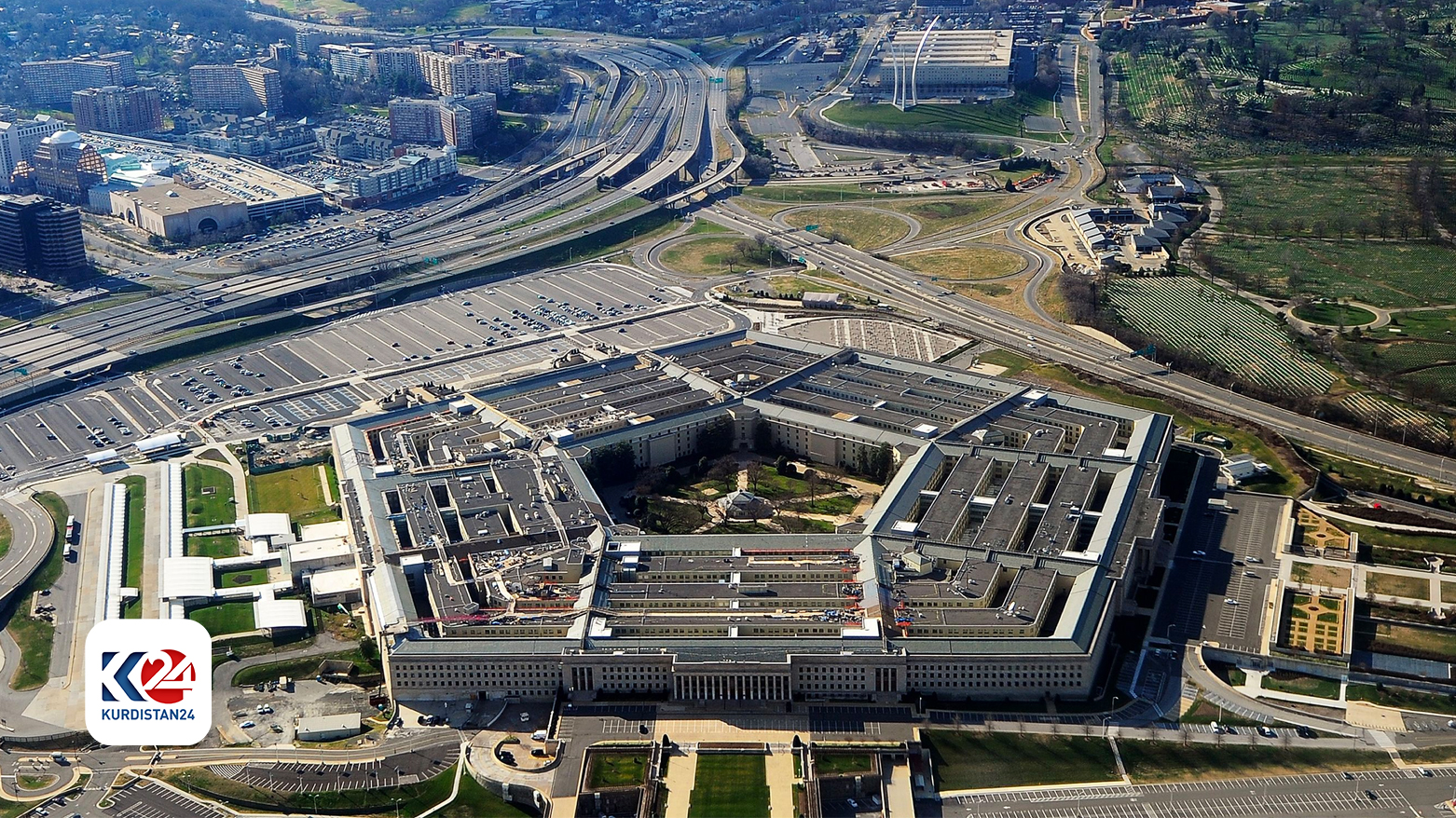
WASHINGTON DC, United States (Kurdistan 24) – Addressing reporters in a press briefing on Friday, Pentagon Deputy Spokesperson Sabrina Singh reaffirmed the U.S. commitment to continuing the fight against ISIS in Iraq and Syria.
The statement is certainly welcome in Erbil. The long-time Kurdish leader, Masoud Barzani, head of the Kurdistan Democratic Party (KDP), recently visited Baghdad. While there, Barzani met with the U.S. ambassador and stressed the importance of a continued U.S. military presence in Iraq.
Read More: KDP President Masoud Barzani meets with US Ambassador to Iraq
Indeed, a point similar to that expressed by Sabrina Singh was made on Thursday by Daniel Shapiro, U.S. Deputy Assistant Secretary of Defense for the Middle East in a meeting in Erbil with the Kurdistan Regional Government (KRG) Prime Minister Masrour Barzani.
And in a press conference in Washington on Friday, Iraqi Deputy Prime Minister and Foreign Minister Fuad Hussein said much the same, following the conclusion of the three-day NATO summit in which he represented Iraq.
These statements come as Iraq’s new government seeks to normalize its situation, or at least present that image. It wants to say that it is in control and the fight with ISIS is over.
That is reflect in its policy toward Iraqis displaced by the fighting against ISIS. It is sending them home, sometimes involuntarily and forcibly.
Read More: US Praises New KRG Steps to Protect Refugees
That is also true with regard to the anti-ISIS forces in the country. Baghdad has repeatedly said that it is having discussions with the U.S about coalition forces leaving Iraq.
But the U.S. is not planning on withdrawing forces from Iraq, nor is it discussing that issue with the Iraqi government. Rather, the discussions are about transitioning from a multilateral system of coalition forces to one in which the presence of those forces in Iraq is determined by bilateral agreements.
Yet such is the poor quality of some Middle Eastern journalism, including some Kurdish reporting, that the issue is erroneously portrayed as talks over the departure of those oreign forces.
The three events, mentioned above and described in more detail below, should make clear that neither Washington nor Baghdad is seeking the withdrawal of U.S. forces.
Indeed, as Masoud Barzani said in his meeting with the U.S. ambassador, this is a vital issue for the Kurds, and they should take some reassurance from its clarification.
Pentagon Briefing—Friday
ISIS-K stands for ISIS-Khorasan, an old name for an area that encompasses northeastern Iran, parts of Afghanistan, and parts of southern Central Asia. “Khorasan” is a word of Persian origin, meaning “where the sun comes from,” or the East.
ISIS uses such names to convey the impression that it is somehow more “Islamic” than other entities. But Khorasan is simply an old name without any religious connotations.
In Friday’s press briefing, a journalist cited a UN report on Afghanistan, issued earlier in the week, which suggested that al-Qaida and ISIS-K were expanding their presence in the country
Asked whether this was of concern to the Pentagon, Sabrina Singh, the Pentagon’s Deputy Press Secretary who gave the briefing, suggested that it was, indeed, and that U.S. concerns about ISIS extended beyond Afghanistan.
“When it comes to ISIS-K, and just the proliferation of ISIS, not just in Afghanistan,” but “throughout Africa,” it “remains top of mind for the United States,” she stated.
Hence, she continued, “you have our mission in Iraq and Syria to continue that fight against ISIS.” So “whether it be from AFRICOM or CENTCOM, it is something that we take very seriously.”
Fuad Hussein’s Briefing—Friday
Iraqi Deputy Prime Minister and Foreign Minister Fuad Hussein represented Iraq at the three-day NATO summit held in Washington from July 9-11 on the 75th anniversary of the founding of the organization.
Following the summit, on Friday, Hussein held a press conference at the Iraqi embassy in Washington. In that briefing, he described ongoing military ties between Iraq and western countries, including the U.S.
Hussein noted that there was a NATO mission in Iraq, which has a training and advisory role. The NATO mission was established in 2018 to assist Iraq’s Ministry of Defense, its Office of the National Security Advisor, and the Prime Minister’s National Operations Center.
Notably, in 2023, NATO’s role was expanded by the current Iraqi government to include providing similar support to the Ministry of Interior and Federal Police Command.
In addition, Hussein met with the Spanish Foreign Minister on the sidelines of the NATO summit. That is because Iraqi Prime Minister Mohammed Shi’a al-Sudani will soon be visiting Spain.
Read More: Iraq Attends NATO Summit in Washington
Sudani’s contacts with the West have been quite limited, and he is in the process of expanding them. In April, he made his first trip to Washington DC.
Read More: U.S. Seeks to Broaden Ties with Iraq, as PM Sudani Makes First Visit to Washington
Sudani’s upcoming visit to Spain will mark his first trip to a European country, or at least his first such trip as a senior Iraqi official.
Hussein also revealed that a high-level Iraqi military delegation will be visiting Washington soon.
Thus, there is no push from the Iraqi side to terminate its military relations with Washington—only to change their basis from multilateral to bilateral.
Senior DoD Official Meeting with PM Barzani—Thursday
Daniel Shapiro, U.S. Deputy Assistant Secretary of Defense for the Middle East, met in Erbil on Thursday with KRG Prime Minister Masrour Barzani, after Shapiro first visited Baghdad.
In his meeting with Barzani, which was attended by the U.S. ambassador to Iraq, Alina Romanowski, and Maj. Gen. Joseph Votel, Commander of the anti-ISIS Coalition, Shapiro affirmed that the U.S., and the international coalition more broadly, would “continue to support Peshmerga forces in combating terrorism, especially against the so-called Islamic State (ISIS) terrorists,” according to a read-out from Barzani’s office.
As that meeting, along with Singh’s remarks on Friday, suggest, there is no push from the U.S. side to leave Iraq either.