Political Deadlock Over PMF Service Law Amid U.S. Pressure on Armed Militias
The stalled negotiations also coincide with intensified U.S. demands for the Iraqi government to curb the influence of PMF factions, particularly those loyal to Iran and implicated in attacks on American interests in the Middle East.
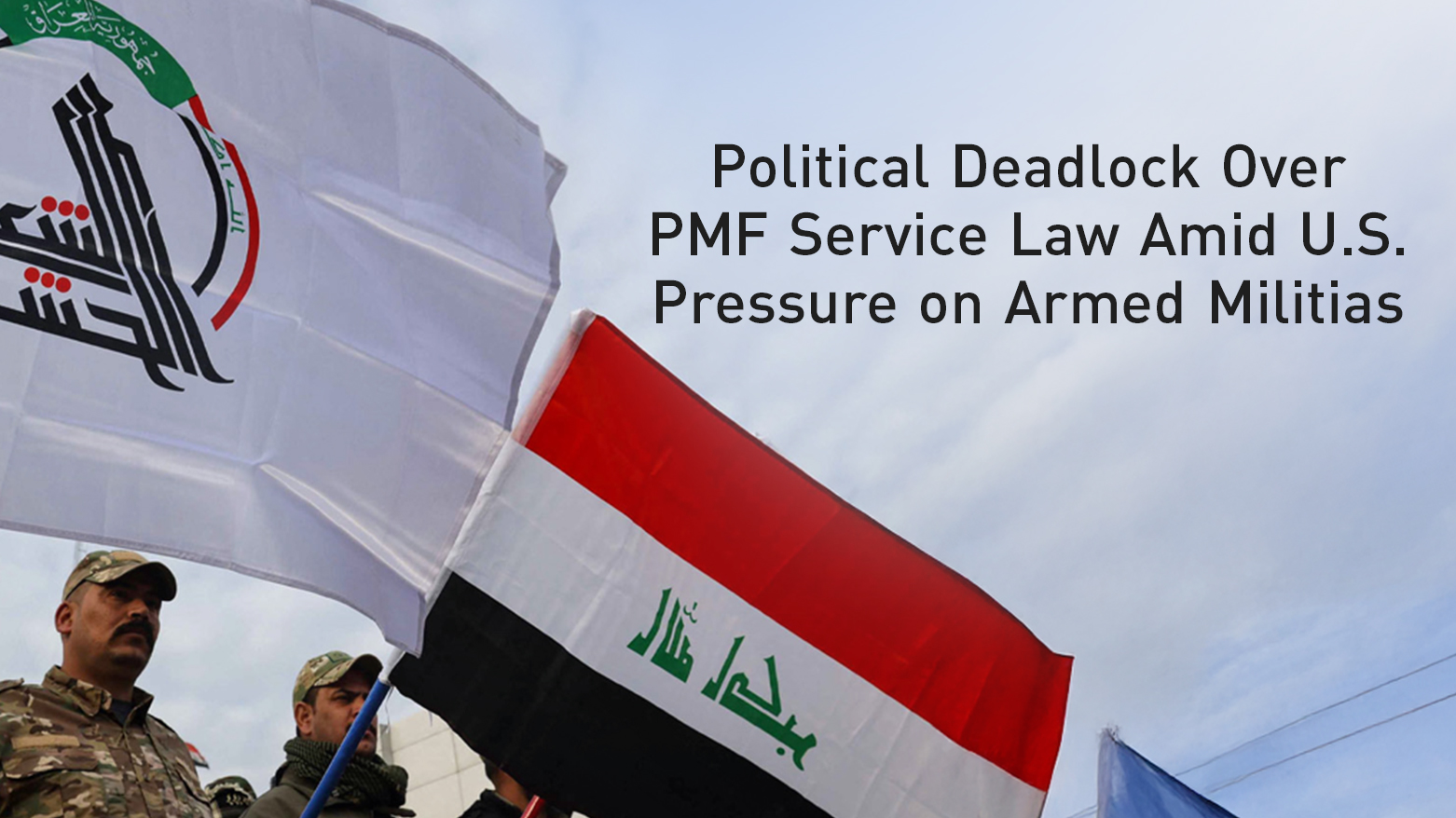
ERBIL (Kurdistan24) – Political disagreements within the Shiite Coordination Framework over the approval of a new service and retirement law for the Popular Mobilization Forces (PMF) have stalled parliamentary sessions in Iraq, according to informed sources.
The Coordination Framework, which includes key Shiite political factions, remains divided on how to finalize and implement the law. In a recent meeting at the residence of Hadi al-Amiri, leader of the Badr Organization, discussions were held to resolve the legal framework for PMF members' service and retirement benefits. One of the primary conditions agreed upon in the meeting was granting authority to the Prime Minister to extend the retirement age for PMF personnel by five years.
However, these internal disputes have led to the postponement of parliamentary sessions, which were initially scheduled to take place this week. Ali Naeemi, a member of Iraq’s parliamentary Security and Defense Committee, confirmed to Iraqi media that although two sessions were planned, the PMF service law was not included on the official agenda, leading to a delay. He added that while parliamentary meetings are expected to resume next week, Shiite lawmakers remain unwilling to push the legislation forward without a consensus.
Deepening Divisions Over Leadership and Implementation
A well-informed source told Al-Araby Al-Jadeed that internal disputes within the Coordination Framework have intensified, particularly over the leadership of the PMF after the passage of the law. Some factions favor Falih al-Fayyadh, the current head of the PMF, to retain his position, while others seek his removal and propose new candidates. This power struggle has further complicated negotiations, delaying a final agreement.
Broader Political Implications
This legislative impasse comes amid broader political stagnation in Iraq, where major laws require extensive negotiations among key stakeholders. So far, no breakthrough has been reached, and the deadlock has extended beyond the Shiite bloc, affecting national-level agreements.
Additionally, Sunni political leaders have called for a broader consensus on governance and decision-making but have yet to secure a formal meeting to address these concerns.
Iraq’s ongoing struggle to pass critical legislation reflects the country’s deep-rooted political fragmentation, where sectarian and factional interests often take precedence over national policymaking. Until a consensus is reached, the future of the PMF’s legal status and its leadership remains uncertain.
U.S. Pressure and PMF Concerns
The stalled negotiations also coincide with intensified U.S. demands for the Iraqi government to curb the influence of PMF factions, particularly those loyal to Iran and implicated in attacks on American interests in the Middle East. Washington has repeatedly pushed for the dismantling of armed militias operating under the PMF umbrella, citing their involvement in destabilizing activities across Iraq and the broader region.
Amid these pressures, PMF leaders fear potential U.S. military strikes targeting key figures or the imposition of fresh sanctions against top commanders. Recent U.S. actions against Iran-backed groups in Syria and Iraq have raised concerns that further escalations could directly impact the leadership of the PMF. The uncertainty surrounding Iraq’s stance on this issue adds another layer of complexity to the ongoing political crisis, as factions within the Coordination Framework struggle to balance domestic power struggles with mounting external pressure.
Until a consensus is reached, the future of the PMF’s legal status and leadership remains uncertain, with both internal rivalries and international scrutiny shaping the next phase of Iraq’s political landscape.