Iraq’s Overcrowded Prisons Face Pressure Amid Amnesty Law Rollout
However, one high-profile case remains unresolved: Iranian citizen Mohammed Ali Ridha, convicted in the 2022 killing of U.S. citizen Stephen Edward Troell in Baghdad, remains in Iraqi custody, Shwani said.
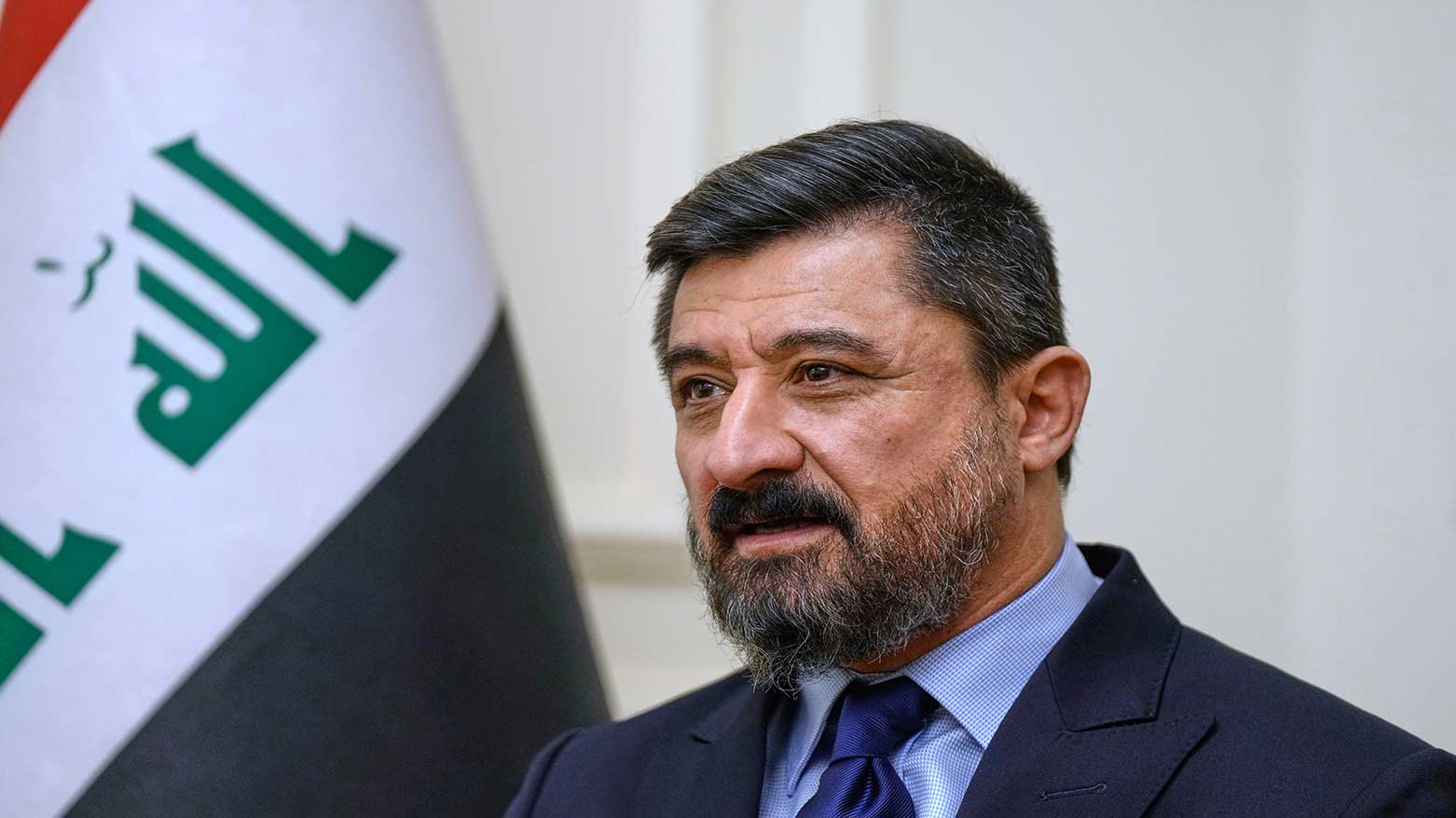
ERBIL (Kurdistan24) — Iraq’s prison system is under intense strain as a sweeping general amnesty law takes effect, with Justice Minister Khaled Shwani revealing that the country’s correctional facilities are holding more than double their intended capacity. In an interview with The Associated Press (AP), Shwani disclosed that the 31 prisons under the Ministry of Justice currently house around 65,000 inmates—despite being built to accommodate only half that number.
“When we took office, overcrowding stood at 300%,” Shwani said. “After two years of reform, we’ve reduced it to 200%. Our goal is to bring that down to 100% by next year in line with international standards.” He emphasized that the severe overcrowding has placed serious pressure on prison healthcare and human rights conditions.
Thousands of additional detainees remain in the custody of security agencies but have not been transferred to the justice system due to the lack of space. To address the crisis, four new prisons are under construction, while three older ones have been shuttered. Two new facilities have opened, and six existing prisons have undergone expansion.
The general amnesty law, passed in January, has become a political flashpoint. Strongly backed by Sunni lawmakers, the law is seen by its proponents as a remedy to what they claim is systemic bias against Sunni communities, especially in terrorism-related convictions. Critics, however, warn the legislation may result in the release of individuals involved in war crimes, corruption, and embezzlement.
The Iraqi Observatory for Human Rights issued a statement voicing “deep concerns over the potential legal and security consequences” of the amnesty law. Despite the controversy, 2,118 prisoners have already been released from Justice Ministry facilities since the law’s enactment, with others released from security agency custody.
Shwani confirmed that a dedicated committee is currently reviewing inmate cases to identify those eligible for release under the new legislation. “The vision is not yet final,” he said. “I expect a good number to be released, but cannot specify an exact percentage until we receive clarity from the judiciary.”
Iraq’s prison population includes hundreds of foreign nationals convicted on terrorism charges or for affiliations with extremist groups like al-Qaida and the Islamic State. The inmates hail from countries across Central Asia, North Africa, Europe, and include a few U.S. citizens. Repatriation talks are ongoing with several governments, excluding those whose nationals face death sentences.
Shwani said Iraq has already transferred prisoners back to Iran, Turkey, and the United Kingdom under bilateral agreements. Recently, 127 Iranian inmates were repatriated to Tehran. However, one high-profile case remains unresolved: Iranian citizen Mohammed Ali Ridha, convicted in the 2022 killing of U.S. citizen Stephen Edward Troell in Baghdad, remains in Iraqi custody, Shwani said.
Troell, 45, a native of Tennessee, was fatally shot in his car in November 2022 by assailants as he pulled up to the street where he lived in Baghdad’s central Karrada district with his family. Iranian citizen Ridha was convicted of the killing, along with four Iraqis, in what was described as a kidnapping gone wrong.
With the general amnesty law now in effect, all executions have been temporarily suspended to allow for case reassessments. Iraq has previously faced strong criticism from human rights groups over its use of the death penalty, including allegations of mass executions carried out without informing legal representatives or family members.
Pushing back on these accusations, Shwani asserted that “strict measures” are in place to prevent abuse. “Many employees have been referred for investigation, dismissed, and prosecuted,” he said. While acknowledging the existence of capital punishment, he stressed that it is only applied in extreme cases—such as acts of mass terrorism, child rape, or the involvement of high-ranking IS figures.
“The number of executions is limited and not as high as reported,” he insisted, framing the pause in executions as part of a broader review process under the new amnesty framework.