Kurdish Language Day: A Testament to Resilience in the Face of Linguistic Suppression
Kurdish communities mark Kurdish Language Day, honoring the 1932 launch of Hawar magazine in Damascus by Celadet Ali Bedirxan, a milestone in modern Kurdish literary standardization. The day highlights a century-long struggle against state-led linguistic repression across the Middle East.
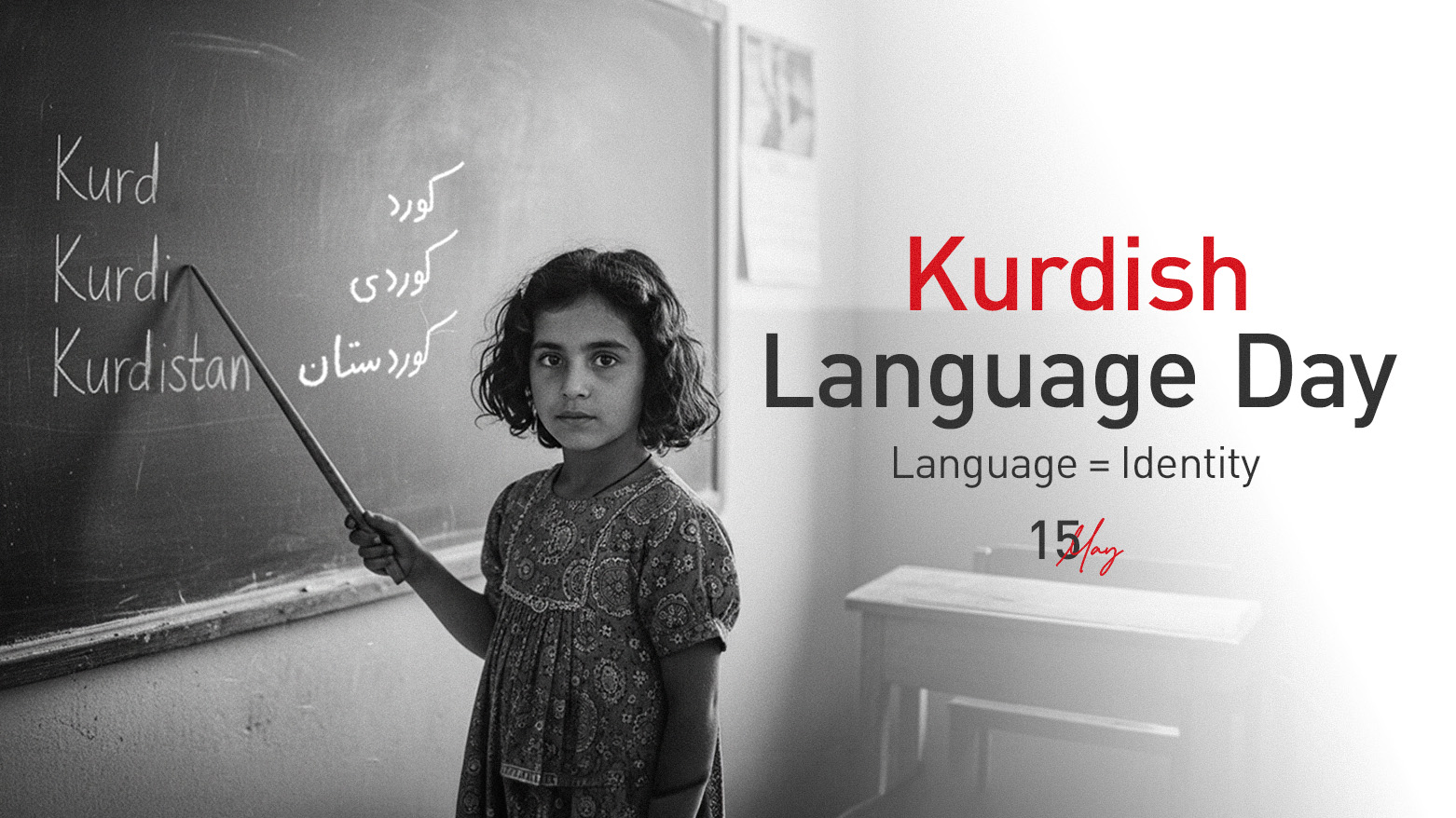
ERBIL (Kurdistan24) - Kurds across the Middle East and diaspora communities today mark Kurdish Language Day, commemorating the launch of the influential magazine Hawar ("The Cry") on this date in 1932.
Founded in Damascus by the Kurdish intellectual and linguist Celadet Ali Bedirxan under the French Mandate in Syria, Hawar represented a landmark in the standardization and revival of modern Kurdish literature.
Published primarily in Kurmanji using a newly adapted Latin alphabet, the magazine, which ran for 57 issues until 1943, disseminated grammar studies, poetry, folklore, history, and cultural essays.
Scholars regard it as a cornerstone of Kurdish cultural nationalism, fostering linguistic unity and self-awareness at a moment when Kurdish expression faced severe restrictions in the states partitioning Kurdistan.
The choice of May 15 as Kurdish Language Day, formally recognized by Kurdish institutions around 2006-2007 following proposals from bodies such as the Kurdistan National Congress (KNK), underscores a deliberate act of historical reclamation.
It honors not only Hawar's role in legitimizing Kurdish as a literary medium but also the broader, century-long struggle against policies of linguistic assimilation and suppression that have sought to erase Kurdish identity.
Peer-reviewed scholarship, notably Amir Hassanpour's seminal 1992 study Nationalism and Language in Kurdistan, 1918-1985, frames this as a classic case of "linguicide", the deliberate targeting of a language as a proxy for destroying national consciousness.
The roots of this struggle trace to the aftermath of World War I and the collapse of the Ottoman Empire.
The unratified Treaty of Sèvres (1920) had promised Kurdish autonomy, but the Treaty of Lausanne (1923) divided historic Kurdistan among the newly formed nation-states of Türkiye, Iran, Iraq, and Syria without regard for Kurdish self-determination.
In the emerging Turkish Republic under Mustafa Kemal Atatürk, the drive for ethno-linguistic homogeneity became state doctrine.
The 1924 constitution declared Turkish the sole official language and redefined citizenship along Turkish ethnic lines. Kurdish schools, publications, and associations were shuttered by decree in 1924-1925.
Following the suppression of the 1925 Sheikh Said rebellion, authorities banned Kurdish outright in public life, courts, and education.
Place names, personal names, and even the word 'Kurdistan' were systematically erased from maps and official discourse. Kurds were officially recast as "Mountain Turks," their language dismissed as a mere dialect or primitive vernacular unfit for modern civilization.
These policies intensified through the 20th century.
The "Citizen, Speak Turkish!" campaigns of the 1930s, forced resettlements, and boarding schools aimed at cultural erasure reinforced the linguicidal framework. After the 1980 military coup, Law No. 2932 (1983) criminalized publications and broadcasts in any language other than Turkish, extending restrictions even to private spheres in some interpretations.
Speaking Kurdish in public could result in arrest; Kurdish names for children were prohibited.
It was not until 1991 that publishing in Kurdish was partially decriminalized, and limited state television broadcasting began only in 2002 under European Union accession pressures.
Even today, full mother-tongue education remains unavailable in public schools, and Kurdish-language media faces ongoing judicial scrutiny.
Academic analyses describe these measures as integral to the Kemalist nation-building project, rooted in the trauma of Ottoman collapse and an ideology equating Turkish linguistic purity with modernity and state security.
Comparable, if varied, suppression occurred elsewhere. In Pahlavi Iran (1925-1979), Reza Shah's Persianization campaign banned non-Persian languages in schools and official use, treating Kurdish as a threat to territorial integrity.
Post-1979 Islamic Republic policies have remained restrictive; while some university-level Kurdish literature courses exist, activists advocating broader mother-tongue rights face imprisonment, and Kurdish has no official status.
In Ba'athist Syria, Arabization policies under Hafez and Bashar al-Assad prohibited Kurdish in education and public administration, stripped many Kurds of citizenship (labeling them "alien Turks"), and banned cultural expression.
In Iraq, the monarchy (1932 onward) and later Saddam Hussein's regime enforced Arabic-dominant Language Education Policies that marginalized Kurdish in state institutions, though the post-1991 Kurdistan Regional Government has since established Kurdish as an official language with greater institutional support.
Despite these multi-generational assaults, Kurdish linguistic resilience has persisted.
Oral traditions, classical poetry from the 16th-19th centuries (e.g., works by Ahmedi Xani), and exile publications like Hawar, produced outside Türkiye's reach, sustained the language.
Bedirxan's circle, including family members involved in earlier efforts such as the 1898 Cairo newspaper Kurdistan, laid groundwork for modern standardization.
In contemporary autonomous regions such as the self-administration in northeastern Syria (Western Kurdistan - Rojava), bilingual education models have emerged, although they previously lacked full constitutional recognition amid ongoing political uncertainty.
More recently, following the downfall of Bashar al-Assad's tyrannical regime and the establishment of a new government in Damascus, Syria formally approved Kurdish-language instruction in public schools under Decree No. 13 of 2026, issued on Jan. 17, 2026.
Officials described the decision as historic, framing it as a step toward national unity, cultural recognition, and equal educational rights.
As Kurds gather today in cities from Erbil to Diyarbakır, Qamishli to Mahabad, to diaspora centers in Europe and beyond, celebrations feature poetry readings, language workshops, and calls for constitutional guarantees of mother-tongue rights.
The day serves as both commemoration and reminder: language is not merely a tool of communication but the bedrock of identity and collective memory.
As Hassanpour and subsequent scholars in journals such as Nationalism and Ethnic Politics and Kurdish Studies have documented, the Kurdish struggle illustrates how linguistic rights remain central to minority self-determination in the modern Middle East.
In an era of partial reforms and persistent contestation, Kurdish Language Day reaffirms that the fight to speak one's own tongue is inseparable from the broader quest for cultural survival and political dignity.