Second Strike Hits Iran’s Fordow Nuclear Site Amid Rising U.S.-Israel-Iran Tensions
Iranian state television confirmed the renewed strike on Fordow, located south of Tehran, though it did not specify the extent of the damage or the party responsible.
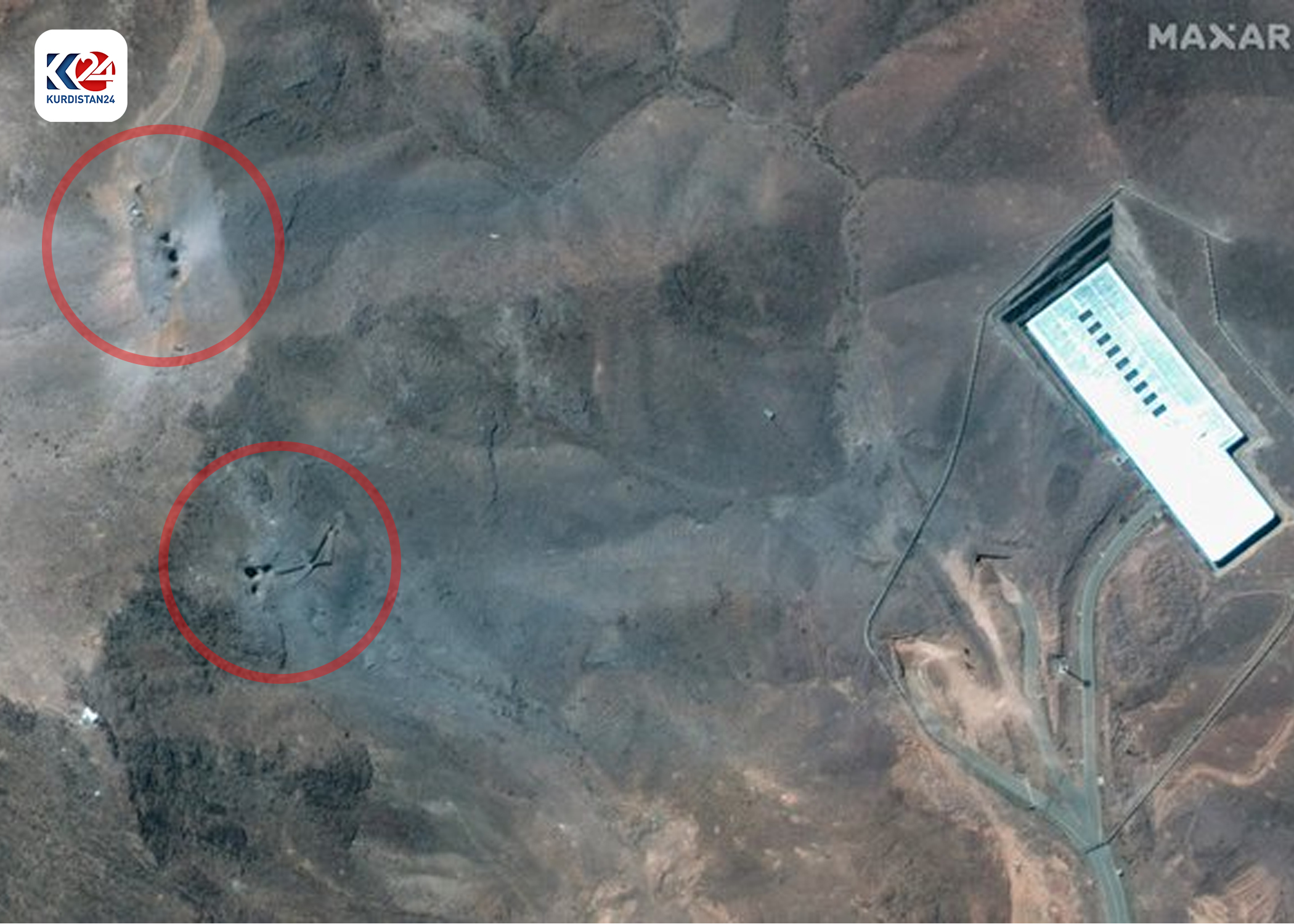
ERBIL (Kurdistan24) — Iran’s heavily fortified Fordow nuclear enrichment facility was struck for the second time in as many days on Monday, after the United States launched unprecedented airstrikes on Iranian nuclear infrastructure over the weekend, according to the Associated Press (AP).
Iranian state television confirmed the renewed strike on Fordo, located south of Tehran, though it did not specify the extent of the damage or the party responsible. The Fordow site had already been one of the three major nuclear facilities targeted in Sunday’s U.S. operation, which involved advanced bunker-buster bombs dropped by American B2 Stealth bombers. Israel, which earlier acknowledged it was conducting strikes on Iranian territory, is widely believed to be behind the latest attack.
In Vienna, Rafael Grossi, head of the United Nations’ International Atomic Energy Agency (IAEA), said significant destruction at the Fordow site was expected due to the intensity of Sunday’s strike. “Given the explosive payload utilized — very significant damage — is expected to have occurred,” Grossi noted, as the agency awaits further access to assess the damage firsthand.
The Fordow, Natanz, and Isfahan facilities were all targeted in Sunday’s U.S. bombardment, which President Donald Trump described as a “one-off” designed to “cripple Iran’s nuclear ambitions.” However, the president warned of further strikes should Tehran retaliate. Iranian officials, meanwhile, described the airstrike as a major breach of sovereignty and a direct provocation. “The U.S. has crossed a very big red line,” Tehran declared.
On Monday, Iranian state media said the country had launched a new wave of missile attacks on Israel under the operation name “True Promise 3,” claiming it targeted the Israeli cities of Haifa and Tel Aviv. Israeli authorities activated air defense systems across the north and central regions and advised residents to seek shelter. Explosions were also heard in Jerusalem, though no immediate casualties or damages were reported.
Inside Iran, witnesses reported additional Israeli airstrikes near Tehran around midday. The scope and effect of these strikes remain unverified.
Earlier in the day, Iranian General Abdolrahim Mousavi, Chief of the Joint Staff of the Armed Forces, issued a stark warning to Washington, saying the U.S. attacks gave Iranian forces a “free hand” to act against American interests. "This is no longer just an escalation—it is tantamount to invasion," he said, as quoted by the state-run IRNA news agency.
The U.S. maintains tens of thousands of troops across the Middle East, many within range of Iranian ballistic and cruise missiles. However, one of the key flashpoints remains the Strait of Hormuz, a strategic maritime route vital for global oil shipments. In the wake of the strikes, Iranian officials revived long-standing threats to shut down the waterway, prompting global concern. Estonian Prime Minister Kaja Kallas warned, “Especially closing of the Strait of Hormuz by Iran is something that would be extremely dangerous and not good for anybody.”
As regional tensions approach a boiling point, the world waits anxiously to see whether diplomacy can regain a foothold—or whether the path to escalation is already set.