Dengara Magazine Relaunches After 27-Year Hiatus
Kurdish magazine Dengara returns after 27 years with its third issue. Editor Azad Hamedemin says print still holds intellectual value despite digital dominance. A relaunch event will be held June 29 in Erbil, aiming to reach both local and diaspora readers.
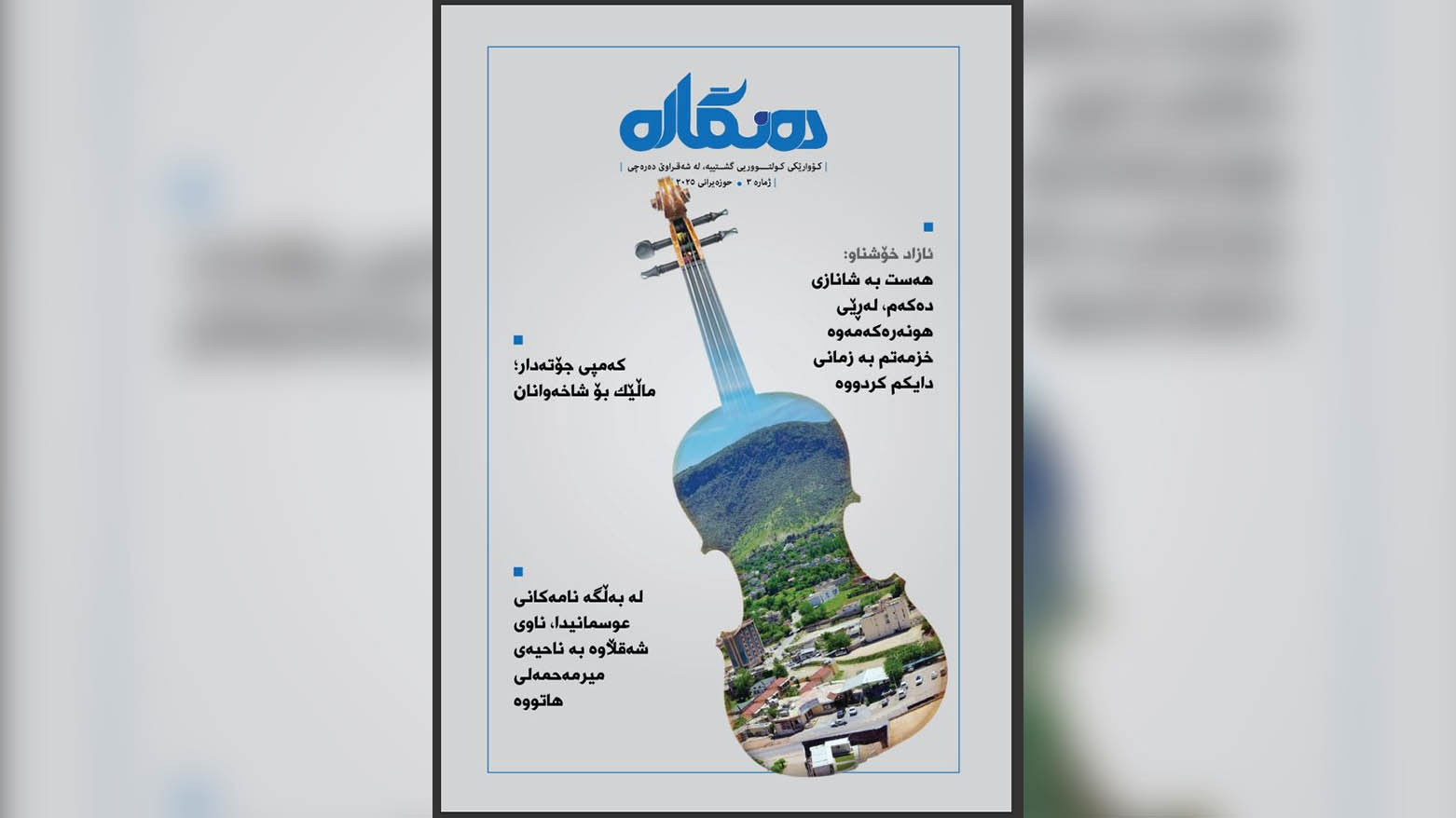
By Kamaran Aziz
ERBIL (Kurdistan 24) — Dengara (Melody), a cultural magazine based in Shaqlawa, is making a return to the Kurdish literary and media scene after a 27-year hiatus. The magazine will be relaunched starting with its third issue, according to its editor-in-chief, Azad Hamedemin, who also serves as head of the Kurdistan Journalists Syndicate.
“After 27 years since the publication of the first issue of Dengara, we are relaunching the magazine, starting again from issue number (3),” Hamedemin told Kurdistan24’s website.
To commemorate this cultural revival, a ceremony is scheduled for Sunday, June 29, 2025, at 5:30 PM, at the Martyr Mahdi Khoshnaw Hall within the Kurdish Writers’ Union – Erbil branch. The event is expected to bring together prominent Kurdish writers, journalists, and intellectuals.
Dengara, which originally released its first two issues nearly three decades ago, is published under the license of Dr. Rebwar Rzgar Khalil Miran. Its editorial leadership has been retained by Azad Hamedemin.
In his editorial note for the new issue, Hamedemin reflected on the magazine’s long pause and the changes in the media landscape since its initial debut. “It has been 27 years since the first issue of Dengara was published. We now complete the mission of the magazine with this third issue,” he wrote. He further added, “Over the past 27 years, many things have changed—media technology has advanced rapidly—but the need for printed journals remains unchanged.”
Commenting on the challenges faced by print media in the digital age, Hamedemin told Kurdistan24: “According to our syndicate’s records, many printed magazines have ceased publication in recent years. The main reason is the dominance of social media and digital news platforms that disseminate information instantly.”
Despite these challenges, Hamedemin expressed optimism about the continued relevance of printed publications. “Nevertheless, some journals continue to be published in different rhythms, because professionals and academics still prefer to publish their work in print rather than on social media, believing that print journals have not yet lost their intellectual value,” he said.
He also emphasized the broader cultural vision behind Dengara’s return: “We will strive to continue the publication,” he affirmed, “and aim for Dengara to reach not only readers in Kurdistan but also Kurds in the diaspora.”
The relaunch of Dengara signals both a return to cultural roots and a renewed commitment to intellectual discourse in Kurdish society, as the magazine seeks to engage a new generation of readers while honoring the legacy of its past.